Showing posts with label reviews. Show all posts

Thursday, July 18, 2013

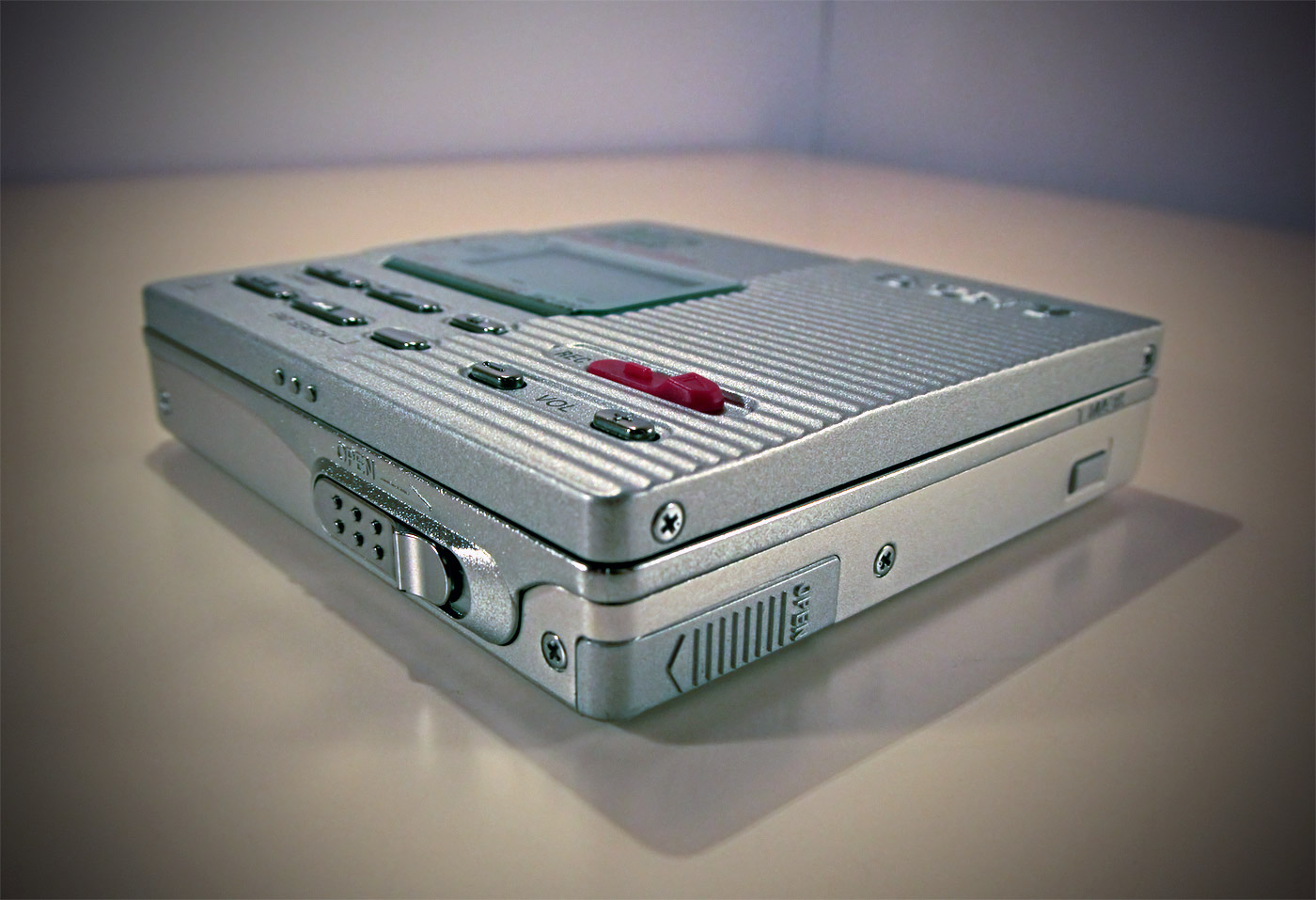
The legendary Sony MZ-R 50 - A review


Willkommen zurück to my blog, dear Constant Reader!

Three months have passed since I last wrote something and while I´ve had several reasons not to write any articles - most of them are explained in the edited blurb now several months old - I still very much desired to return to the one subject that (at the moment) interests me most: MD recorders. As you may remember, I stated in this feature that I won´t tackle MD-related topics anymore for reasons that also were stated in the article mentionend above. Well, this one here bears witness to the fact that I´ve decided to fuck that. I WANT to review MD recorders; they may be obsolete, clunky and not very good yet they ooze charm and force me to concern myself with media I can take into my hand. No one said it better than SileEeles on the MiniDisc Community forum"I think the main reason I got into MiniDiscs again was because I missed having that physical media. I mean I have CD's boxed up for one reason or another (mostly that they are all on the computer) but I just find that I'm a notourious track skipper on the computer. I don't think I've fully listened to an album for ages, and since I've had my portable player hooked up I've been through quite a lot, and I love it." 

Sony MZ-R 50 from above

I´ll leave it at that. During the last months I´ve also had some ideas how to format my reviews. Articles published before the one you´re reading never felt very organized to me; I´ve therefore decided to equip each paragraph with thematically fitting headlines ('overview', 'sound', 'measurements', etc.). That way it´ll be easier for you to visually skip to the section that interests you the most. I´ve also concluded that it would be prudent to move the section containing measurments to the end of every post; it won´t fit into the middle anymore because I´ve chosen to incorporate more detailed and diverse measurments than ever before. Doing that I hope to gain a new level of transparency for you and myself, dear Reader, so let´s see how it works out. What are you saying, shall we start now? Yes, I think we might.

OVERVIEW

The Sony MZ-R 50 was released in October 1997, a period when MD recorders still had a long way to go entering the conscious mind of the general public (and for some this never happened at all). Judging from the units offered for sale on eBay it sold decently just like its predecessor, the Sony MZ-R 30. When the MZ-R 50 was released to the market it cost a whopping 700,- Deutschmarks (€ 350,-); quite a lot of money for a portable audio player 16 years ago and also more expensive than its predecessor. It seems that the price Sony charged was justified 'cause it soon became apparent that the MZ-R 50 was a very reliable machine hard to destroy. It went on to become something like an insiders' tip for journalists working in the field, emerging as the go-to-recorder for interviews or events when used with an attached microphone. Even after all those years many people remember it fondly and consider it to be the pinnacle of MiniDisc engineering in terms of usability and robustness... though I of course managed to break it the day it arrived.

Sony MZ-R 50: 16 years old and in marvellous condition

I purchased it more than a year ago from an extremely nice lady who sold it through eBay small ads. As you can see on the photographs its condition was close to perfect, she obviously treated this machine with respect, something that never fails to surprise me and always feels delightful. When I receive a used electronic item I usually take it apart to clean it as well as I can in order to restore it to its best working order (I hope). In case of the MZ-R 50 disassembly and cleaning were easy enough, though in hindsight I should have skipped both since it was in lovely condition from the inside anyway. Re-assembling however proved to be my downfall: upon reinserting the mainboard I broke the switch responsible for detecting if the shutter door is closed or open. I was devastated 'cause I had just spent € 40,- for a used recorder I was anxious to listen to, a portable in lovely condition now turned to rubbish by my own hands. I didn´t throw it away though, I kept it as a reminder to treat every future electronical device I might purchase with utmost care. But my bad conscience remained, as a matter of fact it was fueled further by an envelope arriving three weeks later: the nice lady I purchased this unit from had found additional parts when tidying up and sent them to me. You know, some people really do know how to make others happy and all they need to do is carrying something out that isn´t requested of them. Extraordinary. Anyway, among those parts was the fully functional original Li-ion battery!

Sony MZ-R 50 macro picture - beautiful, isn´t it?

Do you know how rare this is? This is the only rechargable battery I´ve encountered still working as advertised. And it wasn´t even part of the original ad, it was sent to me without additional charge (though I insisted on paying the postage for the envelope). If the lady I purchased this from reads this: you´re one of the reasons why I´m hopeful that not all of humanity is a bunch of fucked up idiots. Anyway, I very much desired to repair it - which happened in March 2013 when I acquired a horribly looking and supposedly defective MZ-R 50 on eBay. I didn´t care that it was in such an awful condition, I figured the part most susceptible to wear would be the drive and that the mainboard would be less likely to bust. The battered MZ-R 50 declinated to be salvaged for its mainboard to my amazement still worked perfectly (contrary to what the seller claimed), even though it looked and felt as if a car had run over it. Hmm, the purported indestructibility apparently isn´t a myth at all. So I cannibalized its mainboard and transplanted it into my broken unit. After re-assembling the unit I inserted an MD and... bingo, my MZ-R 50 recognized the closed lid again. Phew, operation successful, patient thriving again. The only thing left to do was calibrating the mainboard to the drive, thanks to Sony's convenient automated calibrating feature this happened swiftly and with perfect results.

Sony MZ-R 50, in- and outputs
After telling you this story let´s return to the features of the MZ-R 50... though I´m afraid there isn´t left much to tell seeing that it´s virtually unchanged from the MZ-R 30. The two major differences are that the more recent recorder is 30 % smaller and that it features a 40-second shock protection buffer instead of a 10-second buffer. Inside, both the MZ-R 50 & MZ-R 30 are almost completely alike. Apart from the optical pick-up and the drive mechanism both feature the same WideBitStream capable ATRAC chip (CXD2652AR), A/D-D/A-converter (AK4515VQ), headphone amplifier (LA4800V, also feeds the line-out), gain control IC for changing the volume on the HP-out (DS1802), system control IC (CXP819P60MR), RF amp (CXA2523R)... yadda, yadda, yadda.
Build quality is marvellous and has been improved over the MZ-R 30; buttons work with tight precision, fit very well without jiggling, the aluminum shell feels superior when touching it. In my opinion the MZ-R 50 also looks better than the MZ-R 30, its casing sports a colour best described as 'silverwhite' that doesn´t look as 'dirty' as the dark silver of the former model. The glossy ornamental belt surrounding the outer edges only adds to its exclusivity and doesn´t look tacky. This unit simply feels and looks superior to the MZ-R 30 in every regard. Battery life is not as good, the smaller Li-ion battery keeps a smaller charge and is drained after roughly six to seven hours (MZ-R 30: eight to nine hours). Skipping from one track to the next is incredibly fast, it takes half a second at max. Almost as fast is writing to the TOC, this takes no more than one and a half second... compare that to recorders that came later (MZ-R 90 for example) which seem to take forever.

Sony MZ-R 50: perfect finish

SOUND

Before you start reading this paragraph I suggest you take a look at the post 'Marlene's testing methodology', otherwise you won´t know how I´m able to judge the sound (I don´t do it like everyone else).

Despite most parts being equal sound quality has been improved considerably. The MZ-R 50 gets rid of the biggest sonic problem of its predecessor: resolution and detail. High frequency intelligibility, definition and differentiation has been enhanced by quite a margin, the MZ-R 50 is able to render it convincingly without turning treble details into noise. 
Dynamics are still too soft, this might have been an intentional decision on Sonys' side (this is at least what the Stereoplay magazine wrote in their review). Bass punches sound too weak, transients in general miss impact and bite. The weak bass however is likely to be responsible for how tight and intelligeble it sounds. Timing is ok but nothing to write home about, it doesn´t reach the speed and snap of the original files I compared it too. Generally speaking, mids and especially treble appear to be faster than low frequencies; combine the friendly handling of transients with this high frequency agility and you´re getting an airy yet pleasant sounding audio player.
Another thing that changed big time - not much for the better - is the staging. The MZ-R 30 sounded confused, you weren´t able to make out size and position of instruments, reverbaration felt chaotic, dimensions of the virtual soundstage were lost. The MZ-R 50 improves on that somewhat by creating three seemingly seperated soundstage 'areas': left, center, right. Instead of presenting the stage as it sounds on the original, (aka one singular virtual stage with perfectly naturally integrated instruments and reverb) it takes it apart into something drier and clustered with players having changed their positions. Width is on par with the reference, depth is not (flatter). On the other hand the virtual soundstage is extremely stable; players might have changed positions but at least they stay there no matter what.
Should you plan on using the headphone output I can safely say that you have to ignore it - it sounds like shit. Employ an additional headphone amp and feed it with the line-out, you´ll be rewarded with a sound featuring less distortions and frequency deviations.
I have listened to this player a lot during the last months and despite its sonic shortcomings I came to admire its sound. It might not present the truth but sometimes an airy and pleasant performance can be very soothing, especially if you use a headphone like the HD-448 which borders on sounding too mellow. The highly detailed, yet unintrusive treble balances out the sound signature of the Sennheiser nicely.

Sonic Balance:
Dynamics:
Resolution:
Stage / Ambiance:
Character:

CONCLUSION

The Sony MZ-R 50 is generally regarded as a classic portable audio player, a reputation that it deserves for several reasons. First, it truly is ridiculously reliable and robust. I managed to destroy it but only because I took it apart. An almost broken unit I purchased on eBay turned out to be fully functional even though it looked like it had been through hell and back. There is a reason that this recorder was used by journalists in the field, it´s small enough to be easily portable, it´s big enough to be handled blindly and it´s sturdy enough to not mind a bump or two. Admittedly, the latter would be a shame 'cause with its perfectly executed finish dents would be a disgrace to its beauty. The sound of the MZ-R 50 is not perfect but it nonetheless shows enough character to be enjoyed by listeners seeking a somewhat pleasant and sparkingly airy sound lacking any ounce of edginess. With audio beauty lies in the eyes of the beholder and in my eyes this little thing is achingly beautiful. In conversations with friends I call my MD recorders my "little precious diamonds", the MZ-R 50 summarizes my feelings splendidly because it surely is an example of a gem almost devoid of impurities. Recommended.

FANCY GRAPHS (MEASUREMENTS)

Line-out

Sony MZ-R 50, line-out, 50 kOhm load (Xonar Essence STX)

Sony MZ-R 50, frequency response, line-out
The chart above doesn´t show anything out of the ordinary, I´d even go ahead and say that it measures well considering it´s a portable device. Distortions are - except for THD + Noise - absent, I was especially surprised how low intermodulation distortions are. This is a first for a portable MD recorder. Not that it makes a difference; the ATRAC codec will add lots of IMD itself. On the graph directly above you can see one possible reason for its slightly bass light sound: deep frequencies decrease for 2 dB at 20 Hz. I don´t know about its audiblity, many skeptics are saying that deviations such as these are not audible. Equally inaudible is the residual high frequency ripple caused by the aliasing filter. Not pictured here is the shaped quantization noise beyond 20 kHz which is so loud that it might pose a problem to susceptible amps and loudspeakers.

Sony MZ-R 50, intermodulation distortion + noise, line-out
Sony MZ-R 50, total harmonic distortions + noise, line-out
The intermodulation distortion graph reveals a very clean sine at 7.000 Hz, whatever you plan on playing back, the MZ-R 50 will only add noise. The same goes for the second graph containing the total harmonic distortions + noise where again it is evident that noise is this units' biggest problem. Even-order harmonic distortion at 2.000 Hz is at -90 dB which is certainly inaudible, odd-order distortion is at an even lower -100 dB. Beyond that: nothing... except noise of course.

Headphone out

Sony MZ-R 50, several loads, headphone out
Sony MZ-R 50, frequency response, several loads, headphone out
Headphone output impedance doesn´t seem to be too high (I cannot measure it yet which means I have to guess; sorry), frequency response is the same for all headphones. The Koss PortaPro doesn´t show its characteristic 100 Hz bass-bump caused by an impedance rising higher around that particular frequency band. The 16-Ohm Sony MDR-W08 also leaves the response unchanged. The high frequency drop-off however could be audible on all headphones. The comparison chart above reveals that low-impedance headphones force the amp of the MZ-R 50 into severe distortions:

Sony MZ-R 50, intermodulation distortions + noise, several loads, headphone out
Sony MZ-R 50, total harmonic distortions + noise, several loads, headphone out
Intermodulation distortions are extremely high with every low-impedance headphone, reaching -45 dB around 120 Hz. Equally bad are total harmonic distortions + noise, especially with the two headphones rated at 16 Ohms (NoName Sony & Sony MDR-W08). Using headphones with 32 Ohms (HD-448) or more (PortaPro, 60 Ohms) distortions are lowered somewhat by roughly 15 dB, but even-order harmonics still show a prominent peak at 2.000 Hz. This headphone output isn´t very good, it seems to be engineered for headphones rated for at least 50 Ohms and it shouldn´t be used as an engineering reference for other portable players if you ask me.

Sony MZ-R 50, jitter, digital input, 16/44.1
From listening to the high frequency detail and agility for several months I fully assumed that the MZ-R 50 would show a lot of high frequency jitter, hence my surprise that it´s completely absent. Well, spotting this hasn´t been in vain because it reminded me again that our ears/brain aren´t the best measurment instruments. Yes, there is some slight amount of low frequency jitter, yet I think it´s safe to say that it doesn´t jitter at all... or it´s at least faint enough to be inaudible.


Tuesday, November 20, 2012

Review: Sony MZ-R 90/91

Sony MZ-R 90
This will be my last review of a personal MD recorder for the time being. I´ve received several complaints from personal friends of mine that I concentrate too much on ancient or obsolete technology. Since I also want to talk about other stuff ('snake oil' for example) I´ve finally decided that I have bought enough used MiniDisc recorders and that it´s time for different things. The next article will be about ATRAC, it´ll also contain a guide to hack the firmware of two MD recorders - that´ll be it. On with the review now, shall we? Just like the MZ-R 37 I bought this one not because I wanted it but because I was bored. I placed a bid, being confident that I wouldn´t be successful only to find out later that I´d won the auction. At first I became quite aggravated with myself for buying an MD recorder I never wanted to own in the first place but after it arrived I felt very lucky indeed... boy, this thing is a beauty! Released in 1999 it sports a fantastic manufacturing quality: everything fits perfectly, its shell feels extremely sturdy and is delightful to touch.

Sony MZ-R 90 close-up
But once it starts to play or to record a MiniDisc the impression of high quality is diminished quite a bit: the drive is extremely loud, it literally seems to be 'grinding' along while the disc is spinning. It´s so loud that I can hear this unnerving noise easily during soft passages when playing music over my Sennheiser HD-448. Furthermore, the drive mechanism behaves extremely sluggish: in an effort to conserve battery power Sony chose to implement an aggressive power saving strategy which occasionally results in a waiting time as long as five seconds - and that´s only for a track change. The successor MZ-R 900 is a lot faster but still not as fast as the MZ-R 55. The MZ-R 90/91 also is the first recorder to lack a seperate line-out - it has been combined with the headphone output and can be configured via the menu. It´s a bit smaller than the MZ-R 55 and does seem to have a higher level of integration for some ICs. The ATRAC IC is a CXD-2660GA which uses version 4.0 or 4.5 (measurments are inconclusive) of Sony's proprietary codec, it also seems to combine several ICs into one. Apart from that some things (the DAC for example) have been left unchanged, they are the same on the MZ-R 55, MZ-R 37 and the MZ-R 90/91. The drive and its laser have been completely redesigned compared to the two former models - both are much smaller and also much slower. When I first listened to it I immediately noticed that it sounds much crisper than the aformentionend units, in fact its crispness appears to be a bit too much. I suspected jitter so let´s have a look at my measurments:

Sony MZ-R 90/91 measurments, line-out activated
Sony MZ-R 90/91 measurments, headphone output activated
Sony MZ-R 90/91 jitter
ATRAC measurments, 24 bit input: ATRAC 4.0 or 4.5?
Dynamic Range & IMD are like ATRAC 4.5, THD is like ATRAC 4.0
My suspicions were wrong because as you can see jitter isn´t the culprit here; while it might be audible I think that it isn´t the main problem of the MZ-R 90. Much more serious are high frequency distortions over the analogue output, not even the MZ-R 37 distorts that much. Total harmonic distortions are 10 dB higher, intermodulation distortions are four times as high. BTW, measurments don´t change, no matter how the output is configured which means that the line-out function is nothing more than setting the volume to max and switching of AVLS and MegaBass (the MZ-R 900 has a real line-out setting, changing voltage levels). Another word about the jitter performance: isn´t it amazing that it differs so much from the measurments I did for the MZ-R 55 and MZ-R 37? All three use exactly the same DAC (AK4517) so in laymans' terms they all should have the same performance. Instead, these differences prove that the overall PCB layout is much more important than the DAC-IC itself.

Sony MZ-R 90
I´ve already told you that it sounds very crisp. On some recordings this is nice but on others it adds an aggressiveness not very suitable for well rendered sound quality. While it doesn´t distort as much as the Sansa Clip+ it nevertheless shares some of its sonic traits: dynamics are a tad too explosive and contrived, stage congested, the sound sometimes lacks warmth. Apart from that its sound is ok; stage is much flatter than the reference but equally wide, leaving enough space between instruments. Overall articulation is ok, albeit a bit artificial, the resolution walks a fine line between slightly exaggerated brightness and edginess. Despite its brighter-than-necessary sound the details are rendered too casually, high frequency definition on occasion dissolves into noise. Timing is ok but nothing to be mad about; it´s slower over the whole frequency band which results in missing snap and punch, the aggressiveness doesn´t help. I have to say that I´m disappointed by its sound; for some recordings it might be helpful but for most available releases it´ll be too much because it sounds too forward. Mediocre, predecessor and successor both are the superior units.


Sonic Balance:
Dynamics:
Resolution:
Stage / Ambiance:
Character:


Sony MZ-R 90: perfect built quality
Sony MZ-R 90 close-up

Thursday, November 08, 2012

Review: Sony MZ-R 37

Finally: you´re about to read the last out of nine reviews. You still don´t need to read them all, just pick the unit that seems to be the most interesting to you. During the last few weeks I´ve reviewed the following units: Kenwood DP-5090, Pioneer DV-610, Sony CDP-470, Pioneer BDP-140, iRiver IMP-550, Sony MZ-R 55, Sony MZ-R 37, Sony NW-A 1000 and the Sansa Clip+. Stay tuned and enjoy the last review: the Sony MZ-R 37! I also implore you to read the article describing my rigorous testing methodology before you actually start reading this one.

Sony MZ-R 37
Yay!! President Barack Obama has been re-elected one hour ago (at the time of writing)... I can´t tell you how really happy I am for the American people. What better opportunity to celebrate this marvellous win with the last review, the Sony MZ-R 37? This awkward looking MiniDisc recorder was released in 1999, roughly half a year after the Sony MZ-R 55. - both however contain 90% of the same ICs. A/D-/D/A converter, ATRAC, RF amp, DC converter, System Control IC, Laser and drive mechanism are exactly the same. The amp for the line-out/headphones however is different, the MZ-R 37 apparently uses a slightly more recent IC. However, all parts have much more available space compared to the MZ-R 55, they are evenly distributed on the PCB and not so tightly packed. Both are equipped with exactly the same drive, it is clearly stated in the service manual that the MZ-R 37 inherited the fast, noisefree and reliable drive from the MZ-R 55. All of this might not interest you but you´ll find out soon enough why it´ll be important.

Sony MZ-R 37 close-up
To be honest... I never wanted to own this unit, I acquired it by accident only. It usually sells for roughly 35,- to 70,- Euros on eBay depending on its condition; so I placed a bid of just 15,- Euros. I had nothing else to do, was bored and also convinced that I´d never get it. In the end I forgot all about it. Hence my surprise: many hours later when I checked my mails I became aware that I was the winning bidder and that I also payed only 12,- Euros for a MiniDisc recorder which - when it arrived - I found to be in pristine condition. As you can see on the photos there aren´t any scratches, blemishes or dents, it really looks like new. How incredibly stupid of me never actually considering this lovely recorder because upon the touch it feels really decent, manufacturing quality is excellent. Yes, it´s lighter and bigger than the MZ-R 55 but nonetheless everything fits nicely, feels great and sturdy. Featurewise both of them aren´t that different - the MZ-R 37 only misses an internal clock, meaning it doesn´t stamp the date of the recording onto the MiniDisc. The MZ-R 37 also has the peculiar destinction of being the last portable MiniDisc recorder sporting a seperate Line-out, all others that came after either had none or combined it with the headphone output.

Sony MZ-R 37 front
Sony MZ-R 37 measurments
Sony MZ-R 37 jitter
Now you see why it´s important that I mentioned the similarities to the MZ-R 55: they measure differently despite containing the same ICs. Jitter for example is much higher on the MZ-R 37... which is very curious when keeping in mind that both feature the same A/D-D/A converter (AK4517), subsequently they should have the same amount of jitter. With the MZ-R 55 jitter probably won´t be audible, with the MZ-R 37 however it will: low frequency jitter reaches levels of -80 dB which might be responsible for its characteristic sound signature. Total Harmonic Distortions are higher as well: -71.4 dB (MZ-R 55) vs. -64.3 dB (MZ-R 37). Both of them are equipped with the same ATRAC 4.0 chip, enabling recordings featuring a bit-depth of 24 Bit through their digital inputs. Analogue recording and playback through their own converter however will yield only 16 Bit performance (even less if you consider the mediocre noise performance). Back to the point: will the measurment differences also lead to audible differences?

Sony MZ-R 37 die-cast drive: extremely reliable; also used in the MZ-R 50, MZ-R 55
The Sony MZ-R 37 does indeed sound different, it really isn´t a balanced recorder. Stage for example seems rather compact and full of depth on the MZ-R 55 whereas the MZ-R 37 manages the rare feat to keep the mindboggling depth while also widening the stage considerably. The MZ-R 37 doesn´t sound close to the reference, it creates more space between instruments instead, recording venues sound much bigger albeit dimly lit. Vocalists (or everything in the center) are pronounced as well, I´m able to make out Madonna more easily, it seems as if she takes an additional step towards the microphone while everything else is placed a bit further behind. It´s interesting: this is only the second gadget I´ve reviewed that does sound forward without sounding aggressive. The marvellous stage and ambience performance is indeed its most appealing sonic characteristic; even though it occasionally creates disadvantages because on already very wide sounding recordings the MZ-R 37 punches 'holes' into the virtual stage which sometimes sounds odd and a bit 'empty'. It combines this with lovely dynamic capabilities: speed, pace and rhythm are a bit faster than the original, timing is rendered exceptionally well throughout all frequencies. The Sony MZ-R 37 is one of the rare units (like the Sony D-335) that doesn´t represent the truth but exchanges it with its own, convincing character, it 'lies' so well that you won´t recognize it most of the time.
But when something is exaggerated another things suffers: the track from "The Girl with the Dragon Tattoo" sounds much too mellow, it looses its aggressive treble, lower frequencies are unintelligable and muddied. Deep bass is diminished as well, the same goes for treble. Transients are too lovely, avoiding a grungy or aggressive sound. Additionally, you won´t exactly marvel at resolution and precision with the MZ-R 37, details are rendered too casually for that. Despite these shortcomings this is one of the most appealing MiniDisc recorders (and one of the best 'interpreting' audio units) I´ve ever heard.

Sonic Balance:
Dynamics:
Resolution:
Stage / Ambiance:
Character:

Sony MZ-R 37: bottom

Monday, November 05, 2012

Review: Pioneer BDP-140

You´re about to read the penultimate out of nine reviews. You don´t need to read them all, just pick the unit that seems to be the most interesting to you. In the weeks to follow I´ll review the following units: Kenwood DP-5090, Pioneer DV-610, Sony CDP-470, Pioneer BDP-140, iRiver IMP-550, Sony MZ-R 55, Sony MZ-R 37, Sony NW-A 1000 and the Sansa Clip+. Stay tuned and enjoy the new review: the Pioneer BDP-140! I also implore you to read the article describing my rigorous testing methodology before you actually start reading this one.

Pioneer BDP-140 (picture copyright by Pioneer)
The Pioneer BDP-140 is my first BluRay player and the most recent of the bunch. My boyfriend bought it for me last month as a present for my birthday. Until a year ago I didn´t spend one minute on BluRay simply because the picture quality of the DV-610 was so wonderful with upscaled DVDs. At the same time I however noticed that special DVD editions were becoming less common; special or Collector's editions started to be produced for BluRays instead. Point is, I really like to put those nifty looking special editions onto our cupboards (or into drawers, the cellar... where there is available space). I´m a collector and DVD started to become extinct in regard to special editions so I concluded that I would finally need a BluRay player. In September 2012 the BDP-140 was going to be replaced by the BDP-150 (its very similar successor) and as a result it became very cheap: my boyfriend bought it for roughly 100,- Euros (compare that to the 170,- Euros for the DV-610).

Pioneer BDP-140 from inside
Its manufacturing quality is reflected by its price range: compared to the DV-610 it has been reduced somewhat. While the BDP-140 is bigger than the DV-610 it weighs roughly half, probably because everything inside is smaller, less complex with a much higher level of integration. The power supply board for the DV-610 for example is three times bigger, its PCB is twice as big and also contains more parts. When BluRay players first hit the market their cases were filled to the brink with parts, they even needed fans to cool their power hungry hardware. The BDP-140 has only one D/A-converter (a fairly recent Asahi Kasei 4430) which also seems to include the complete output stage... yes, it´s true, I can only see six additional parts for the output in the Service Manual. BUT: I might be talking bullshit here so I´d be thankful if someone could enlighten or correct me. Anyway, the DV-610 was still aimed at analogue playback, it could pass six  analogue channels for Dolby Digital, DTS, SACD and DVD-Audio through its RCA outputs while the HDMI-output felt like a fancy gimmick in comparison. The BDP-140 on the other hand has only digital interconnections in mind, achieved through its modern HDMI 1.4a output. Few people know that it´ll also allow digital output of SACD signals through its optical S/PDIF output with 24/88.2 (2.0). it´s one of only two players on the market able to do that. EDIT: The last two generations of Pioneer BluRay players apparantly have been able to do that, I became aware of it thanks to members from the AVSforum. Since everything can be done digitally the analogue output seems to serve as some kind of spare. Apart from being extremely lightweight it also doesn´t look good from the outside or the inside. The front and the mechanical parts (drive) feel like rather cheap and not well-manufactured plastic and the whole layout appears to lack sophistication and care. The impression I have is that this player is a mass-produced, off-the-shelf creation constructed without love - or so it seems.

Pioneer BDP-140: cheap looking front
BTW, Pioneer didn´t manufacture it, it was built for them by Chinese manufacturer TCL. That might be one of the reasons why several people at for example Amazon.com reported that the drive emits loud noises, that the menu of the player has faults or that the software embedded in the player crashes often - they don´t trust the Chinese even though they have been manufacturing high quality devices for years. I however have not witnessed something like this in the one month I´ve used it: for me it has been working without flaw, played every disc and every file I´ve fed it with so far. The drive is fast and doesn´t emit loud noises, the player also doesn´t get very warm. In short: since I got it it has been working very reliably.

Pioneer BDP-140 CD playback
Pioneer BDP-140 SACD playback
Pioneer BDP-140 jitter CD playback
As you can see on the RMAA charts the BDP-140 measures almost as well as the DV-610; jitter performance has been improved and I´m sure that it´s 100% inaudible. With CDs the sound through its analogue output is equally impressive: as detailed and defined as the reference it only shows a lack of power at the presence range to some extent. I assume that this somewhat laid back sound is also the reason for a recessed stage - but when I say "somewhat" I really mean that it´s hardly noticeable at all. The stage for example is as wide and deep as the reference files yet a tiny bit distant because of aforementioned reasons. The slightly diminished mids are also responsible micro dynamics losing a small part of their appeal. These are the only flaws I could find because it doesn´t have any problems with timing, snap, transients or speed. Resolution and details are top-notch, it also retains the reference files' character. I wish I could tell you that SACD sounds better, I can´t though because it sounds exactly like CD. Just like the DV-610 the BDP-140 resamples DSD to 24/88.2 - but apparently not as well. Taking other reviews I´ve read to their logical conclusion I´d like to point that even the digital output won´t reveal as much of the music as the analogue output of the DV-610. But I´m complaining on a high level... because consider this: the engineering focus wasn´t on analogue output and it still sounds that well? Above I wrote that it seems to be constructed without 'love'... as it turns out you won´t need emotions to create well sounding devices, apparently you´d 'only' need engineering skills! Congratulations, Pioneer:

CD/SACD playback

Sonic Balance:
Dynamics:
Resolution:
Stage / Ambiance:
Character:


Update 17.04.2013: Over half a year has passed since purchasing this BluRay Player. I would love to write that something dramatic has happened (no, I wouldn´t) but this player still performas as expected. Not one Disc it had to play during those seven months has malfunctioned, it didn´t matter if it was a BluRay, DVD, CD or SACD. There has been one complete crash of its system software which was caused by an error I made myself (I was trying out video encoding and created a faulty encoding). Furthermore, during those seven months I´ve come to love its remote. It feels wonderful in my hand (because of mixture of plastic/aluminum), has every button I wish for it to have and seems to have an incredibly powerful infrared light as I can point it anywhere with the player receiving every command. The result is that I can still recommend it, if you should find it anywhere go buy it.
Related Posts Plugin for WordPress, Blogger...

The Socials