
You´re about to read the penultimate out of nine reviews. You don´t need to read them all, just pick the unit that seems to be the most interesting to you. In the weeks to follow I´ll review the following units: Kenwood DP-5090, Pioneer DV-610, Sony CDP-470, Pioneer BDP-140, iRiver IMP-550, Sony MZ-R 55, Sony MZ-R 37, Sony NW-A 1000 and the Sansa Clip+. Stay tuned and enjoy the new review: the Pioneer BDP-140! I also implore you to read the article describing my rigorous testing methodology before you actually start reading this one.
 |
| Pioneer BDP-140 (picture copyright by Pioneer) |
The Pioneer BDP-140 is my first BluRay player and the most recent of the bunch. My boyfriend bought it for me last month as a present for my birthday. Until a year ago I didn´t spend one minute on BluRay simply because the picture quality of the DV-610 was so wonderful with upscaled DVDs. At the same time I however noticed that special DVD editions were becoming less common; special or Collector's editions started to be produced for BluRays instead. Point is, I really like to put those nifty looking special editions onto our cupboards (or into drawers, the cellar... where there is available space). I´m a collector and DVD started to become extinct in regard to special editions so I concluded that I would finally need a BluRay player. In September 2012 the BDP-140 was going to be replaced by the BDP-150 (its very similar successor) and as a result it became very cheap: my boyfriend bought it for roughly 100,- Euros (compare that to the 170,- Euros for the DV-610).
 |
| Pioneer BDP-140 from inside |
Its manufacturing quality is reflected by its price range: compared to the DV-610 it has been reduced somewhat. While the BDP-140 is bigger than the DV-610 it weighs roughly half, probably because everything inside is smaller, less complex with a much higher level of integration. The power supply board for the DV-610 for example is three times bigger, its PCB is twice as big and also contains more parts. When BluRay players first hit the market their cases were filled to the brink with parts, they even needed fans to cool their power hungry hardware. The BDP-140 has only one D/A-converter (a fairly recent Asahi Kasei 4430) which also seems to include the complete output stage... yes, it´s true, I can only see six additional parts for the output in the Service Manual. BUT: I might be talking bullshit here so I´d be thankful if someone could enlighten or correct me. Anyway, the DV-610 was still aimed at analogue playback, it could pass six analogue channels for Dolby Digital, DTS, SACD and DVD-Audio through its RCA outputs while the HDMI-output felt like a fancy gimmick in comparison. The BDP-140 on the other hand has only digital interconnections in mind, achieved through its modern HDMI 1.4a output. Few people know that it´ll also allow digital output of SACD signals through its optical S/PDIF output with 24/88.2 (2.0). it´s one of only two players on the market able to do that. EDIT: The last two generations of Pioneer BluRay players apparantly have been able to do that, I became aware of it thanks to members from the AVSforum. Since everything can be done digitally the analogue output seems to serve as some kind of spare. Apart from being extremely lightweight it also doesn´t look good from the outside or the inside. The front and the mechanical parts (drive) feel like rather cheap and not well-manufactured plastic and the whole layout appears to lack sophistication and care. The impression I have is that this player is a mass-produced, off-the-shelf creation constructed without love - or so it seems.
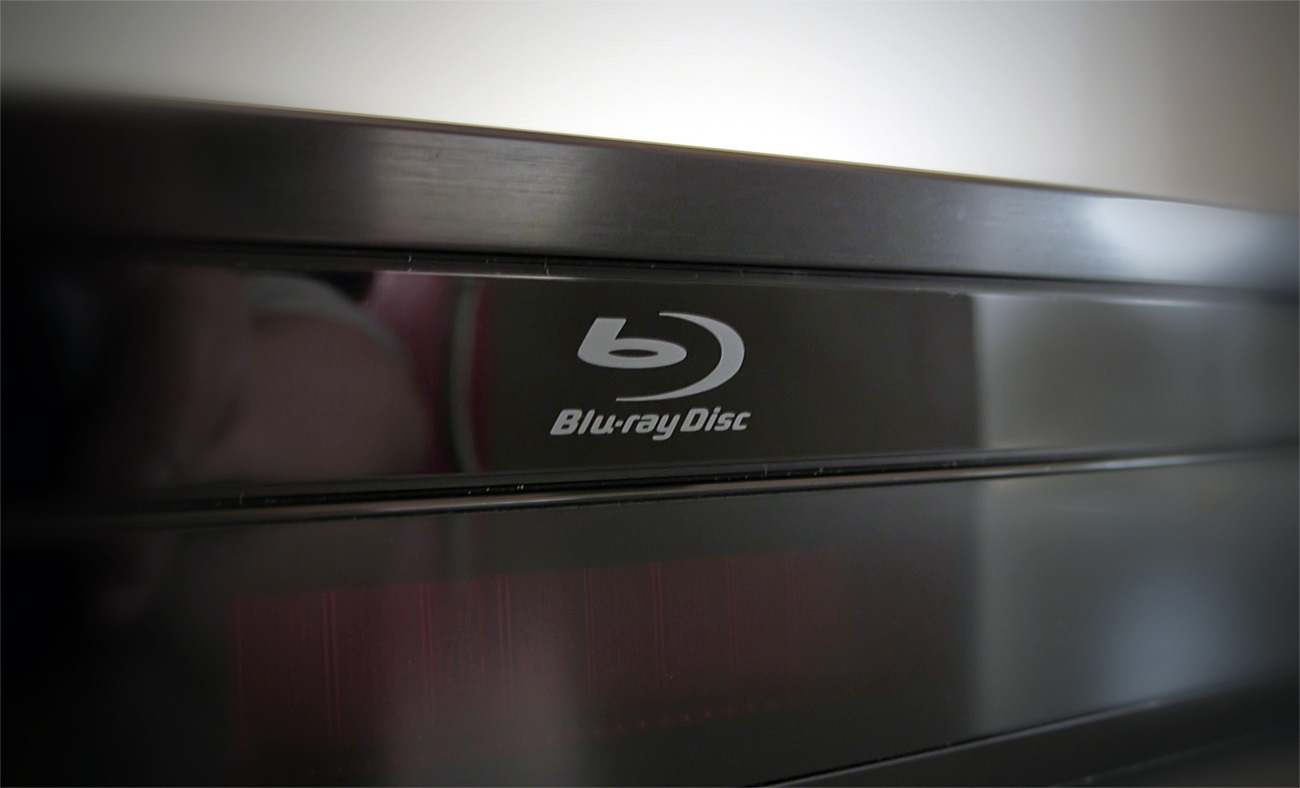 |
| Pioneer BDP-140: cheap looking front |
BTW, Pioneer didn´t manufacture it, it was built for them by Chinese manufacturer TCL. That might be one of the reasons why several people at for example Amazon.com reported that the drive emits loud noises, that the menu of the player has faults or that the software embedded in the player crashes often - they don´t trust the Chinese even though they have been manufacturing high quality devices for years. I however have not witnessed something like this in the one month I´ve used it: for me it has been working without flaw, played every disc and every file I´ve fed it with so far. The drive is fast and doesn´t emit loud noises, the player also doesn´t get very warm. In short: since I got it it has been working very reliably.
 |
| Pioneer BDP-140 CD playback |
 |
| Pioneer BDP-140 SACD playback |
 |
| Pioneer BDP-140 jitter CD playback |
As you can see on the RMAA charts the BDP-140 measures almost as well as the DV-610; jitter performance has been improved and I´m sure that it´s 100% inaudible. With CDs the sound through its analogue output is equally impressive: as detailed and defined as the reference it only shows a lack of power at the presence range to some extent. I assume that this somewhat laid back sound is also the reason for a recessed stage - but when I say "somewhat" I really mean that it´s hardly noticeable at all. The stage for example is as wide and deep as the reference files yet a tiny bit distant because of aforementioned reasons. The slightly diminished mids are also responsible micro dynamics losing a small part of their appeal. These are the only flaws I could find because it doesn´t have any problems with timing, snap, transients or speed. Resolution and details are top-notch, it also retains the reference files' character. I wish I could tell you that SACD sounds better, I can´t though because it sounds exactly like CD. Just like the DV-610 the BDP-140 resamples DSD to 24/88.2 - but apparently not as well. Taking other reviews I´ve read to their logical conclusion I´d like to point that even the digital output won´t reveal as much of the music as the analogue output of the DV-610. But I´m complaining on a high level... because consider this: the engineering focus wasn´t on analogue output and it still sounds that well? Above I wrote that it seems to be constructed without 'love'... as it turns out you won´t need emotions to create well sounding devices, apparently you´d 'only' need engineering skills! Congratulations, Pioneer:
CD/SACD playback
Sonic Balance:

Dynamics:
Resolution:

Stage / Ambiance:
Character:
Update 17.04.2013: Over half a year has passed since purchasing this BluRay Player. I would love to write that something dramatic has happened (no, I wouldn´t) but this player still performas as expected. Not one Disc it had to play during those seven months has malfunctioned, it didn´t matter if it was a BluRay, DVD, CD or SACD. There has been one complete crash of its system software which was caused by an error I made myself (I was trying out video encoding and created a faulty encoding). Furthermore, during those seven months I´ve come to love its remote. It feels wonderful in my hand (because of mixture of plastic/aluminum), has every button I wish for it to have and seems to have an incredibly powerful infrared light as I can point it anywhere with the player receiving every command. The result is that I can still recommend it, if you should find it anywhere go buy it.


