Showing posts with label RMAA. Show all posts

Tuesday, July 30, 2013

Measurement section for the article 'Review of the FiiO E07K 'Andes' / Avinity USB DAC Mobile (& FiiO L7)'

Fancy graphs (measurements)

This article is part of a bigger article, 'Review of the FiiO E07K 'Andes'  / Avinity USB DAC Mobile (& FiiO L7)' and they can be enjoyed in a better way if read side by side. I therefore recommend to click this link here to read the first part as well. ATTENTION: if an engineer reads this and finds an error, is able to offer some additional, meaningful measurements or anything else, please notify me.

Headphone output

Fig. I. FiiO 'Andes', headphone out, four different headphones
with different impedances, 
USB +6 dB gain, volume setting 50
Fig. II. FiiO 'Andes', frequency responses, USB +6 dB gain, volume setting 50
Fig. III. FiiO 'Andes', channel separation, USB +6 dB gain, volume setting 50
Have a look at fig. II. where you can witness (or not) the effect several headphones, featuring impedances from 16-300 Ohm, have on the headphone output of the Andes. The small load of 16 Ohm of the Sony MDR-W08 is the most challenging, yet the FiiO doesn´t display any frequency deviations, indicating a fabulously low output impedance. Please note that I connected the Sennheiser HD-600 just for comparison, the E07K is unsuited for these demanding headphones (sounding thin, flat and 'tiny' driving them). Channel separation (fig. III.) is at a very good -70 dB for the 16 Ohm load and consistent over the whole frequency band. The chart (fig. I., pictured just for completeness) indicates distortions driving the smallest load, and, oddly enough, stronger intermodulation distortions on the 60 Ohm load than the 32 Ohm load.

Fig. IV. FiiO 'Andes', intermodulation distortion, USB +6 dB gain, volume setting 50
Fig. V. FiiO 'Andes', total harmonic distortions + noise, USB +6 dB gain, volume setting 50
Low frequency IMD (fig. IV.) are strongest with the 60 Ohm Koss PortaPro; I don´t know the reason for it and I´d be very glad if someone could explain it to me. If I understood it correctly, these are THD really, not related to the interaction of the 60 Hz / 7000 Hz testtones. Much more interesting should be the intermodulation products above 7 kHz which are below -100 dB. Total harmonic distortions (fig. V.) are below -90 dB at all times, this should be inaudible. Generally, odd order distortions are dominating, if they´d be audible you´d probably listen to a more aggressive and crisper sound signature.

Line-out (using FiiO L7)

Fig. VI. FiiO 'Andes', RMAA interpretation chart, line-out, 96 kHz, +6 dB gain, 0 dBfs
Fig. VII. FiiO 'Andes', frequency response, line-out, 96 kHz, +6 dB gain, 0 dBfs
Fig. VIII. FiiO 'Andes', noise floor, line-out, 96 kHz, +6 dB gain, 0 dBfs
Fig. IX. FiiO 'Andes', THD + noise, line-out, 96 kHz, +6 dB gain, 0 dBfs
Attaching the FiiO L7 one gains a true line-out for the DAC function. The voltage level of this output is at supposedly 1.35 Volts. As you can see on the chart where RMAA interprets the measured values (fig. VI.) the performance of the FiiO E07K 'Andes' is excellent throughout when used as a DAC. Frequency response (fig. VII.) misses only 1 dB at 20 Hz and 0.2 dB at 20 kHz, inaudible and certainly not responsible for its sound signature. All the same, I would love to know what those distortions from 120 Hz to 4 kHz are (fig. VIII.). They are present on the measurments for the headphone out too (are they USB related?), only buried by a higher noisefloor. Speaking of the noisefloor... it is at a respectable -108 dB, the Wolfson DAC has a typical signal-to noise ratio of 116 dB for 96 kHz but it isn´t the responsible part here; the operational amp MX97220 with its SNR of 112 dB is. Considering this I´d say that -108 dB are pretty damn good.

FiiO ASIO driver

Fig. X. FiiO 'Andes', RMAA interpretation chart, ASIO driver
configured to 44.1 kHz, playback at 96 kHz
Fig. XI. FiiO 'Andes', frequency response, ASIO driver
configured to 44.1 kHz, playback at 96 kHz
The RMAA interpretation chart doesn´t look too bad (fig. X.). Upon closer look however it is revealed that the ASIO driver resamples when playing a stream it hasn´t been configured for (fig. XI.). In this case, a 96 kHz signal is resampled to 44.1 kHz. Suspiciously, the resampled frequency response looks exactly like a response caused by the bad resampler built into the Windows audio engine which is why I assume FiiO's driver not to be a 'real' ASIO driver at all.

Fig. XII. FiiO 'Andes', IMD, ASIO driver
configured to 44.1 kHz, playback at 96 kHz
Fig. XIII. FiiO 'Andes', THD + noise, ASIO driver
configured to 44.1 kHz, playback at 96 kHz
Figs. XII. & XIII.: atrocious resampling causes audio to distort severely. Distortions, no matter if THD or IMD, are just below -70 dB, making them very likely audible. This is not how an ASIO driver should perform. BTW, the imbalanced noisefloor is caused by using the Soundblaster X-Fi HD USB as a recording device; its left channel doubles as the microphone input on the front whose amp is always active, emanating noise.

Fig. XIV. FiiO 'Andes', THD + noise, FiiO driver,
WASAPI, configured to 44.1 kHz, playback at 96 kHz
Fig. XV. FiiO 'Andes', THD + noise, generic MS driver,
WASAPI, configured to 44.1 kHz, playback at 96 kHz
Just for comparison I´ve added two charts showing the FiiO driver (fig. XIV.) and the generic MS driver (fig. XV.) playing back 96 kHz WASAPI streams. In both cases WASAPI was instructed to resample everything to 44.1 kHz, which can be circumvented however by programs using the exclusive mode WASAPI offers. It enables direct access to the driver through the WASAPI software / hardware interface. There isn´t any difference between them, yet this was one of the few instances where the FiiO driver actually worked using WASAPI, it really was a rare incident. I´d like to use these two examples to make it clear to you that you can safely use the generic driver Microsoft automatically installs when you connect the Andes for the first time.

Line-in

Fig. XVI. FiiO 'Andes', RMAA chart, line-in, 4300 Ohm load
Fig. XVII. FiiO 'Andes', THD + noise, line-in, 4300 Ohm load
These measurements were made in January 2013, shortly after receiving the Andes. They serve to show that those distortions visible in the graphs for the line-out are absent, I assume that those are indeed related to the USB connection being active (I´d still love an explanation though). THD + noise construe that the highest volume setting of 60 should be avoided (fig. XVII.); while distortions stay below -90 dB I´m quite sure that RMAA is unable to measure this properly. Because I don´t know how to measure everything it´s entirely possible that some other procedure would disclose stronger distortions. I´ve opted to present the THD + noise graph only, everything else (IMD, frequency response, dynamic range, etc.) looks just like the line-out using USB.

Jitter
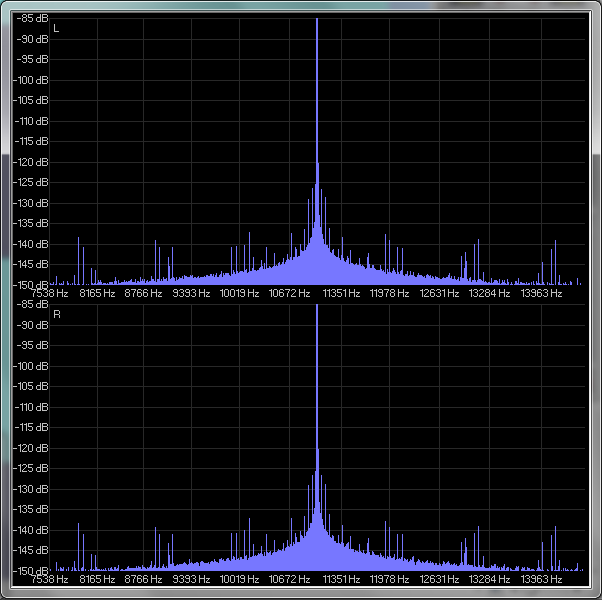
Fig. XVIII. FiiO 'Andes', jitter, 44.1 kHz, line-out
Fig. XIX. FiiO 'Andes', jitter, 96 kHz, line-out
German audio magazine AUDIO measured in their tests of the Avinity USB DAC Mobile a jitter performance of not-very-good 2000 ps. I really wonder if something peculiar happened there, because on my unit jitter is absent. Figs. XVIII. & XIX. demonstrate that the E07K has some amount of random low frequency jitter (the spreaded base around the 11.025 Hz &12 kHz sines), always below -110 dB. Spikes of high frequency jitter are at an even lower -125 dB. I don´t know very much about audibility of jitter, yet I´m 100% confident that these results are completely insignificant. To me this is very interesting because the FiiO transfers data using the Isochronous Transfer with Adaptive synchronization, the USB Descriptor Dumper from Thesycon confirms this. According to countless people, this mode is supposedly extremely susceptible to jitter. From all you can read online one gains the impression that it´s detrimental to general sonic performance, unsuited for perfect audio playback, yadda, yadda, yadda. Now listen to me very carefully: IT IS NOT TRUE. At least not with every interface. The Isochronous Transfer with Asynchronous Synchronization would in theory be superior, my X-Fi HD USB uses it, my E-MU 0202 USB used it. Both interfaces do or did not jitter, exactly like the FiiO. A fact that serves to exhibit that not the mode is important but how it is implemented. Numerous cases using adaptive synchronization have occasionally created horrible amounts of jitter on other interfaces, yet the only conclusion you´re allowed to draw is that those interfaces have been constructed sloppily... and not that the mode itself is faulty.

Impulse

Fig. XX. FiiO 'Andes', impulse response, 44.1 kHz
You know, I really like seeing those perfect, symmetrical impulse responses (fig. XX.), anything else wouldn´t have felt this trustworthy. I refer to impulses lacking any pre-ringing, in other peoples' ears they might sound 'analogue' but to me they sound awkward (remember, I can experiment with them using iZotope RX) Furthermore, they introduce phase distortions and horrible post-ringing so it´s good that FiiO avoided them.

Last update: 18.09.2013

Monday, November 05, 2012

Review: Pioneer BDP-140

You´re about to read the penultimate out of nine reviews. You don´t need to read them all, just pick the unit that seems to be the most interesting to you. In the weeks to follow I´ll review the following units: Kenwood DP-5090, Pioneer DV-610, Sony CDP-470, Pioneer BDP-140, iRiver IMP-550, Sony MZ-R 55, Sony MZ-R 37, Sony NW-A 1000 and the Sansa Clip+. Stay tuned and enjoy the new review: the Pioneer BDP-140! I also implore you to read the article describing my rigorous testing methodology before you actually start reading this one.

Pioneer BDP-140 (picture copyright by Pioneer)
The Pioneer BDP-140 is my first BluRay player and the most recent of the bunch. My boyfriend bought it for me last month as a present for my birthday. Until a year ago I didn´t spend one minute on BluRay simply because the picture quality of the DV-610 was so wonderful with upscaled DVDs. At the same time I however noticed that special DVD editions were becoming less common; special or Collector's editions started to be produced for BluRays instead. Point is, I really like to put those nifty looking special editions onto our cupboards (or into drawers, the cellar... where there is available space). I´m a collector and DVD started to become extinct in regard to special editions so I concluded that I would finally need a BluRay player. In September 2012 the BDP-140 was going to be replaced by the BDP-150 (its very similar successor) and as a result it became very cheap: my boyfriend bought it for roughly 100,- Euros (compare that to the 170,- Euros for the DV-610).

Pioneer BDP-140 from inside
Its manufacturing quality is reflected by its price range: compared to the DV-610 it has been reduced somewhat. While the BDP-140 is bigger than the DV-610 it weighs roughly half, probably because everything inside is smaller, less complex with a much higher level of integration. The power supply board for the DV-610 for example is three times bigger, its PCB is twice as big and also contains more parts. When BluRay players first hit the market their cases were filled to the brink with parts, they even needed fans to cool their power hungry hardware. The BDP-140 has only one D/A-converter (a fairly recent Asahi Kasei 4430) which also seems to include the complete output stage... yes, it´s true, I can only see six additional parts for the output in the Service Manual. BUT: I might be talking bullshit here so I´d be thankful if someone could enlighten or correct me. Anyway, the DV-610 was still aimed at analogue playback, it could pass six  analogue channels for Dolby Digital, DTS, SACD and DVD-Audio through its RCA outputs while the HDMI-output felt like a fancy gimmick in comparison. The BDP-140 on the other hand has only digital interconnections in mind, achieved through its modern HDMI 1.4a output. Few people know that it´ll also allow digital output of SACD signals through its optical S/PDIF output with 24/88.2 (2.0). it´s one of only two players on the market able to do that. EDIT: The last two generations of Pioneer BluRay players apparantly have been able to do that, I became aware of it thanks to members from the AVSforum. Since everything can be done digitally the analogue output seems to serve as some kind of spare. Apart from being extremely lightweight it also doesn´t look good from the outside or the inside. The front and the mechanical parts (drive) feel like rather cheap and not well-manufactured plastic and the whole layout appears to lack sophistication and care. The impression I have is that this player is a mass-produced, off-the-shelf creation constructed without love - or so it seems.

Pioneer BDP-140: cheap looking front
BTW, Pioneer didn´t manufacture it, it was built for them by Chinese manufacturer TCL. That might be one of the reasons why several people at for example Amazon.com reported that the drive emits loud noises, that the menu of the player has faults or that the software embedded in the player crashes often - they don´t trust the Chinese even though they have been manufacturing high quality devices for years. I however have not witnessed something like this in the one month I´ve used it: for me it has been working without flaw, played every disc and every file I´ve fed it with so far. The drive is fast and doesn´t emit loud noises, the player also doesn´t get very warm. In short: since I got it it has been working very reliably.

Pioneer BDP-140 CD playback
Pioneer BDP-140 SACD playback
Pioneer BDP-140 jitter CD playback
As you can see on the RMAA charts the BDP-140 measures almost as well as the DV-610; jitter performance has been improved and I´m sure that it´s 100% inaudible. With CDs the sound through its analogue output is equally impressive: as detailed and defined as the reference it only shows a lack of power at the presence range to some extent. I assume that this somewhat laid back sound is also the reason for a recessed stage - but when I say "somewhat" I really mean that it´s hardly noticeable at all. The stage for example is as wide and deep as the reference files yet a tiny bit distant because of aforementioned reasons. The slightly diminished mids are also responsible micro dynamics losing a small part of their appeal. These are the only flaws I could find because it doesn´t have any problems with timing, snap, transients or speed. Resolution and details are top-notch, it also retains the reference files' character. I wish I could tell you that SACD sounds better, I can´t though because it sounds exactly like CD. Just like the DV-610 the BDP-140 resamples DSD to 24/88.2 - but apparently not as well. Taking other reviews I´ve read to their logical conclusion I´d like to point that even the digital output won´t reveal as much of the music as the analogue output of the DV-610. But I´m complaining on a high level... because consider this: the engineering focus wasn´t on analogue output and it still sounds that well? Above I wrote that it seems to be constructed without 'love'... as it turns out you won´t need emotions to create well sounding devices, apparently you´d 'only' need engineering skills! Congratulations, Pioneer:

CD/SACD playback

Sonic Balance:
Dynamics:
Resolution:
Stage / Ambiance:
Character:


Update 17.04.2013: Over half a year has passed since purchasing this BluRay Player. I would love to write that something dramatic has happened (no, I wouldn´t) but this player still performas as expected. Not one Disc it had to play during those seven months has malfunctioned, it didn´t matter if it was a BluRay, DVD, CD or SACD. There has been one complete crash of its system software which was caused by an error I made myself (I was trying out video encoding and created a faulty encoding). Furthermore, during those seven months I´ve come to love its remote. It feels wonderful in my hand (because of mixture of plastic/aluminum), has every button I wish for it to have and seems to have an incredibly powerful infrared light as I can point it anywhere with the player receiving every command. The result is that I can still recommend it, if you should find it anywhere go buy it.

Saturday, November 03, 2012

Review: Pioneer DV-610

You´re about to read the seventh out of nine reviews. You don´t need to read them all, just pick the unit that seems to be the most interesting to you. In the weeks to follow I´ll review the following units: Kenwood DP-5090, Pioneer DV-610, Sony CDP-470, Pioneer BDP-140, iRiver IMP-550, Sony MZ-R 55, Sony MZ-R 37, Sony NW-A 1000 and the Sansa Clip+. Stay tuned and enjoy the new review: the Pioneer DV-610! I also implore you to read the article describing my rigorous testing methodology before you actually start reading this one.

Pioneer DV-610
The Pioneer DV-610 is the first SACD player I bought. I already had collected numerous SACDs beforehand for years without being able to play them back. I knew that I would own a SACD player the moment they became affordable - which finally happened in 2009 when I bought this one for 170,- Euros. But I wanted more and this player appeared to be the device best suited to my needs: I wished to replace my ageing JVC DVD player with a technologically more advanced machine, a player that would read every medium I´d throw at it with ease (including my SACDs). I also wanted to have an HDMI output for possible future use with a modern display. Last year in July we finally bought our first flat screen and for the first time I witnessed a digitally transmitted picture having a quality I didn´t expect coming from DVD. Responsible for upscaling to 1080p is a chip manufactured by Mediatek, this chip (MT1389) also does DSD decoding, mp3 decoding, MPEG 2 / MPEG 4 decoding and whatnot. D/A conversion is achieved by three Burr Brown PCM 1742KE (released in 2005 and still in production), an up-to-date delta-sigma converter incorporating functions into only one IC for which the Kenwood DP-5090 and the Sony CDP-470 needed up to five seperate ICs. It´s also quite expensive when I consider that the Pioneer DV-610 was only a budget model. For SACD its potential is partially unused since the Mediatek chip resamples DSD from 1/2.8224 down to 24/88.2. The huge amount of parts for D/A converter and output stage present in the CDP-470 and the DP-5090 is absent, the Pioneer achieves the goal of converting and amplifying with a much simpler layout.

Responsible for good picture quality at 1080p
Manufacturing quality is ok but nothing to get mad about. The DV-610 is lightweight, its front is made out of plastic and the drive mechanism (by Orion) doesn´t feel too robust (though it still works very well, reliably and fast). It´s certainly not manufactured as well as the Kenwood DP-5090 which probably is the reason that this player and its predecessors didn´t fare too well in reviews when used as a CD/SACD player. Several audio magazines here in Germany compared it against much more expensive players (heavier, more parts, etc.) and - surprise! - they fared much better. As we all know, weight, manufacturing quality and a high price tag are all important for audio, aren´t they? To find out if that´s the truth let´s have a look at my measurments which have been done seperately for CD and SACD:

Pioneer DV-610, CD
Pioneer DV-610, SACD
Pioneer DV-610, jitter, CD
Apart from the amount of jitter the measurments are excellent throughout, noise or distortions are absent. Jitter indicates a mixture of low frequency jitter (the "spread" around the 11.025 Hz sine) and periodic high frequency jitter. However, everything is well below -110 dB so it´s probably inaudible. Measurments are slightly better when the test signal is played back on SACD - this is exactly as it should be since it offers higher resolution. The SNR and Dynamic Range show the skill with which the engineers designed the PCB layout: the DACs are rated at -106 dB, I measured -104 dB which is a fantastic result. Still, I´m slightly disappointed because 20 Bit output quality theoretically allows for a SNR of -121 dB. I know, I know, I´m complaining on an extremely high level, furthermore if someone needs to be blamed it´s Burr Brown for constructing such 'noisy' DACs in the first place.

CD playback
CD material shows dynamic capabilities close to the reference files (transients seem a tad too timid), the stage is well represented albeit a bit too compact and not particularly stable; instruments tend to change their place. Furthermore, the timing is not very good for lower frequencies: bass sounds as if it "follows" the rest of the frequency spectrum where timing and snap are impeccable. Overall EQ displays a little fondness for bloated and too thick bass while treble is diminished a bit which hampers detail and resolution to be reproduced properly. But there are advantages as well: this player won´t ever sound strident, sibilant or shrill, it also won´t sound slow or boring because apart from the bass mids and treble show a lot of speed with a particularly enjoyable amount of snap. Yes, this player really grooves. Sonic colour is the area where the player clearly surpasses the reference; it adds a nice voluptous and engagingly wet yet precise euphonic sheen to the music. This sheen naturally is artificial and not the original but it´s still jolly good fun, therefore:

Sonic Balance:
Dynamics:
Resolution:
Stage / Ambiance:
Character:


SACD playback
When playing back SACDs the Pioneer DV-610 sounds... well, it doesn´t really sound. It was extremely difficult for me to hear any difference to my reference files at all. Dynamics are almost perfect, the timing problem audible with CD material vanished upon playing SACD. Staging sounded like a carbon copy of the reference, just like resolution, level of detail and colour. Still, stage and imaging on occasion show some tiny difference, sometimes instruments seem to be placed rather strange with the left channel sounding as if coming from behind (don´t know how else to describe it). But instead of creating a euphonic colour the player now sounds perfectly neutral and completely retains the character of the recording. Any deviation I´ve just described is tiny, but I have to mention it and I will therefore substract one point for dynamics & stage. The pristine sound with SACDs leaves me with only one possible rating, the highest I´ve ever given to a player:

Sonic Balance:
Dynamics:
Resolution:
Stage / Ambiance:
Character:


Pioneer DV-610 close-up

Monday, October 29, 2012

Review: Sony NW-A 1000


You´re about to read the fifth out of nine reviews. You don´t need to read them all, just pick the unit that seems to be the most interesting to you. In the weeks to follow I´ll review the following units: Kenwood DP-5090, Pioneer DV-610, Sony CDP-470, Pioneer BDP-140, iRiver IMP-550, Sony MZ-R 55, Sony MZ-R 37, Sony NW-A 1000 and the Sansa Clip+. Stay tuned and enjoy the new review: the Sony NW-A 1000! I also implore you to read the article describing my rigorous testing methodology before you actually start reading this one.

Sony NW-A 1000
I admit it: I´m a Sony fan. Sue me. What other reason would I have to purchase a portable player that is forced to use the dreaded piece of software called SonicStage? Yeah, go ahead and ask "Why?" I wanted to try out something different than mp3 or AAC: because of my good experiences with ATRAC DSP Type-R I thought that the more modern ATRAC3Plus would be an improved version combining less space requirements with equally high sound quality. Boy, was I wrong! After I received the used NW-A 1000 I started to convert several albums to ATRAC3Plus using 256 kBit/s CBR (VBR doesn´t exist) with SonicStage and transferred them to this glossy gadget. While I admired the amount of definition and crispness upon listening to it I noticed a lack of impact, punch and snap. All the transients seemed to have been transformed into cute kittens instead of the wild cat they were before encoding. It didn´t take long for me to discover that the codec itself was the culprit: Sound Forge offers the very same ATRAC3Plus codec as an encoding option (why I didn´t think of testing the codec before purchasing the NW-A 1000 escapes me). With these files encoded by Sound Forge I was able to find out that the codec is neither transparent at 256 kBit/s nor at 352 kBit/s (both have exactly the same quality but the latter uses more space for no reason). Sound Forge also offers a "High Quality" setting for the codec which takes a bit longer to encode; only then will the ATRAC3Plus codec be finally transparent. SonicStage sadly doesn´t offer this option when transferring from PC to portable player, it just encodes with "Normal Quality". You could now say "Why don´t you encode with Sound Forge all the time?" I would if I would keep tagging options! Without tags embedded in the files the Sony won´t show anything on its display, I wouldn´t know what album I´d be picking. CDDB tagging doesn´t help either since SonicStage always messes up the tags (how can someone engineer a software as stupid as this one?). After a firmware update it was able to play AAC files - but that didn´t help either because SonicStage ignores embedded AAC tags, it has to tag itself using its own scheme. The only option I have been left with is to use mp3 which I finally accepted begrudgingly - I´ve started to use 256 kBit/s or 320 kBit/s files CBR (VBR drains the battery faster) using the -q0 switch... it takes forever to encode but the difference in quality is audible (I did a DBT to confirm this).

Sony NW-A 1000 backside: heavy metal
When it was released to the market in 2006 Sony very much desired for it to kill the iPod. Several journalists indeed described the NW-A1000 as being capable of being an "iPod killer" and Sony did everything in their power to make it last inside a highly competitive market being ruled by Apple products since 2001 (for starters they should have terminated SonicStage). As typical for Sony they approached this goal by assuming that customers would be interested in a high quality device that was combined with wonderful sound. It is in fact one of the best manufactured portable players I´ve ever seen, everything fits tightly together, the two (!) transparent layers of plastic acting as the upper shell with the backside being constructed out of thick aluminum. When you touch a button the player doesn´t light up immediately, it takes half a second to light up completely. The same happens when it deactivates or saves power: it slowly dims lights down, with different timings for display and buttons, creating a nice effect. Everything about this player suggests "I´m a high quality device, better than the iPod - love me and abandon Apple." Its design even won a prestigious award from the International Forum Design (I still don´t find it THAT beautiful). It looks and feels like an expensive & heavy space age cigarette case, revealing its true function only at the touch - nifty.

Sony NW-A 1000 closeup
When I took it apart I found that the inside looks pristine as well: Sony seems to have used a bunch of quality parts for it. One example is its D/A converter which is a Burr Brown PCM1772 (still in production), a 24/48 capable high quality converter developed by Texas Instruments with portable gear in mind. Sony combined it with 16 MB RAM and an AN17020A from Panasonic, a headphone amp with additional line-out function. Because in 2006 solid stage cards were still expensive Sony decided to use the Microdrive, produced by IBM. Should a person desire more space than the 6 GB the NW-A 1000 provides one could use of course a CF Card with 16 GB or more (they are really cheap nowadays) - sadly that doesn´t work; the player will accept it but SonicStage won´t. BTW, the Sony really does put out signals with 24 bits - but only for AAC and ATRAC3Plus, not with mp3. Together with the line-out function this creates a tiny portable high end machine. Kudos to Sony for wisely choosing the best hardware the price range allowed. But since customers are more interested in convenience than sound quality this strategy didn´t work because in the end Sony wouldn´t take the market by storm with this player.

Sony NW-A 1000 measurments (line-out)
Sony NW-A 1000 jitter (with AAC encoded test file)
For a portable player using a lossy compression scheme it behaves quite well. Measurment differences between mp3 or AAC were negligible, ATRAC3Plus encoded test signals on the other hand measured horribly, especially at distortions (not caused by the player, the codec just sucks). Jitter however is not so good, the spread around the sine at 11.025 Hz indicates low frequency jitter and has the potential to become audible. I doubt that all other peaks are high frequency jitter, most likely these spikes have been introduced by lossy compression.

Sony NW-A 1000: glossy perfection
How does it sound? It's hardly noticeable that the NW-A 1000 reduces impact of transients and that snap & punch do not completely sound like the reference. The same goes for the speediness of the material: it´s a bit slower compared to the source. But all of this is only valid when music is loud; should it be soft everything is allright. The frequency response diminishes deep bass and treble marginally which might also be responsible for an insignificant loss of resolution and definition. The amount of details on the other hand is pure bliss and a perfect match. Staging sounds like a carbon copy - except for a slight forwardness of everything that´s in the center. It also sounds instable, instruments are wandering around a bit and changing their size slightly. The result of this characteristic is that the NW-A 1000 sometimes sounds "small", too nice and too confused. Well... I have to say that I was somewhat disappointed, I expected it to sound better. Don´t get me wrong, it fares really well, certainly better than the Sansa Clip+, the iRiver IMP-550 or the Kenwood DP-5090. We also have to consider that those three players were reviewed with lossless material while this one used lossy mp3 files! But I still had hoped that this unit would finally be THE ONE with the perfect mixture of convenience, available space and sound. It´s really good and I´ll probably use it often... but I nevertheless will seek an even better player.


Sonic Balance:
Dynamics:
Resolution:
Stage / Ambiance:
Character:

Sony NW-A 1000


Related Posts Plugin for WordPress, Blogger...

The Socials