Showing posts with label james horner. Show all posts

Wednesday, September 05, 2012

The Need to Panic: the disease 'Loudness War' is spreading!


Introduction

Hello again my little Darlings! Today I will stand witness, not for the prosecution but for crimes against good audio quality. I will present proof that something that once was healthy now suffers from an illness so severe that no one knows if it will ever be able to recover again. The "something" this article is about is called audio quality and the illness it currently suffers from has been known for decades as 'Loudness War'. Besides presenting numerous examples I also argue that this 'Loudness War' is partly responsible for declining sales of published music (-> CDs, downloads, etc.) and that it´s a crime against peoples' nerves by producing static. A true disgrace to the technical capabilities of the CD format and its possible achievable dynamic music produced right now exhibits a limited dynamic range comparable to the Edison cylinder from 1909. Roughly 15 years ago this illness was mainly contained in the country of "Pop/Rock/Rap/Soul" but in recent years has been spreading into the land of "Scores/Classic/Jazz". Like many other diseases it behaves without intelligence or emotion, its only motivation is greed. Symptoms are as follows:

  • brickwall limiting
  • awkward frequency response
  • audible distortions
  • absence of natural dynamic
  • 'life' seems drained out of the music

The ultimate fate of patients affected is death causing in turn the demise of the music industry as we know it. Not all of the symptoms above need to be present though in order for the patient to be described as being suffering from 'Loudness War'. Another thing: as with every other malady mild and severe cases need to be distinguished. The patients used as examples will be subjects recently exposed to this abnormal condition, furthermore these patients will come solely from the land 'Scores'. So let´s start by having a look at two subjects where one is not affected and the other one is:

Subject 1: 'Lord of the Rings: Fellowship of the Rings' - not affected
Subject 2: 'The Dark Knight Rises' - severely affected (already treated with "ReplayGain" here)
Compare the two individuals above: Subject 1 (Birthdate: 2001) doesn´t show any signs of the horrible disease, dynamic peaks are intact, loud parts of the music are loud but not brickwall limited while soft parts are delicate. Frequency response (not pictured) behaves completely natural. Subject 2 (Birthdate: 2012) shows strong signs of brickwall limiting, absence of natural dynamic and an awkward frequency response (pictured further below).

History of the Illness

What are you saying? I´ve been too fast? Where does the disease come from, you want to know... Well, it has been in existence for quite some time. It first emerged in the '60s in an attempt to make music as loud as possible considering the very limited abilities of the then-in-use vinyl distribution format. First Phil Spector and then Motown Records tried to squeeze out every single bit of Loudness in order for their products to be perceived better than others while also combating the poor high frequency performance of then present radio. This continued for a while and wasn´t remotely as severe as it is today - the technical gadgets available to us today were simply not existing all those years ago. Surprisingly, when the CD was introduced in 1982 the affliction turned dormant for a while, probably because people had to learn how to work with a digital (absolute) format. But at the beginning of the '90s the 'Loudness War' returned with an unparallelled force and it has been worsening ever since. More and more people are reporting rather extreme cases that even got mentionend in articles from mainstream magazines.
Who is responsible? I call them Men In Suits (abbreviated as MIS) who mostly are managers (-> investors / bosses), their natural habitat being the executive floor in huge buildings containing the offices of music publishing businesses like Sony Music, Universal or EMI. These MIS firmly believe that something that is louder will be bought by more people, hence will be generating more profit so that they can purchase another Porsche. They hide their desire for profit under a decent looking mask and say sentences like "The public wants it so". In their defense they actually have a tiny point: if out of two musical objects one is louder than the other the louder one will be perceived as sounding better, this has something to do with how our ear works. Of course, MIS are using this fact soleley to hide their greed. Anyway, Mastering Engineers (abbreviated as ME) are the poor blokes ending up spreading the desease, sucking every dynamic out of recordings and turning them into frightful sounding monsters. They are actually fully aware of what they are doing, all the while claiming that they are unable to do something about it.

Examples

Now back to the symptoms, shall we? As described above brickwall limiting and dynamic mutilation are not the only things 'Loudness War' does to audio quality. Another very audible symptom are strange frequency responses prompting equally strange reactions in listeners. In an effort to sound well on an iPod or a cellphone the overall frequency response has been changed into something that barely resembles natural sound. How would an ideal frequency response look like? Well, it would have the form of a curve decreasing towards higher frequencies. A curve like that takes into account how us humans perceive sound: low frequencies (bass) can only be perceived with great difficulty by our ear, higher frequencies (treble) are less of a problem. At the same time our ear can hear exceptionally well at frequencies in the middle (1.000 to 3.000 Hz). Recordings not affected by the health impairment adhere to this concept not by countering our hearing sensivity but by presenting a pleasing overall sonic package. Have a look at two examples:

A perfect and idealized frequency response
Subject 3: 'Superman Returns' - extremely close to the ideal above
You can see how gradually the curve declines towards high frequencies. You can also see that Subject 3 'Superman Returns' (Birthdate: 2006) and its frequency response match the idealized response almost perfectly. The only exceptions are missing deep bass below 65 Hz, rendering the perceived sound to be "faster", and a little bump at roughly 14.000 Hz. That 'mountain' is responsible for the amount of air this score presents. Bumps or "Mountains" as small as these represent a clever method to infuse audio quality with something of a "sonic character". Following now are two examples of subjects suffering from an extreme case of frequency distortion with their condition being critical:

Subject 4: 'Salt' - critical deviations

Subject 2 again: 'The Dark Knight Rises' - awful
Subject 4 (Birthdate: 2010) is able to serve as a very prominent example how serious 'Loudness War' can affect audio quality. The deviations in frequency response cause such unbearable suffering for the patient that even its description prooves problematic. Bass and treble are extremely exaggerated while the mids are recessed. Frequencies around 1.000 Hz  on the other hand are amplified to counter the extreme gain at both frequency ends. Combine that with the effects of excessive brickwall limiting (not pictured) and you are watching a patient being close to death. A skeptical person might now argue that this frequency response is caused by the many synthesizers, drum pads and samplers employed for the production of this score. But one listen to the score crushes this otherwise valid argument because in places where the pure orchestra can be heard the response still presents itself as being heavily distorted. The effect on listeners is an audio quality that is shrill, piercing, lifeless, colourless and extremely unnerving. The medical state of Subject 2 is not that critical. Instead of sounding piercing it "only" sounds shrill, dull, flat and full of 'droning' bass, in short, equally unnerving. But not all is bad in the land of scores because even now there are still a few exceptions around suffering only from mild or serious but stable cases of 'Loudness War':

Subject 5: 'The Bourne Legacy' - stable
Subject 5 is dynamically not as healthy as its frequency response

Subject 6: 'The Amazing Spider-Man' - a healthy patient
Subject 6 is also dynamically in good health with only slight limiting

Subject 5 (Birthdate: 2012) presents an interesting case: while it may look like a serious affection on paper it isn´t like that in reality. This score is perfectly suited for comparison to Subject 4 ('Salt') because both movies contain similar themes, their music similar orchestration and the same amount of artificial elements. Additionally, both scores are composed and engineered by the very same persons (James Newton Howard (composing) and Shawn Murphy (engineering)). In case of Subject 5 however the frequency response is actually pretty balanced, the artificial elements are well integrated and sound non-intrusive. The slight imperfections can be treated fairly easy with an equalizer, just as well as its dynamic compression can be removed with another medicine that will be mentionend later in the section "Therapy".
Not many words need to be spend on Subject 6 (Birthdate: 2012) since it appears to be in very good health with the result that it sounds exceptionally well (A sidenote: Dear producers, composers and engineers - yes, I know that you read my blog - a review from me can be simple and positive as evidenced by those two words).

Subject 7: 'The Avengers' - an interesting case

Subject 8: 'Snow White and the Huntsman' - more or less affected like Subject 5
Subject 7 (Birthdate: 2012) is a very interesting case because it deviates in an entirely different direction by decreasing high frequencies even further, resulting in a warm and voluptuous sonic character. Apart from having the brickwall limiting symptom it showcases a very well designed and characteristic audio quality. Subject 8 (Birthdate: 2012) is an example of a patient not unlike Subject 5 ('The Bourne Legacy') with the exception that bass is much too strong and frequencies around 2.000 Hz have too much power (again to counter the strong bass). Like Subject 5 this can be treated fairly well with several medicines.

Subject 9: 'The Shadow' - a frequency response infused with character

Now let´s have a look at scores being called "remastered", the score for 'The Shadow' serving as an example for all other releases by small independent labels, in this case Intrada. A remaster can be described as something akin to the rebirth of a score, occasionally it´s easier to just re-create a patient instead of prescribing medicine to get rid of the symptoms. In many cases however "remastering" means: "make it louder". The potential buyer expects of course that the last, yet unheard detail may be uncovered... but in 90% of all cases he/she is sadly wrong. Ironically, with every current remastering the patients' condition gets more critical by adding more treble, bass and gain. Subject 9 (Birthdate: 1994, Rebirth: 2012) luckily isn´t such a case; it shows a complete lack of brickwall limiting (not pictured) and a characteristic frequency response caused by the employment of synthesizers which are producing strange noises working within the sonic context. In fact, overall audio quality is fairly high and has been improved over the first release from 1994. That one suffered from analogue, dynamic compression producing 'pumping' artifacts which are nowhere to be found here. This is a rebirth where you have MORE dynamic range than before. In my opinion the frequency response could have been a bit more on the warm side for the rebirth since a more voluptuous sound would have suited the golden tinted atmosphere of the score better. Of course, this is complaining on an extremely high level because this score has been treated very, very well during its rebirth.

Effects

During my introduction I´ve already stated some of the effects afflicted patients may have on listeners. Effects can be cumulative though that isn´t always the case. They are as follows:

  • listening fatigue
  • headaches
  • ringing ears
  • bleeding ears (unconfirmed)
  • heightened anger
  • high blood pressure
  • wrecked nerves

The most interesting effect would be listening fatigue. How to measure if someone is affected by it? Do we really know that 'Loudness War' affected patients are the cause for creating fatigue for the listener? Before we talk about it we need to distinguish between psychological fatigue and physical fatigue. The first one is predicated on the perception of Loudness by the listener only. The latter one can be caused by two things: mechanical fatigue and biochemical fatigue. As suggested by James D. Johnston in his article "Listener Fatigue and Longevity" outer hair cells might be depolarized if exposed to high loudness over certain periods of time. Secondary, the inner hair cell firing rate is proportional to loudness, meaning that if something has more loudness our ear starts to protect itself by decreasing the amount of information it is sending to the brain.
Psychological or cognitive fatigue is more difficult to describe because it´s hard to measure. But it´s safe to say that with speech signals multiband compression flattens the signal and causes a loss of articulation, prompting the brain to work harder to process the information. Dynamically compressed transients contained in recordings affected by the 'Loudness War' crush the leading edge of the signal, thereby reducing intelligibility and again forcing the listener working hard to understand its content. On the other hand, slower dynamic compression motivates the listener to regard the music playing right now as background music - it will be tuned out and ignored because it isn´t a cognitive challenge anymore (not to be confused with the aforementionend challenge of increased processing power). All of this turnes music into noise. Rip Rowan described it transparently in his article "Over the Limit":

"WHY IS THE LOUDER IS BETTER APPROACH THE WRONG APPROACH? BECAUSE WHEN ALL OF THE SIGNAL IS AT THE MAXIMUM LEVEL, THEN THERE IS NO WAY FOR THE SIGNAL TO HAVE ANY PUNCH. THE WHOLE THING COMES SCREAMING AT YOU LIKE A MESSAGE IN ALL CAPITAL LETTERS. AS WE ALL KNOW, WHEN YOU TYPE IN ALL CAPITAL LETTERS THERE ARE NO CUES TO HELP THE BRAIN MAKE SENSE OF THE SIGNAL, AND THE MIND TIRES QUICKLY OF TRYING TO PROCESS WHAT IS, BASICALLY, WHITE NOISE. LIKEWISE, A SIGNAL THAT JUST PEGS THE METERS CAUSES THE BRAIN TO REACT AS THOUGH IT IS BEING FED WHITE NOISE. WE SIMPLY FILTER IT AND QUIT TRYING TO PROCESS IT."

Another result that you need to look at: the decline of sales for the music industry. Have you noticed the recent increase in sales for the old, very outdated vinyl format? It has been stated for example by Kristina Dell in a Time Magazine article that the perceived "warmer" sound of vinyl might have to do something with the necessity of using finesse during mastering in order to work around vinyl's physical limitations regarding signal level. Compare that to the brutal sledgehammer approach applied to CDs. Declining sales happened at roughly the same time as the Loudness of CDs went to extreme levels. The big labels (--> Sony, Universal, EMI, etc.) won´t hear any of it, for them the culprit causing declining sales is easily identified as being a filesharer.
They do have a point: sales have been declining since the year 2000, the same time when mp3 and filesharing rose to mainstream prominence. Since it´s then easy to come to the filesharers-are-guilty conclusion the result was that they were starting to lobby for stronger rights enforcement. But as ME Bob Ludwig states: "People talk about downloads hurting record sales. I and some other people would submit that another thing that is hurting record sales these days is the fact that they are so compressed that the ear just gets tired of it. When you're through listening to a whole album of this highly compressed music, your ear is fatigued. You may have enjoyed the music but you don't really feel like going back and listening to it again.".
So our subconscious (hello Sigmund) might be responsible for diminishing sales since it obvisously cannot stand 'Loudness War' affected patients anymore. When we stretch this argument to its logical conclusion it´s safe to say that 'Loudness War' is a danger to the artform 'music' itself. Contrast (dynamic) creates tension, an intellectual and emotional challenge if you will, if one removes that you are left with garbage that formerly was art. Another opinion to support the theory of diminishing financial returns caused by 'Loudness War' comes from ME Bob Speer, who wrote in 2001 that "The record labels blame digital downloads, MP3s, CD burners, and others for the lack of CD sales. While there is some truth to their constant whining, they only have themselves to blame for the steady decline in CD sales. The record labels need to reevaluate what they consider to be good music. Much of the music being produced today isn't music at all. It's best described as anti-music. It's anti-music because the life is being squashed out of it through over compression during the tracking, mixing, and mastering stages. (...) It's no wonder that consumers don't want to pay for the CDs being produced today. They're over priced and they sound bad."
Additionally, Nick Southall wrote in 2006 that "Compression will continue to be abused in the pursuit of loudness for as long as the recording industry believes that louder shifts units (...) Global album sales are falling year-on-year, far less mega-million-selling records are occurring (...) and I think this is because the clamour to make music louder has made it less loveable, and in the long run loveable sells more." I´m afraid that his call for action won´t reach the people responsible for it. As the recent financial crisis has shown managers in charge of multi-million-dollar companies are rarely interested in long term profit. They strive for an easy success, achievable during a short time period (this is actually taught in college).
All these theories and opinions are supported by the Evergreen Project. There the author Chris Johnson visually analyzed spectograms from a number of the most commercially successful albums; he found out that "the more strongly they sell, the more likely it is that they will have High Contrast characteristics," meaning a wide dynamic range. In particular, speaking about the album 'Greatest Hits 1971-1975' by The Eagles he continues that "it is gratifying, but unsurprising, to discover that the single most commercially important album in RIAA history contains some of the most striking dynamic contrasts pop music's ever seen."
Granted, he talks about pop music there - but if 'Loudness War' is bad for pop how much more difficult might the situation be regarding filmscores? Those consist of recordings made with an orchestra and while slight dynamic compression always has been a part of the sound of Rock/Pop/Soul music this can´t be applied that easily to orchestral recordings. On natural instruments dynamic compression tends to be very audible since it destroys timbre and character, it simply removes microdynamics vital for recognizing them. These instruments are part of the orchestration that most of the time has been carefully fleshed out - effectively dynamic compression or brickwall limiting destroys the message of the music, as a result rendering it unsuited for the movie it was written for - shouldn´t that be avoided?

Therapy

Medicating the aformentionend patients in critical condition for symptoms of 'Loudness War' is not easy and involves spending some time with them in order to ease their suffering. Therapy consists of a lot of research and also bears the risk of hurting them even further by destroying their data integrity. Naturally, another risk is the possibility of prescribing the wrong medicine. Of equally high importance is the amount of medicine to be dosed - too much of the treatment might destroy the subjects' sonic character, e.g. render it even more unrecognizable than before. Nevertheless, treatments so far available are:

  • ReplayGain as a starting point
  • declipping (for example with iZotope's DeClipper)
  • ReLife (Terry West Productions)
  • re-processing individual channels for battling stage symptoms (for example PLParEQ)
  • re-equalization (for example with iZotope's Ozone)
  • repairing stereo field with multiband stereo imaging (iZotope Ozone again)

As you can guess those treatments are extremely expensive. Luckily, not all of them need to be administered in every case. Physicians may therefore apply treatment as they deem necessary after extensive study of the patients' medical condition. A few examples of successful cases are presented as follows:

Remember Subject 4 ('Salt') - before treatment
Subject 4 after treatment
As you can see above on the before treatment / after treatment charts, Subject 4 has been eased of its pain: Amplficiation of frequencies around 11.000 Hz has been reduced considerably as well as the overbearing bass response while mids and presence area have been strengthened. The therapy also got rid of the effects of brickwall limiting by eliminating it completely. All in all, I can say that treatment has been a success - people listening to Subject 4 aren´t complaining anymore of headaches or bleeding ears, they now are actually able to recognize the music in a non-fatiguing way.

Subject 2 ('The Dark Knight Rises') before treatment
Subject 2 after treatment
The same is valid for Subject 2. You can see how much the overpowering, 'droning' bass has been reduced, as a result presenting sonic colours for the first time. Mids around 1.000 Hz have been strengthened, the same goes for higher frequencies at roughly 4.800 Hz. The amount of amplifications at 3.000 Hz has been straightened out as well. Sadly, the symptoms for Brickwall limiting (not pictured) couldn´t be rectified completely but at least ReLife was successful in easing them greatly.

Conclusions & Opinion

I called this article "The Need to Panic: the disease 'Loudness War' is spreading". You, my beloved constant reader, might think that I´m exaggerating. You might look at the charts and think "The differences look tiny to me, they can´t be as bad as described." Should that be the case I have to tell you that you´re mistaken. While these pictures don´t look like much they contain a powerful statement: gain differences for several frequency bands between 'ill' releases and 'cured' releases happen to be as big as +/- 10 dB (for example on 'Salt' ). Additionally, the effect of transients with natural dynamic can make a difference like night and day. For subjects like 'The Avengers' or 'The Bourne Legacy' the effect of sound being not differentiated may not be that apparent - on subjects like 'The Dark Knight Rises' or 'Salt' they indeed are easily recognizable and they of all are in desperate need of being cured. If I´m extrapolating the examples given here to the entire soundtrack market it leaves us with 50% of all scores sounding well enough while the other 50% are nothing more than distorted audio garbage sounding like a Wax cylinder from 1909.

Most of the time that crap (sorry) is unleashed to the public by the big majors (--> Sony, Universal, EMI) while smaller and independent labels like Intrada or LaLaLand generally are releasing the "good", unaffected half (with some exceptions). Just for the sake of argument let´s expand this situation further into the even bigger market of mainstream releases. How can people treat 'Loudness War' affected releases with respect if even their creators won´t? What if not only filesharers were responsible as it is so often stated by the music industry? What if the 'Loudness War' had an effect too? This would be quite ironic: cranking up the volume was done in order to boost sales and not for the opposite to happen. Is it just a coincidence that sales degenerated at the same time when music got extremely loud? The big labels won´t finance research into that matter - regarding every consumer as a potential thief is much cheaper and easier. (A Sidenote: I´m not defending filesharers here - but that argument alone is insufficient). Furthermore, trying not to make music louder would require balls, something those managers or financial advisors seem to lack considering the absence of daring decisions. I can tell you this though: I have stopped buying mainstream releases because they sound like shit. I´m not even downloading them illegally. While they might be available for free at some place on the net they still sound like shit. I can also promise you that I will stop buying score releases coming from major lables if their sound quality continues to be as bad as it is now, they are a disgrace to the technical possibilities the CD offers and I won´t accept music that has been destroyed on purpose. Right now I´m buying roughly 70 CDs, SACDs or digital downloads every year (not even including DVD's or BluRay's), most of them being scores and classical music - but I cannot guarantee that this will continue indefinetely.

Enough with the ranting. I could go on and talk about mastering engineers saying "No" to 'Loudness War' even if that would mean getting fewer assignments. As you can see above they are complaning - but are they doing something about it? You may remember the statement from ME Bob Ludwig; considering his opinion it's surprising that he continues to expose music to the disease by cranking up the volume using the excuse of "The customer won´t accept anything else." If he would be true to his word he´d stop taking on those assignments. To be fair to him and others: I´m not sure if I wouldn´t behave like them if I were in their shoes; it´s easy to see oneself as a victim instead of an accomplice - and I have been a victim of my own bigotry in the past too. Anyway, this situation has to stop. An orchestra - not even one augmented by synthesized sound elements - cannot be treated as the next best Pop music release and I just don´t have the patience to 'cure' their diseases. I consciously know about this and can subsequently try to get rid of it - but what about the tens of thousand other people being unaware? They simply stop buying these releases. So I urge the people in charge to act now before you´re broke.


Sources:

experience and 'The Loudness War: Background, Speculations and Recommendations',
Earl Vickers, ST Microelectronics, first released at the 129th AES Convention, 2010

Last update: 16.07.2013

Wednesday, June 27, 2012

Sound quality differences with optical outputs - why?


For years I haven´t been bothered with digital S/PDIF connections. I basically stopped using them in 2001 when I got rid of my MD deck. This deck had been connected using its RCA digital input, only because everyone was saying that these gave superior sounding results. I never actually checked out if this was true with the result that I ignored optical Toslink in-/outputs back then. But my recent encounters with the Sony MZ-R 30 and the Sony MZ-R 900 forced me to use them again - they are the only way with which I can achieve digital copies with these MD recorders. Thankfully many of my vintage portable CD players are equipped with an optical TOSLINK interface, sometimes I also bought them for this reason. With an optical cable I can connect my PCDPs to an MD recorder to create a digital copy even including trackmarks automatically set by the MiniDisc recorder.

Optical mini-Toslink on the Sony D-335

During the last few weeks I recorded roughly twelve MiniDiscs. Some were recorded with the respective CDs played back by my Sony D-465 or the Sony D-335, some were recorded with the Creative Soundblaster X-Fi HD USB as their the digital source. To my surprise the CDs copied with those two CD players sounded different to what I´m used to, it was apparent that the sound signature had been changed somehow. The ones made with my Creative sounded pristine instead. To use an analogy: recordings from my CD players sounded like a decent analogue copy while the ones from the Creative sounded like the originals. But how can this be true? In both cases I used an optical cable that transferred its data digitally, effectively creating a second original (ignoring the lossy ATRAC compression). All the digital outputs I´ve used so far are bit-perfect meaning they won´t change the digital signal in any way. I´ve confirmed this with one of my CDs from TELARC, a rare example of a DTS-recording they released some 15 years ago. Our Sony STR-DB 830 QS is able to recognize the digital signal as DTS-encoded, it doesn´t matter which device is doing the playback. So why do I hear differences between digital signals? It just doesn´t make sense.

My optical fiber cable (copyright: Philips)

The cable you can see above is the one I´ve used for all my tests involving MD recorders and my Creative. Build quality is good... the gold plated "connectors" don´t make sense of course; the signal is pure light and cannot be influenced by the conductivity of certain metals. People seem to expect it though... what the heck, it looks nice doesn´t it? Back to the question of why I´m hearing differences. The S/PDIF protocol necessary for digital Toslink transfer has several disadvantages. The most significant is that the receiver of the signal doesn´t control it, the sender does. Because of that it must synchronize its internal clock (necessary for D/A converting) to the one contained inside the signal itself which is generated by the device transmitting it. Now in case of jitter (you knew that I would mention this, didn´t you?) introduced by an unstable or polluted clock the receiver (D/A converter or MiniDisc) won´t have a stable clock reference, in effect making jitter audible upon conversion to analogue signals. Research into this subject has been going on for years, for example from members of the AES. This influence can be reduced of course by reclocking the incoming signal. Both my MiniDisc recorders do exactly that: they reclock the signal with their built-in samplerate converter, effectively creating their own clock reference. Another impermeable wall for jitter is the MiniDisc writing process itself because it is another reclocking step. All of this should in theory eliminate jitter completely. Would it be able to survive it would result in distortions not unlike those found in intermodulation distortion and in a compromised stability and clarity of the stereo image. How are my MD recorders doing this reclocking? They probably use a phase-locked loop circuit (PLL) which you can imagine as a huge flywheel averaging out speed variations. Depending on the quality and implementation of the PLL jitter reduction is more or less successful, according to an article from Soundonsound it cannot ever be eliminated completely though. Attention: even with jitter the transferred signal will always be the same, it still contains the same 0 and 1, albeit at different places (sort of).

Jitter test signal on MZ-R 900, played back by Creative Soundblaster X-Fi HD USB

Jitter test signal on MZ-R 900, played back by Sony D-465

Look at the two pictures above by clicking on one of them, then scroll through them with your mousewheel. They were created employing the Sony MZ-R 900, its analogue output recorded with my E-MU 0202 USB. I set the MD recorder into record-pause mode in order for it to serve as a D/A converter only without the result being distorted by the ATRAC encoding. In both cases I used exactly the same signal, it´s the jitter test I usually use for my vintage portable CD players. In case of the Creative it was played back by foobar2000, utilizing the WASAPI interface of the soundcard - without resampling of course. Exactly the same file (this time burned on a CD-R) was then played back by the D-465. Level matching was unnecessary since both results have the same gain. On the pictures you can see that the spread of the signal is wider with the Creative. With the signal played back by the D-465 however there are additional sidebands absent with the Creative. The example below also exhibits a noisefloor higher for roughly 1-2 dB. While I assume these tiny differences to be insignificant, they (or something else) do have an audible effect on music. Recorded from the D-465 music has an unsharp and compact image, sounding a bit bloated and less crisp. Piano for instance sounds a bit distorted while strings loose their gloss. All of this was restored to normal when the Creative was used as a digital source for recording. I even did a DBT, not only for you but also for myself to make perfectly sure that I wasn´t hallucinating these differences:

foo_abx 1.3.4 report
foobar2000 v1.1.13
2012/06/25 20:54:42
File A: D:\Coast Guard Rescue Creative.wav
File B: D:\Coast Guard Rescue D-465.wav
20:54:42 : Test started.
20:56:15 : 01/01 50.0%
20:57:00 : 02/02 25.0%
20:57:29 : 03/03 12.5%
20:57:48 : 04/04 6.3%
20:58:08 : 05/05 3.1%
20:58:26 : 06/06 1.6%
20:59:45 : 06/07 6.3%
21:00:00 : 07/08 3.5%
21:00:06 : 08/09 2.0%
21:00:41 : 09/10 1.1%
21:01:01 : 10/11 0.6%
21:01:08 : Test finished.
----------
Total: 10/11 (0.6%)

For this DBT I recorded the same track ("Coast Guard Rescue", The Perfect Storm) twice, again with the D-465 and the Creative. Level matching was unnecessary as both had the same level, they needed precise alignment of course in order for the DBT to be successful. By this example you can see that different digital sources might have an impact on sound, even when they are bit-perfect. I´ve subsequently tested several other players and their digital outputs: all my portables appear to be susceptibe to something that distorts the digital sound while still being able to transfer a bit-perfect digital signal. There was only one portable player coming closer to the clarity of the Creative transferred signal, the DE-J 725. It didn´t sound bloated but flat and uninvolving (strangeley mirroring its analogue signature). The player almost sounding like an exact clone of the Creative was my Pioneer DV-610 AV which is nothing more than a simple DVD player. Are the reasons for this jitter? Or is it something else? I´d like to know if you, dear reader, have made similar experiences. Maybe my portables do have an unstable clock source or their signal gets distorted by other factors unknown to me yet. In either case the Creative once again proves itself to be a very reliable device of high quality. Additionally a clean digital signal from the source seems to be vital for perfect sound. To all the doubters out there: a bit-perfect realtime signal doesn´t mean that it´s free from some kind of distortion! You might now think that everything is a bliss - you are mistaken there. Recording to MD with the Creative is quite tiresome, trackmarks are not transmitted and therefore I have to set them myself after recording which essentially means that I have to divide a single, 60-minutes track into several pieces. But I´m obviously not a person that loves convenience that much (Exhibit: using MD recorders) so my desire for quality usually gets the upper hand and in the end I´m rewarded with perfect sound quality from MiniDisc. Before I forget: my reviews for the MZ-R 30 and the MZ-R 900 have been done with recordings from the Creative.


Last update: 10.01.2013

Monday, March 26, 2012

The ten best sounding scores of all time


Finally, my last best-of list! Somehow I´m glad that this is finally finished... believe it or not: it took quite some time to write those lists. All the time in my head was this nagging feeling that some people won´t like the choices I finally selected. But I´ve said it from the beginning that I´d only present my personal, subjective picks and won´t copy another list with the usual candidates. No one should forget that this blog is for my personal enjoyment only, call it my "expression of egocentricity" if you like. Of course I enjoy to be recognized and I find relief in the fact that some people seem to regard my blog helpful in some way. However, it´s still surprising to me that it continues to attract the attention it gets every day considering the geeky stuff I´m writing about, not many people are interested in things they usually don´t relate to. Having said that, I don´t express myself very well, sometimes I fail at explaining where I want to go with my articles. One reason is that I´m not a native speaker (sometimes I bang my head on the table because the easiest expression has escaped my head while at other times I can´t remember the german word for an english expression), another reason is that I tend to view things from a rather simple black/white perspective. It´s so easy to get lost in one's own limited view of the world - that's one of the reasons why I took the avatar of Mrs. Dietrich: she was a true globetrotter, fluent in several languages, surrounding herself with the intellectual and artistic elite of her time while staying true to her roots. Sure, she had many flaws. But  to me she still serves as a great example of integrity, courage and open mindedness. Sometimes this example isn´t vivid enough though.

Several weeks ago I published an article about DBTs, science, engineers, mathematicians and statistics, an article I was initially very proud of. In reality however it was an abomination. I tackled themes I didn´t really understand and I myself used the very instruments I was trying to attack, it was nothing more than a badly written hack job aimed at people who couldn´t do anything about it. Additional problems were that it wasn´t new, needlessly cynical, badly researched - and all the while during writing I had delusions of grandeur! I needed my best mate to realize that the monster I created shouldn´t be in this world (I know, I love being dramatic!). This mate is a curious fella because he has a certain way of telling me directly to my face "That sucks!" and then goes on explaining why. He possesses an enormous amount of aquired knowledge in combination with a vast intellect which enables him to pick apart my reasoning. Believe me, sometimes it can be quite daunting and on more then one occasion he did hurt my feelings - but only because I do have  a problem of accepting criticism directed at me (the roots for that can be found in my occasional difficulties with self confidence). He is a very empathic person (something I lack myself) and he´s one of the few people who knows me inside out. I also think he respects what I´m doing even though he rarely tells me so (just as I have problems telling people "You were good") So he really doesn´t want to hurt my feelings, I´m still glad though that he occasionally does, as for example on my DBT article. I wouldn´t have realized my error if he would have behaved too diplomatic! Of course this is a thinly veiled 'Thank you' and I don´t really know why I´m writing all of this, I wanted to write something about scores, sound, the usual stuff. It´s just that I want him to be proud of me, I´m so glad that I´m surrounded by people like him and my boyfriend who constantly advise me to better myself. And after reading all of this I fear that he will forever taunt me :D

How do I get back to filmscores now? Life-changing experiences perhaps? My biggest passion alongside electronic stuff? Wow... how ingenious. If I think about it... I actually have several strong memories related to movie scores. I remember being in cinema with my mom at the age of seven, we were watching "The Secret of Nimh". It´s one of my most vivid positive memories from my childhood: during the climax of the movie when Mrs. Brisby has to watch her children suffer inside a stone that is sinking into the mud she touches an amulet given to her on an earlier occasion by Nicodemus, the leader of the rats. The amulet becomes powerful by "realizing" Mrs. Brisby's strong will to save her children. By sheer will power and with the help of this amulet she moves the stone out of the mud to safety, saving her children. Of course this scene is accompanied by music, music written by Jerry Goldsmith and up to that point I´ve never heard more heavenly, beautiful and spine tingling sounds. I forgot all around me and started crying helplessly, even now I´m on the brink of crying just by the memory of it. Back then I felt that I had never witnessed anything more wonderful in my entire life. And I´m not exaggerating this time. It took me until 1993 to find out that Jerry Goldsmith composed the score, a period when I already loved his music and I suddenly realized that it was only fitting that my favourite composer was responsible for one of my strongest childhood memories. 

Since 1982 I have constantly (unconsciously at first) been looking for this strange combination of somehow sad, awe inspiring and goosebumps inducing music. I have not been disappointed so far: another memory of mine is the first time I watched "Poltergeist" on TV. My parents weren´t home, I was alone and I smoked my first cigarettes out of curiousity. I was eleven, terrified and mesmerized by this strange combination of horror mixed with emotions. Again, the music was for a large part responsible for it - and back then I thought John Williams had composed it, at eleven I already made the connection that Spielberg always goes hand in hand with Williams. But no, it was Jerry Goldsmith again. There are of course certain other scores being responsible for still holding their respective movies dear to my heart: "The last Unicorn" or "The Neverending Story" (the Doldinger score), both very lovely, admittedly kitschy scores. But oh, they are so achingly beautiful... The latter movie is part of another memory: several years ago my best friend (the one above) and I were driving in a car, I did the driving. It had been a rainy day and the streets were wet. While we were driving we listened to "Bastian's happy Flight" from the Doldinger score of "The Neverending Story". When we approached a sharp bend the tires lost their grip on the wet street and the car suddenly started spinning without control. An accident could have happened then but the car "only" spun for 360° and finally came to a standstill, perfectly in line with the street again. Cars behind us were simply driving around us as if nothing had happened, it indeed had been a 'happy Flight'.

These are just some of the more important reasons why I have been adoring and enjoying so many scores since the age of 15. Filmscores are so different to classical music, sometimes they are showcasing so much talent and creativity that it´s breathtaking. To round up the discussion about art vs. commercialism of my last article I´ll say that scores can lead you through several genres, composing styles and eras of classical music in just five minutes - and you won´t even recognize it because the composer is adapting those only for inspiration into his own compositorial style, all the while fitting the demands of the movie and at the same time composing a complete work ready for the concert hall. Despite the public opinion that they are just commercial embellishment many scores showcase that they can be removed from the context of the movie they are written for so that they are able to emerge as a true and unique form of art. Think about the monumental work Howard Shore has done for the Lord-of-the-Rings movies, he had to create over ten hours of music! The amount of notes is virtually unimaginable yet he still managed to orchestrate and conduct on its own besides creating a work of excellent quality. It´s only fitting that it has been turned into a symphony that gets played with regular orchestras, even though they may sneer at it. Scoring a movie truly is an underrated and genuine form of art, it starts as an instrument for creating movies but if it´s good it´s able to cross the lines to be recognized forever.


In hindsight of what´s written above there´s no better release to start my last best-of list than this one. A classically trained conductor (and composer of its own) leading an orchestra used to perform "serious" music only. On this release here they tackled master composer Bernard Herrmann, known for his many scores for famous movies directed by Alfred Hitchcock. The result of this seemingly strange marriage are works for the silverscreen interpreted with a comparatively "classical" approach - and it works. While many fans of the originals despise this release as being "too slow" or "too boring" this indeed is the prerogative of a conductor who interprets the work with his orchestra. It´s his own subjective view on a particular work and I for one love Mr. Salonen's view because he gives something else to these excerpts, a little something extra I´ve rarely heard from Bernard Herrmann: emotions. Of course, they were always there but hidden under the stark and rigid conducting style of the composer. The sound quality of this recording shows 'extras' too: the sonic colour is breathtaking. Dynamics, crispness, bass, colour and staging are perfect, just perfect, resulting in a release that is without flaw. Highly recommended!


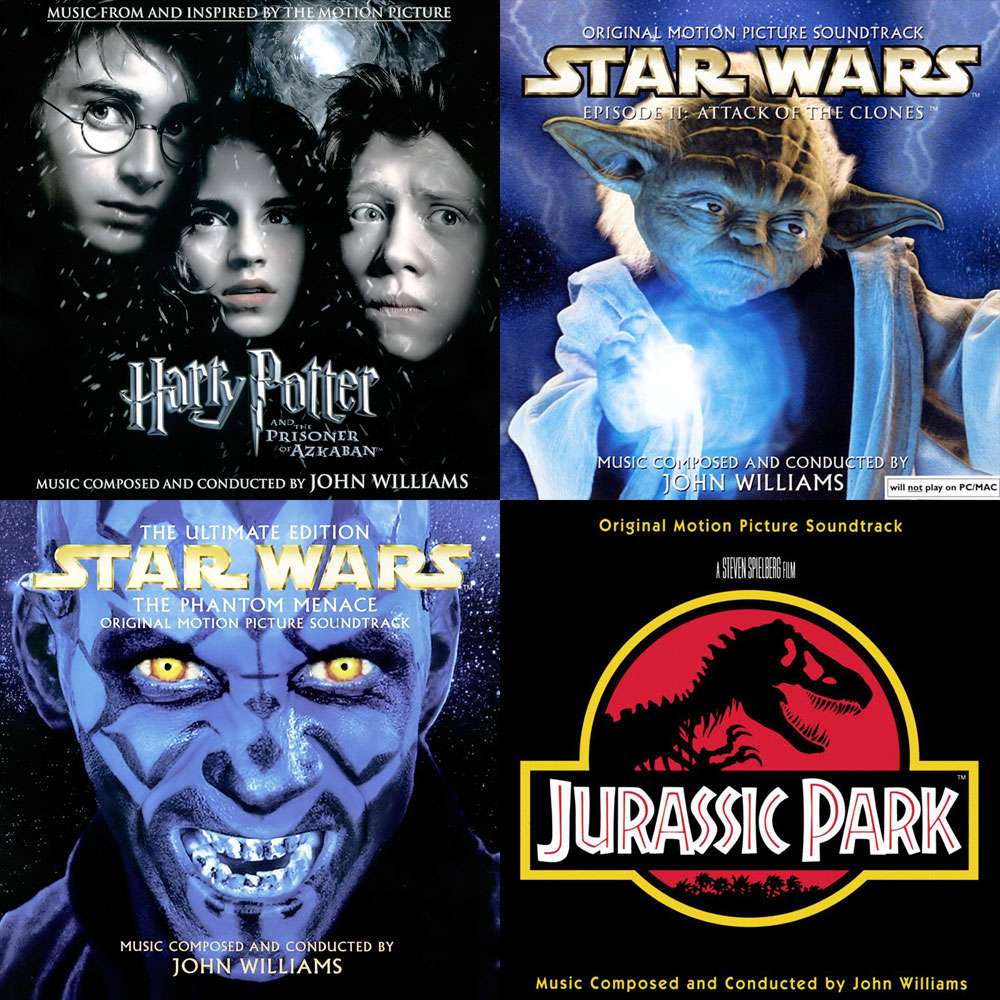
For a long time now I have been assuming that some composers are more interested in a well captured sound than others. One of these composers is John Williams. While his earlier work from the '70s and '80s does not always sound well his more recently released compositions range among the best sounding orchestra recordings available. It´s impossible to pick just one work and declare it to be the best, they all are almost perfect. To name but a few: "Hook", "Jurassic Park" (even with its exaggerated treble), "Schindler's List", "Minority Report", "Harry Potter & The Prisoner of Azkaban" or his more recent "Tintin" score all have a lush, defined, dynamic, spacious and colourful sound. They simply are pure joy which might have to do with the circumstance that Mr. Williams takes his time to compose and to record. Unlike other composers he usually requires six months time for one score and while greatness can be achieved in just three to four weeks by others ("King Kong", James Newton Howard or "Air Force One", Jerry Goldsmith) he always seems to be just slightly more careful, adding layer after layer of variations, harmony and complex rhythms. The engineers he uses seem to know what he requires - and most of the time they deliver.


You probably own a wonderful sounding score yourself already: "Titanic". If I remember correctly over 30 million CDs have been sold over the years, it´s an impressive and rare number for a score. It was composed by James Horner and it earned him a well deserved Academy Award but probably very few people know that it also sounds close to perfection. Bob Katz, himself a highly respected engineer, knows about it, some years ago he stated that it´s one of the best mastered CDs out there. But one shouldn´t stop with this example of Horner's composing style even though it serves as some kind of "Best-of" for Horner's music itself. There are just so many other scores by him that sound very well: "Apocalypto", "Flightplan", "A Beautiful Mind" (even though it has been mixed odd) or "Avatar". Hm, if I think about it you might want to forget the last one. Sure, it was written to accompany the most successful movie of all times but it really is a boring, cheap and uninspired score. You see, over the last 20 years or so James Horner has been accused of being too ecclectic, he literally "steals" (which goes way beyond of being "inspired" or "paying hommage to") music by others (not so often) and himself (everytime). The main theme for "Aliens" for example turns up again in "Clear & Present Danger". You can bet your life on it that a theme for one movie might turn up in another completely unrelated one resulting in the public accusation of laziness which has been surrounding James Horner lately. If you´re still willing to accept this you are in for sonic ride for most of his later scores (since the mid 90s) come close of being the epitome of sonic perfection. Compared to John Williams above they do not sound as well but the differences are so tiny that these scores still sound better than 95% of everything else.


If you´re into electronic music this release from Trent Reznor & Atticus Ross is for you. Trent Reznor initially started out as an industrial rock singer/songwriter, his band Nine Inch Nails is quite famous. That  background might be one of the reasons that there are many people out there who are deriding this work as being uninspired and boring, "The Girl with the Dragon Tattoo" has been attacked for bordering on being a collection of noises and soundscapes only. Well, there actually doesn´t exist a reason for denouncing it other then not being able to fit everyones' taste. It even has a strong connection to "Star Trek" (for a yet unknown reason), one piece is called "Bird of Prey" while another piece quotes the Borg-Theme Jerry Goldsmith composed for "Star Trek: First Contact" (one possible reason could be the quote from the movie that "Borg" sounds swedish; Stieg Larsson, the author for TGWTDT came from Sweden too which would render the theme-quote an in-joke). The sound is a beast of its own because it will prey on your ears, it´s just pristine. This score doesn´t use a classical orchestra - but that doesn´t mean that it cannot sound well. Samples of real recordings are mixed with synthesizers, sequencers and signal processors are manipulated with extreme attention to detail and a fine ear for subleties while the overarching sonic concept never strays out of sight, creating a balanced soundscape with many highlights. I don´t know how Reznor/Ross achieved this but it´s evident that you sometimes won´t need a classically trained composer to support a movie, create an artistic work and to produce sublime musical soundscapes. If I have one criticism it´s that this score is an example of the Loudness War, it has distorted 0 dBFS peaks responsible for a slightly smeared image. Otherwise it´s perfect so get out and buy the 3-CD edition, it´s quite cheap.


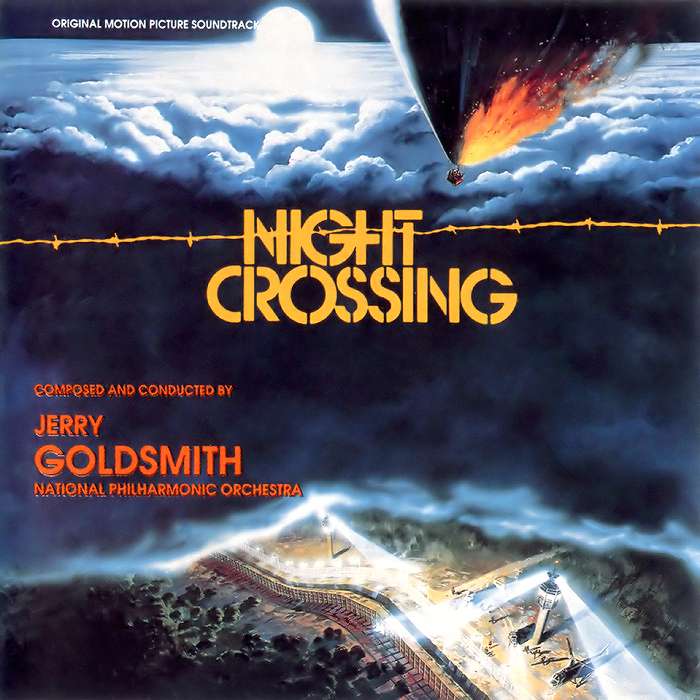
In 1981 Jerry Goldsmith composed the score to a now obscure movie called "Night Crossing" which described the flight of two families from East Germany to West Germany with a huge balloon. It seems that Mr. Goldsmith has been inspired by this movie to compose one of his most passionate works because the music is complex, dynamic, emotional, intelligent and quite breathtaking (even though used a tacky accordeon for describing German rural life). The sound quality of this release is equally perfect because it´s noisefree, not distorted, extremely dynamic, crisp with lovely sonic colour and perfect staging (it could use a bit more energy at the lower mids though which somehow results in a slightly flat imaging). Surprising really because it´s 31 years old, yet it still holds up extremely well. Engineering was done by Eric Tomlinson and it´s one of those cases where he succeeded in getting a perfect sound. Sadly, this score isn´t available anymore, the last time it has seen a (limited) release was in 1994 by Intrada. I only have a copy a friend made for me but - as is often the case with me on rare OOP releases - I very much would like to have an original CD since I love to read a booklet in combination with a pressed medium instead of a CD-R. So I really hope that the recent Disney/Intrada pairing will pay off and that it´ll be released again, they won´t need to remaster it because it´s already almost pristine. 


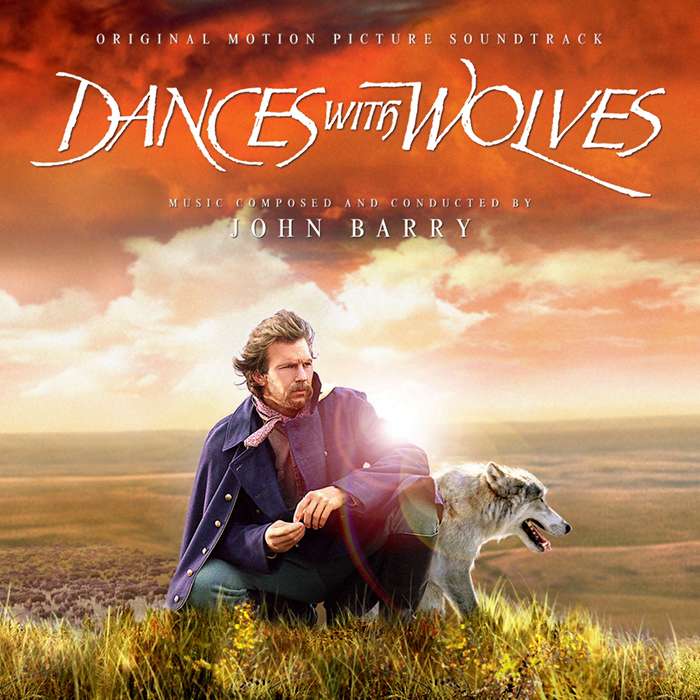
With his epos Kevin Costner singlehandedly resurrected a genre that was believed to be a rotting corpse. Courtesy of the marvellous photography the movie presented vast vistas and dramatic pictures, marrying these with an enganging love story and a well done description of how the native American people once suffered. Not one composer would have been better suited to score this picture than John Barry. Mr. Barry can of course be described as "Bond, James Bond" for he is the one composer responsible for shaping an entire genre. While the Bond style wouldn´t have been well suited for this movie he already had developed a secondary style throughout the '70s that used an extremely slow and elegant pace with big brass and cinemascope sized emotions, all glued together by jazz harmonics & rhythms and loaded with his trademark simple composition style. If one work by a composer could be described as being the crowning achievement of a long career it would be this. Another wondrous achievement always was and is the sound of the CD: it perfectly fits the music and the movie. The scores' sonics are extremely articulate, airy and dynamic combined with fullness and details that must be witnessed to be believed. This score is over 20 years old and still sounds like it has been recorded tomorrow. Of course you can criticise it for being too wide and too reverb laden - but if it would be any other way it wouldn´t fit the music. The sound is so well captured that it has been re-released many times, always on the newest audiophile medium: in 1995 on a Gold-CD with additional music, in 2001 as an SACD and finally in 2004 in remastered and expanded form. If possible however you should try to seek out the original version or the Gold-CD because the 2004 version has been remastered with too much emphasis on bass and treble. Don´t get me wrong, it still sounds good but the newest release has lost one of the most appealing aspects of the score: the balanced frequency response. This one is highly recommended even if the music sometimes will prompt you to fall asleep over it. Before I forget: the cover you can see above isn´t the original cover. That one looked boring so I took an alternate that has been created by the wonderful Luis Roja.


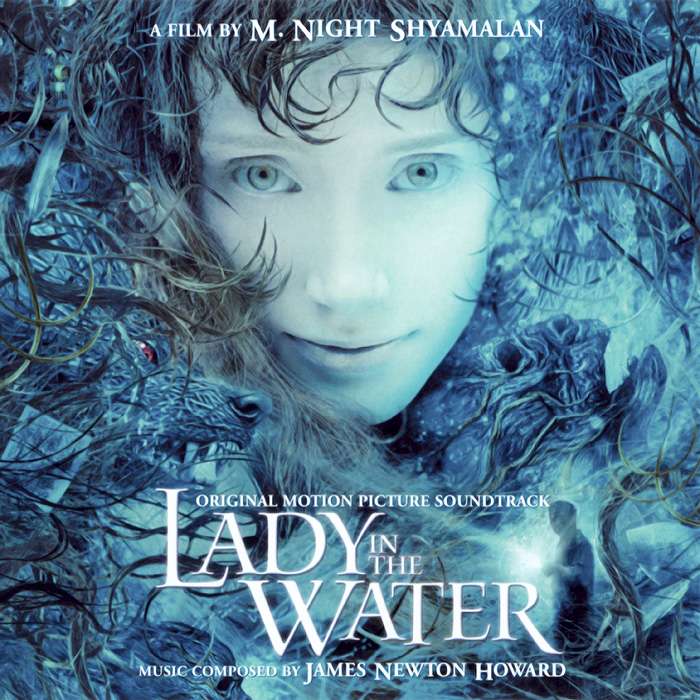
Ah yes, this movie... I won´t talk about it. I like it but it has many flaws and describing them would go beyond the scope of this article. The music however is perfect - as is the sound. There might be some energy missing at the mids but other than that it´s well captured. Treble is extremely gentle, yet extremely detailed and airy. Bass is full and deep but never bloated and the slightly recessed mids are largely responsible for the laid-back sound. On weak systems it can appear to sound too liquid but that´s only because those systems destroy the very delicate textures. The staging is lovely too, it´s wide, deep and perfectly balanced. I cannot listen to this recording on my old Technics SL-XP 300, with that CD player it sounds like shit. So this is not only a marvellous score by James Newton Howard, it´s also able to serve as a Test-CD.


Sadly not many scores by Christopher Young sound as well as this one. If they would however they´d be even more engaging. Mr. Young is primarily known for composing music for horror movies, he composed the music for "Hellraiser", "Species", "Copycat" and "The Grudge". But scoring for horror movies isn´t the only reference, he also composed music for big budget movies like "Spiderman 3" and "The Core". At one thing he excels though: writing for strictly dramatic movies, as a prominent example I´d like to mention "The Shipping News". The knack for emotions might be one of the reasons enabling him to compose horror scores that are perfumed with an underlying melancholia that´s hard to grasp. This melancholic horror is perfectly captured here with the "Excorcism of Emily Rose" which also showcases his talent to use the styles of Penderecki, Kilar, Lutoslawski and Górecki. The latter fact renders him one of the most modern and advanced composers in Hollywood. Of course he doesn´t simply copy them, the wonderful artist that he is incorporates them into his own style. Result: one moment you´re in sheer terror, goosebumps are chasing goosebumps while the next moment you are immensely depressed, melancholic and feel the weight of the world on your shoulders. Mr. Young always is an emotional rollercoaster ride on his better scores - thankfully the sound of this one isn´t for it will make you truly happy. It does have some high frequency sinuses which can be quite distracting but otherwise staging is lovely, the size and placement of instruments stays consistent throughout, the occasional synthesizers are sounding organic and perfectly blended into the orchestra. Sometimes it´s a soundscape not unlike the one described above with "The Girl with the Dragon Tattoo", this time created with an orchestra though. You really should seek out "Emily Rose" before it´s too late, the CD has already started to disappear from stores. It´s really a shame because it´s such a wonderful little gem from an underrated composer.


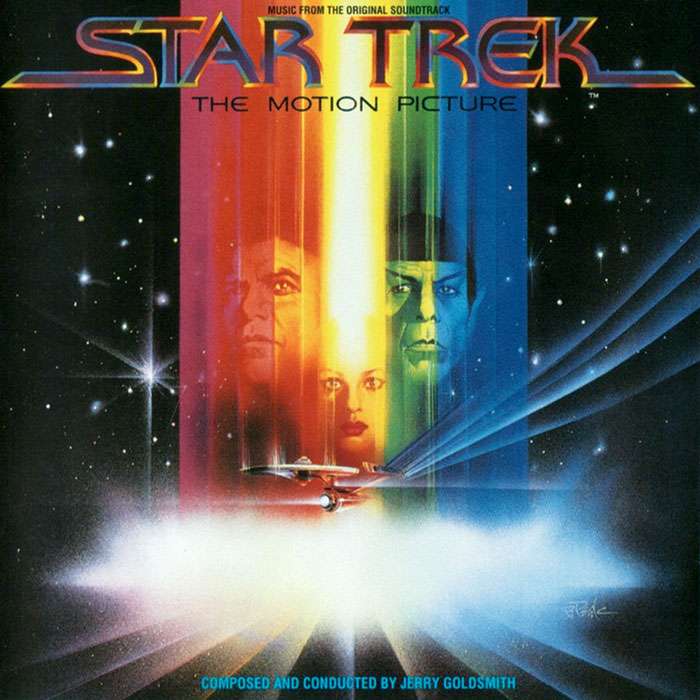
The score to the first Star Trek movie by Jerry Goldsmith is a legend. It´s commonly mentioned alongside scores like "Lawrence of Arabia", "Star Wars", "Titanic", "E.T." and it´s a shame that it wasn´t awarded an Academy Award. It by far surpasses the quality of the movie and its brassy title march was made famous by its use in the TV series "The Next Generation". The post production of the movie (and subsequently the music) was hurried and stressfull. The first theme Goldsmith composed was rejected by director Robert Wise to be too grand and operatic, sounding like "sailing ships". So J.G. came up with the theme we all know and love, a theme that has been performed by many orchestras in the world ever since. And even though the composing was done with little available time the final work is one fine piece of music. It marries a huge orchestra with synthesized elements, an organ and some unusual other instruments (the "Blaster Beam") and it was responsible for shaping the musical world of the entire Star Trek genre. It´s a wonder that the sound holds up very well when keeping the ennerving production circumstances in mind: engineering was done by Bruce Botnick and the resulting sound is wonderful. Dynamics are explosive, there´s an abundance of crispness that rarely gets harsh and a sometimes thundering base combined with an extremely precise and sharp image of the instruments while the ambience that surrounds them is lush. Yes, there is some noise and sometimes it can become a tad harsh but these are only occasional problems that shouldn´t hinder you to seek this score out for it should be on every cupboard.


Another score by Jerry Goldsmith composed for an obscure film that was directed by a director who later singlehandedly wrecked the Star Trek genre with the movie "Star Trek: Nemesis". A flop too, "U.S. Marshals" served as the sequel to the wonderful "The Fugitive" and while the second movie basically was a carbon copy of the first one it still failed to engage audiences and critics alike. The music has its fair share of detractors too, many Goldsmith fans hate it because it´s generally considerd to be too rhythmically complex and devoid of any good theme. I for one always loved it, this score proves that it won´t need a good theme and grand harmony to produce a good piece of music. The sound is lovely too, it was engineered by Bruce Botnick again (19 years after the score directly above) and while it has a very audible sine at higher frequencies it´s nevertheless detailed, crisp, lush and incredibly dynamic. Ambience tends to be too dry at times but that produces the positive side effect that you can pinpoint the instruments embedded in the virtual stage. Very recommended!


The ten worst sounding scores of all time


This is my penultimate best-of (or 'worst-of') list and it will concern itself with movie scores, commonly called soundtracks. For all my readers who don´t know what these are: scores are these strange things sounding remotely like music accompanying scenes of the movie you´re watching. I´m not talking about some songs where some guy sings something that´s somehow related to the movie (the feeling of the scene), no, I´m talking about music specifically created for those scenes only. Most of the time movies have a musical score so that certain scenes can be enhanced, weakened, juxtaposed, whatever you like. Filmmusic composers come in at the last moment of the movies' creation process, one often quoted statement describes it best in my opinion: "A filmmusic composer is the last writer on a movie". It´s important to understand that the job of a score composer is extremely important and difficult, he/she can affect the final statement of certain scenes in a movie tremendously. While the importance of scoring is common knowledge in the movie industry there are many people all over the world who sneer at filmscores, these people often state that scores are just tapestry and wouldn´t exist on their own. In Germany for example it´s quite normal to deride filmscores, in the eyes of us sometimes arrogant Germans scores are not "art" - they are written for a movie which itself is nothing more than entertainment. The truth however lies somewhere in the middle: yes, a movie is a form of commercialized entertainment and yes, a filmmusic composer indeed is an artist. This is of course a discussion hundreds of years old, Mozart or Beethoven can be equally accused of being commercial (they made a living with their music). 

It´s important to understand this clash because it is one of the reasons why filmscores fail to sound as well as many classical recordings. Yes, I know, a score is not classical music. Many people actually get this wrong; while filmmusic may use one instrument of the classical repertoire (an orchestra) it still doesn´t belong to that genre. Filmmusic also uses many different styles ranging from romanticism, baroque, post modernism, serialism, pop, jazz etc. and it must do so because it has to be recognizable and not too challenging so that the audience can still get the message. So, because filmmusic isn´t regarded as pure art and is created mainly for enhancing the commercialized dramatic narrative (the movie) and also because it is sometimes produced with limited amounts of time and money it can sound horrible as a result. I can only imagine what this means to the engineer responsible for the sound of the score: immense stress. Regarding that it´s no wonder that filmscores rarely sound perfect - still most of them sound decent; not very good but good enough for daily enjoyment. A proof to the talent of most of the engineers having to work under stressful, ever changing and demanding situations where money and time are on short supply. Some examples are so awful however that I´ll start my last two lists with the worst sounding scores of all time, it´ll be fun, I promise you. Oh, and score fans? Gimme a break, you may not like what you´re going to read but as I´ve written in all the other articles: this is just my personal opinion, nothing more.


I´ll start my list with a score by celebrated, multiple Academy Award winner John Williams. He did most of the movies of Steven Spielberg and George Lucas, he probably is the most successful score composer of all time, even "normal" people celebrate him (not only nerds like me). His score to "The Empire strikes back" has been a constant challenge for fans during the last 30 years or so. When it was first released it wasn´t complete (a score rarely is), when it was released in complete form by RCA Records in 1997 it sounded just awful. The latter version is the one you can see above and - by God - it´s one of the most hideous examples of sound ever preserved on CD. To make this release possible several different sources had to be used, sometimes they were in a very bad condition because of improper storage and sometimes they were mixed awkwardly. Several tracks were subsequently remixed by a person who obviously never mixed an orchestral recording before or didn´t have the correct information of how to place certain instruments with the result that some instruments of the orchestra are changing their place during the CDs' runtime. Even worse is that the original sound balance by engineer Eric Tomlinson was lost, resulting in a harsh, distorted, flat and compact sounding experience. It comes close to the sound of fingernails on a blackboard: deep bass is absent, highest frequencies responsible for "air" are nonexistent and the rest inbetween is either too loud, constricted or distorted. Until an improved version is to be released sometime in the future this release has to be avoided by all means. Believe me, I have tried to "remaster" it for myself but I´ve failed miserably two times, it simply cannot be done. Oh, and the 2004 Sony re-release is the same (despite the moniker "DSD remastered" on its back cover).


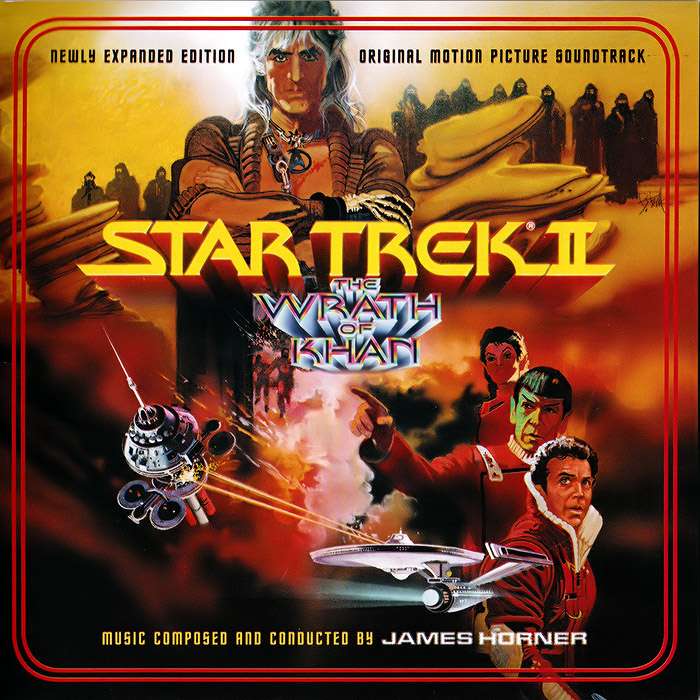
This is a truly great score, an achievement that catapulted James Horner to the A-list of composers working for Hollywood. The sound is frightfully distorted when the amplitude gets higher and looses resolution when it gets lower. This is an example of a recording made without much money and also another example of a recording engineered for vinyl. The release you can see here is the remastered and expanded version, released in 2009 by FSM, expertly remixed by Mike Mattessino. The new mix actually improves the sound somewhat but I assume that Mr. Mattessino couldn´t do something about the atrocious recorded sound without destroying too much of the initial material. Really a shame because the music is so good, it shows all the characteristics James Horner uses to this day in the best way possible.


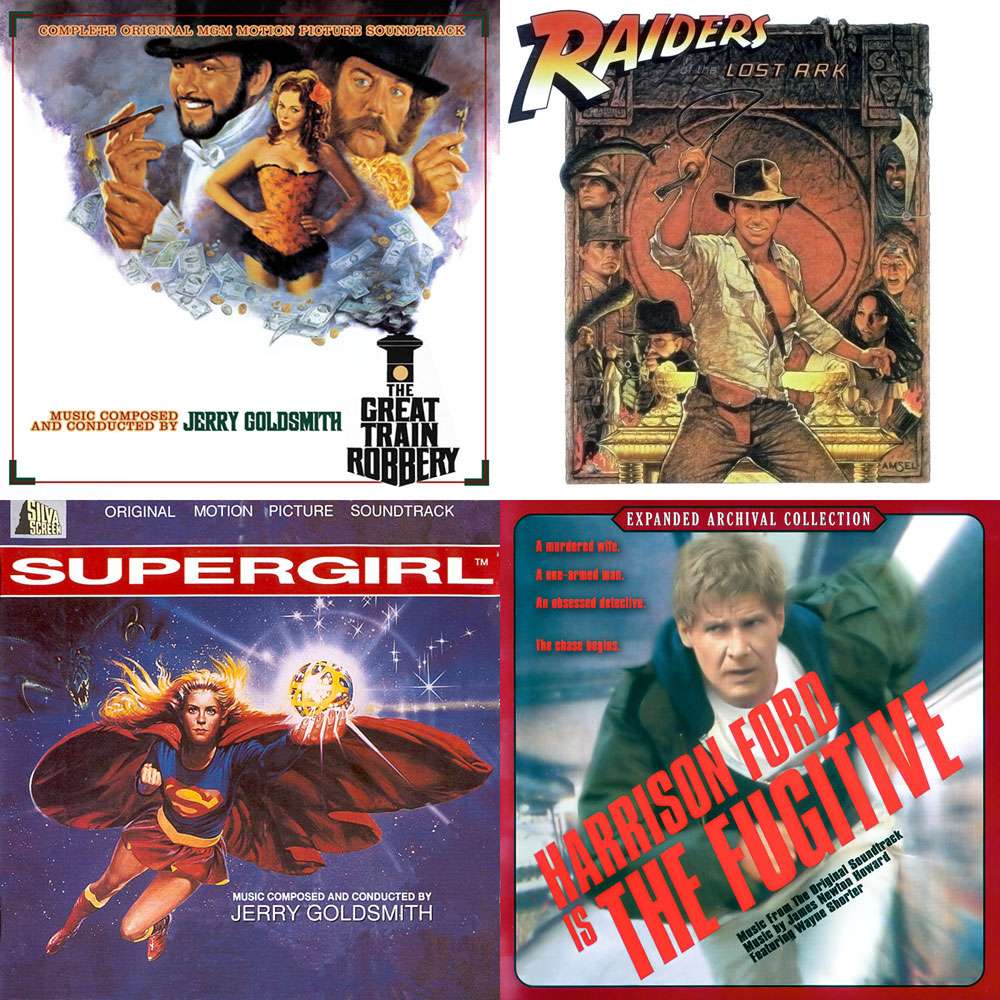
These four score shall serve as an example for recordings that have been remastered badly. "The Great Train Robbery" by Jerry Goldsmith had been released already in remastered, remixed and expanded form in 2004 and none other than Bruce Botnick did the new mix. Many fans of the score (and of the old LP released in 1979) always hated that expanded version because of a supposedly bad sound. Bruce Botnick had been working with Mr. Goldsmith from 1979 until 2004 (when Jerry Goldsmith sadly passed away) so he was constantly exposed to the sonic wishes of the composer. These were calling in later years for the sound to be "wetter, wetter, wetter" (as Mr. Mattessino so nicely told me) and so he remixed the Eric Tomlinson engineered score according to the newest sonic taste of the maestro. The result was a surprisingly fresh and up-to-date sounding release by Varèse Sarabande. But then there are fans who cannot forgive a more modern approach. For the past seven years they have been constantly crying out loud to "fix this mess", they complained that the timpani and the overall sound were too muted. In reality however it sounded like a modern recording, able to display an orchestra as one singular unit and not as parts seemingly recorded in seperate booths. Anyway, in 2011 the fans got their wish: the score was re-released by Intrada, newly remixed, remastered and expanded. With this latest release the sound is back to its old, vinyl-y self: compact, explosive but harsh with the orchestra sounding like seperate units. Bass that was present on the 2004 version is gone as is the lovely bloom courtesy of Mr. Tomlinsons original engineering. Very disappointing.

"Raiders of the lost Ark" was re-released in remastered form by DCC Records in 1995, a now defunct label. Originally the engineering was done by Eric Tomlinson (again) while the remastering job was done by Steve Hoffman, a man regarded as God by his many fans. He even might be well suited - when it comes to soul, rock and other releases from many decades before (-> don´t sound well). He cannot make anything worse with these recordings in my opinion. His fans may disagree but I can tell you that he appears to have no idea of the sound of an orchestra. His remaster of one of the greatest scores of all times sounds too compact with too much emphasis on treble. The result is an often piercing, shrill sound that lacks a solid "base" in combination with constricted staging. While it´s common practice to master music to fit ones' sonic taste it just didn´t work on this example here where Mr. Hoffman added his beloved euphonic colour with a tube equipped pre-amplifier (as he always does), resulting in already crisp high frequency details being exaggerated beyond enjoyment. The most recent remaster released by Concorde Music in 2008 is the superior one even though they applied some light dynamic compression and got the speed of some tracks wrong. But that´s still the one you should buy.

"Supergirl" not only failed at the cinema, it also fails soundwise on the release from 1993 by Silva Screen Records. The music itself is really good, critics have sometimes called it the single redeeming aspect of the movie. It offers a brassy, extremely engaging title theme, a robust theme for the villain and a sweet love theme. The synthesizer integration is well excecuted here (Mr. Goldsmith loved to pepper his orchestral scores with synthetic elements) and the original sound was gorgeous too - Eric Tomlinson again. So it´s even more baffling to me how a person can turn a sound that was lovely to begin with into this... well, hideous thing. Actually it´s no surprise: the remastering engineer has just one orchestral mastering credit: this one. Most of the time he masters hard rock, punk and other "loud" stuff. Sadly it shows here: the music is way too aggressive, reverb sounds like metal, bass is absent. The presence area is extremely loud while the treble area usually pronounced by Mr. Tomlinson has been reduced. In the end you get a screeching and screeming mess where instruments are either too loud or too big and the orchestra seems much too small or too wide.

"The Fugitive" is an oscar nominated score by James Newton Howard, well worth your time. The saxophone is played by none other than Wayne Shorter. The original release from 1993 already had a strange problem: channels had been switched during mastering. The expanded re-release from La La Land records (2009) corrected this but introduced a new malady: dynamic compression. While the older release will rock your house with dynamic hits of the orchestra the newer one won´t do so because it sounds timid and it misses deep bass. This release seems to have been done with old grandmas in mind!


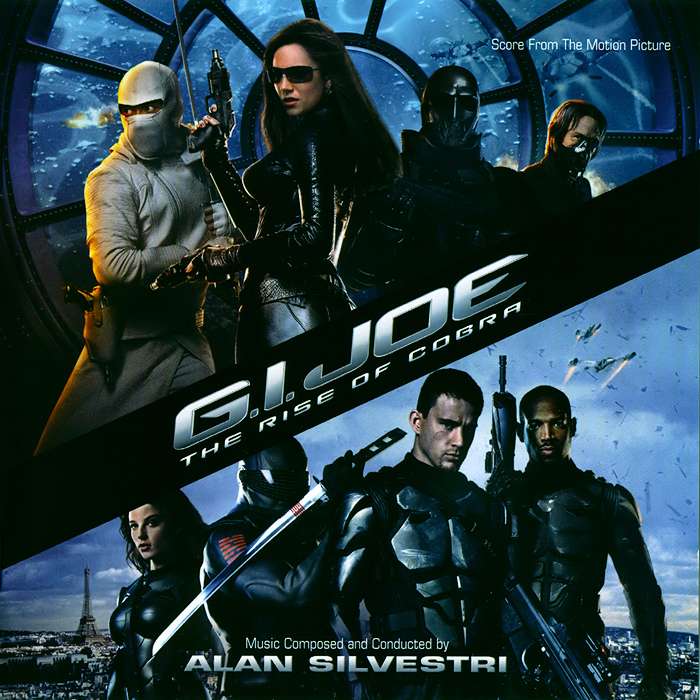
A movie for the younger and predominantly male generation of movie goers, a movie that will proudly swell your balls to the size of melons if you belong to this group, a movie with a mediocre score by Alan Silvestri. Dumb and stupid is also the sound of this Varèse Sarabende released CD: it has been brickwall limited; it may appeal on the radio where it´ll certainly grab your attention playing alongside such dignitaries as Gaga or Katie Perry. C´mon, a score on the radio?? Who decided that an orchestral score would need that? What the heck were these people thinking, how could Patricia Sullivan-Fourstar master like this? But wait, this wouldn´t even be the worst aspect of this mess wouldn´t it have been mastered from lossy compressed mp3 files. Yes, you´ve read it right: the first half was mastered from 48 kHz mp3 with a data rate of 192 kBit/s. A bug? A feature? No one can tell. Varèse Sarabande said back then that they never look at the frequency spectrum, they observe only by ear. You know what? I actually have been avoiding scores from Varèse during the last years. I´m really glad now that I realized that!


A very famous and experimental score, released in 1968, composed by Jerry Goldsmith for a film by Franklin J. Schaffner.With this score Mr. Goldsmith effectively brought Alex North's dissonant and percussive style then foreign to casual movie goers to bigger attention. The music strongly divides fans' opinion of Goldsmith's work with no shades of grey inbetween. The sound however is for sure disliked by everyone for it is devoid of treble (replaced by noise) and has a great amount of energy at the presence area which makes it aggressive and muddied at the same time. While this is not unusual for music recorded at those times it still fares worse compared to other scores produced back then. It wouldn´t be that bad if everything would sound like playing through a blanket but some instruments (or should I say kitchen appliances?) indeed are crisp and generally very well recorded. So why wasn´t everything else matched during the remix and the subsequent mastering? An unused chance - disappointing.


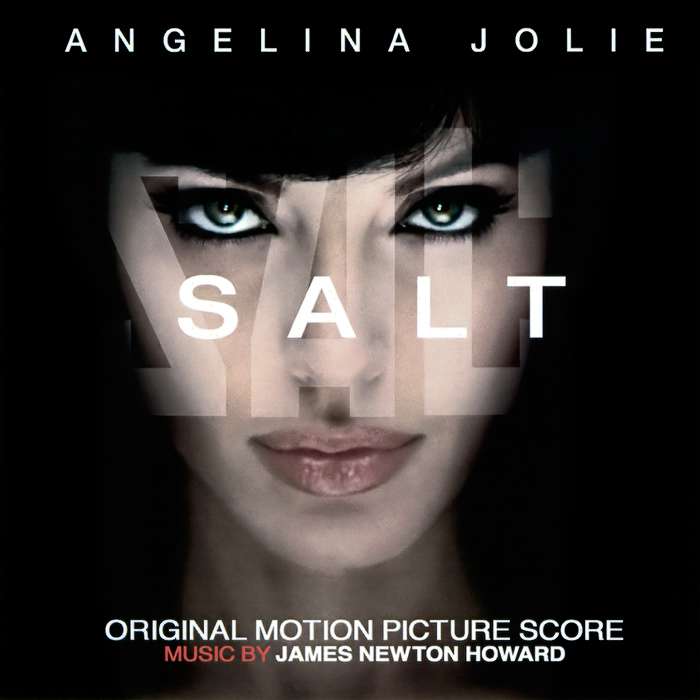
This score by James Newton Howard for a movie with lovely Angelina Jolie playing a secret agent was a - successful - attempt to cash in on the Bourne-franchise - and it does show in the score. It even copies some "Zimmerisms" ("composing" characteristics of Hans Zimmer) and it improves them as a result. "Chase accross DC" is a particular highlight of the score. Wouldn´t there be this - how can I put this politely? - awful sound... this release seems to be engineered to sound impressive on the very mediocre iPod headphones, it´s able to counteract their bass- and treble weak sound. On a home stereo this ostensibly results in an bass heavy and shrill sound, colour has been drained in favor of a built-in loudness switch you usually find on your amplifier - that obviously cannot be switched off in this case because it has been engineered into the sound itself. To be fair, it actually seems to be recorded well which will be revealed only if you´d attempt trying to correct this - but even then you´d have to do something about the dynamic artifacts created by the brickwall limiting. Yes, this score is just another prime example of the Loudness War. Shawn Murphy, how could someone like you - who normally is wonderfully talented and tasteful - produce something like that?


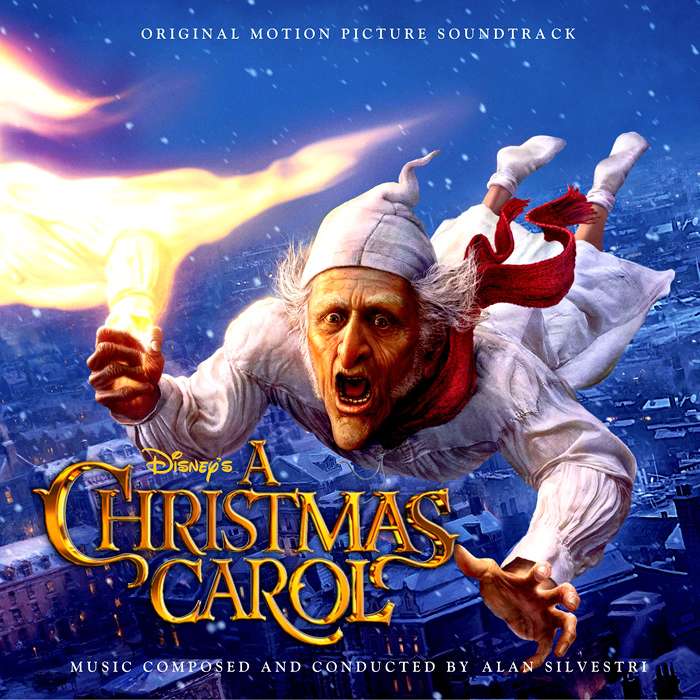
Yet again, another example of the Loudness War. Oh, and please excuse the non-original cover, I couldn´t find a better one because the original cover is too small and not very sophisticated. This beautiful score suffers in many ways from its sound: this release appears to have been mastered with a crowd in mind that usually buys mainstream pop music. It sounds constricted, very dry (curious for a christmas-themed movie), some instruments sound more like static. Plus: a Loudness switch has been engineered into the sound again in combination with brickwall limiting - ReplayGain tells me it is 7 dB too loud (!). Hence this increase of Loudness destroys the sound of the orchestra and its dynamics. Subtleties of the orchestras` performers are lost on this recording with the effect that the music isn´t presented as good as it really is. It´s disappointing really; the process of mastering should never affect the message of the music. To add insult to injury this wasn´t even released on CD but as a lossy download only. I bought my version at Amazon.de and while it has a comparatively high bitrate of 256 kBit/s it still is lossy with almost all frequencies missing above 16 kHz (which I still can perceive). I hope Intrada will rectify all shortcomings soon in view of their recent partnership with Disney for this score to shine properly.


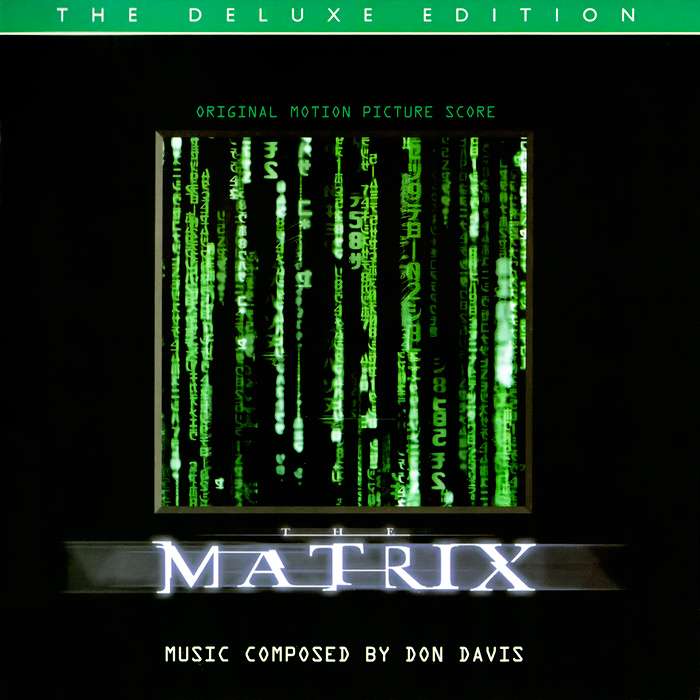
This actually isn´t that bad, frequency response is relatively balanced. It´s just brickwall limited and much too wide, someone has been pushing the "widen the stereofield" button to greedily. Probably to improve the already dry and constricted sound of the original. Strings are too far on the left, brass is on the far right with virtually no sound in the center. The staging is so wide that it has to be heard to be believed. Another Varèse Sarabende disappointment.


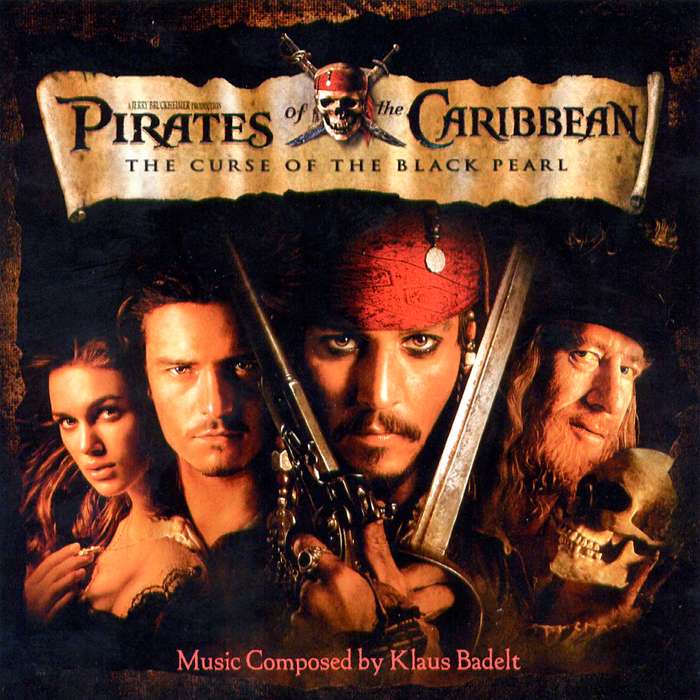
Composed by Hans Zimmer (he was contractually obligated to another project so Klaus Badelt is credited with composing duties) this score is extremely popular with mainstream audiences and Zimmer fanboys alike (who shouldn´t be regarded as experts because they usually listen to DJ Tiesto). Many people will know that Zimmer and his team produced this as a replacment score for the first composer Alan Silvestri (who was Verbinski's personal choice). To be fair, this score was produced in a very limited amount of time only because producer Jerry Bruckheimer hated the first score by Alan Silvestri, it wasn´t manly enough (it had woodwinds in it which are - we all know this - for faggots like me only (yes, he´s a homophobic)). It´s highly commendable that Badelt/Zimmer (and probably a bunch of other composers) achieved this in the short amount of time. As I now know from the wonderful book "Torn Music" there were no hard feelings between Alan Silvestri and Jerry Bruckheimer who behaved most admirably. Mr. Silvestri hadn´t written something beyond some themes and synth-mockups, even less recorded something. According to Silvestri, him and the producer parted on good terms. Zimmer and his Remote Control team had one month time to come up with this score which isn´t that bad and typical for Herr Zimmer; it´s jolly good fun. The sound however isn´t funny, it´s a nightmare. Brickwall limited again which leads to audible distortions and dynamic artifacts with the usual slighly loudness-y sound so typical for Remote Control productions. Parts of the orchestra have been replaced by 80s` synthesizers and it´s very apparent here. Hans, warum klingen deine Scores eigentlich immer so Scheiße? Mach mal was dagegen!


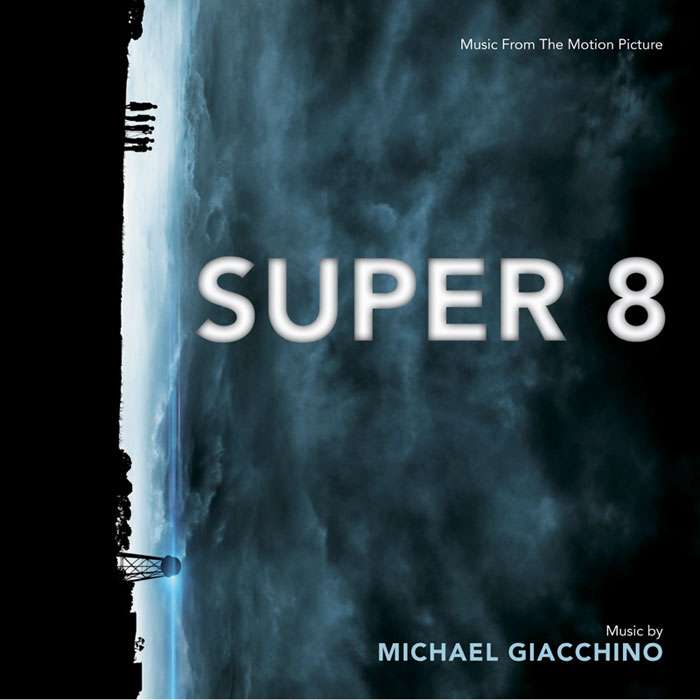
A good score for an even better movie. But I´m at a loss here why it sounds so bad. You know, I expect a new recording from 2011 to show how far we have advanced soundwise. Why this one disappoints is baffling to me. "The Matrix" above was too wide but this one here is the opposite, it´s too compact. From what I´ve read many scores from Michael Giacchino show a sonic soundscape like this so I have to assume that he suffers from some sort of hearing damage. Tinnitus perhaps? Otherwise this close-to-monaural sound cannot be explained: on lower frequencies the stereo field is wide enough but the higher the frequencies go the smaller the stage gets. Frequency response is relatively balanced but borders on the muffled sound typical for recordings of the '60s, violins sadly are sounding dark. All of this results in a tiny and very analogue (in a bad way) sounding score. Thankfully brickwall limiting is absent - the dynamics have been tinkered with nonetheless: pieces that are supposed to be low in amplitude have been amplified to a level close to the amount of usually very loud pieces. I´m very confused by that, I´m always at the volume knob to re-create a "normal" orchestral dynamic. It sounds as if the mastering engineer applied a per-track based ReplayGain result to the final mastering instead of a per-album based result. Erm... no; not Loudness War but uneven.


Last update: 08.06.2012
Related Posts Plugin for WordPress, Blogger...

The Socials