Finally, my last best-of list! Somehow I´m glad that this is finally finished... believe it or not: it took quite some time to write those lists. All the time in my head was this nagging feeling that some people won´t like the choices I finally selected. But I´ve said it from the beginning that I´d only present my personal, subjective picks and won´t copy another list with the usual candidates. No one should forget that this blog is for my personal enjoyment only, call it my "expression of egocentricity" if you like. Of course I enjoy to be recognized and I find relief in the fact that some people seem to regard my blog helpful in some way. However, it´s still surprising to me that it continues to attract the attention it gets every day considering the geeky stuff I´m writing about, not many people are interested in things they usually don´t relate to. Having said that, I don´t express myself very well, sometimes I fail at explaining where I want to go with my articles. One reason is that I´m not a native speaker (sometimes I bang my head on the table because the easiest expression has escaped my head while at other times I can´t remember the german word for an english expression), another reason is that I tend to view things from a rather simple black/white perspective. It´s so easy to get lost in one's own limited view of the world - that's one of the reasons why I took the avatar of Mrs. Dietrich: she was a true globetrotter, fluent in several languages, surrounding herself with the intellectual and artistic elite of her time while staying true to her roots. Sure, she had many flaws. But to me she still serves as a great example of integrity, courage and open mindedness. Sometimes this example isn´t vivid enough though.
Several weeks ago I published an article about DBTs, science, engineers, mathematicians and statistics, an article I was initially very proud of. In reality however it was an abomination. I tackled themes I didn´t really understand and I myself used the very instruments I was trying to attack, it was nothing more than a badly written hack job aimed at people who couldn´t do anything about it. Additional problems were that it wasn´t new, needlessly cynical, badly researched - and all the while during writing I had delusions of grandeur! I needed my best mate to realize that the monster I created shouldn´t be in this world (I know, I love being dramatic!). This mate is a curious fella because he has a certain way of telling me directly to my face "That sucks!" and then goes on explaining why. He possesses an enormous amount of aquired knowledge in combination with a vast intellect which enables him to pick apart my reasoning. Believe me, sometimes it can be quite daunting and on more then one occasion he did hurt my feelings - but only because I do have a problem of accepting criticism directed at me (the roots for that can be found in my occasional difficulties with self confidence). He is a very empathic person (something I lack myself) and he´s one of the few people who knows me inside out. I also think he respects what I´m doing even though he rarely tells me so (just as I have problems telling people "You were good") So he really doesn´t want to hurt my feelings, I´m still glad though that he occasionally does, as for example on my DBT article. I wouldn´t have realized my error if he would have behaved too diplomatic! Of course this is a thinly veiled 'Thank you' and I don´t really know why I´m writing all of this, I wanted to write something about scores, sound, the usual stuff. It´s just that I want him to be proud of me, I´m so glad that I´m surrounded by people like him and my boyfriend who constantly advise me to better myself. And after reading all of this I fear that he will forever taunt me :D
How do I get back to filmscores now? Life-changing experiences perhaps? My biggest passion alongside electronic stuff? Wow... how ingenious. If I think about it... I actually have several strong memories related to movie scores. I remember being in cinema with my mom at the age of seven, we were watching "The Secret of Nimh". It´s one of my most vivid positive memories from my childhood: during the climax of the movie when Mrs. Brisby has to watch her children suffer inside a stone that is sinking into the mud she touches an amulet given to her on an earlier occasion by Nicodemus, the leader of the rats. The amulet becomes powerful by "realizing" Mrs. Brisby's strong will to save her children. By sheer will power and with the help of this amulet she moves the stone out of the mud to safety, saving her children. Of course this scene is accompanied by music, music written by Jerry Goldsmith and up to that point I´ve never heard more heavenly, beautiful and spine tingling sounds. I forgot all around me and started crying helplessly, even now I´m on the brink of crying just by the memory of it. Back then I felt that I had never witnessed anything more wonderful in my entire life. And I´m not exaggerating this time. It took me until 1993 to find out that Jerry Goldsmith composed the score, a period when I already loved his music and I suddenly realized that it was only fitting that my favourite composer was responsible for one of my strongest childhood memories.
Since 1982 I have constantly (unconsciously at first) been looking for this strange combination of somehow sad, awe inspiring and goosebumps inducing music. I have not been disappointed so far: another memory of mine is the first time I watched "Poltergeist" on TV. My parents weren´t home, I was alone and I smoked my first cigarettes out of curiousity. I was eleven, terrified and mesmerized by this strange combination of horror mixed with emotions. Again, the music was for a large part responsible for it - and back then I thought John Williams had composed it, at eleven I already made the connection that Spielberg always goes hand in hand with Williams. But no, it was Jerry Goldsmith again. There are of course certain other scores being responsible for still holding their respective movies dear to my heart: "The last Unicorn" or "The Neverending Story" (the Doldinger score), both very lovely, admittedly kitschy scores. But oh, they are so achingly beautiful... The latter movie is part of another memory: several years ago my best friend (the one above) and I were driving in a car, I did the driving. It had been a rainy day and the streets were wet. While we were driving we listened to "Bastian's happy Flight" from the Doldinger score of "The Neverending Story". When we approached a sharp bend the tires lost their grip on the wet street and the car suddenly started spinning without control. An accident could have happened then but the car "only" spun for 360° and finally came to a standstill, perfectly in line with the street again. Cars behind us were simply driving around us as if nothing had happened, it indeed had been a 'happy Flight'.
These are just some of the more important reasons why I have been adoring and enjoying so many scores since the age of 15. Filmscores are so different to classical music, sometimes they are showcasing so much talent and creativity that it´s breathtaking. To round up the discussion about art vs. commercialism of my last article I´ll say that scores can lead you through several genres, composing styles and eras of classical music in just five minutes - and you won´t even recognize it because the composer is adapting those only for inspiration into his own compositorial style, all the while fitting the demands of the movie and at the same time composing a complete work ready for the concert hall. Despite the public opinion that they are just commercial embellishment many scores showcase that they can be removed from the context of the movie they are written for so that they are able to emerge as a true and unique form of art. Think about the monumental work Howard Shore has done for the Lord-of-the-Rings movies, he had to create over ten hours of music! The amount of notes is virtually unimaginable yet he still managed to orchestrate and conduct on its own besides creating a work of excellent quality. It´s only fitting that it has been turned into a symphony that gets played with regular orchestras, even though they may sneer at it. Scoring a movie truly is an underrated and genuine form of art, it starts as an instrument for creating movies but if it´s good it´s able to cross the lines to be recognized forever.

In hindsight of what´s written above there´s no better release to start my last best-of list than this one. A classically trained conductor (and composer of its own) leading an orchestra used to perform "serious" music only. On this release here they tackled master composer Bernard Herrmann, known for his many scores for famous movies directed by Alfred Hitchcock. The result of this seemingly strange marriage are works for the silverscreen interpreted with a comparatively "classical" approach - and it works. While many fans of the originals despise this release as being "too slow" or "too boring" this indeed is the prerogative of a conductor who interprets the work with his orchestra. It´s his own subjective view on a particular work and I for one love Mr. Salonen's view because he gives something else to these excerpts, a little something extra I´ve rarely heard from Bernard Herrmann: emotions. Of course, they were always there but hidden under the stark and rigid conducting style of the composer. The sound quality of this recording shows 'extras' too: the sonic colour is breathtaking. Dynamics, crispness, bass, colour and staging are perfect, just perfect, resulting in a release that is without flaw. Highly recommended!
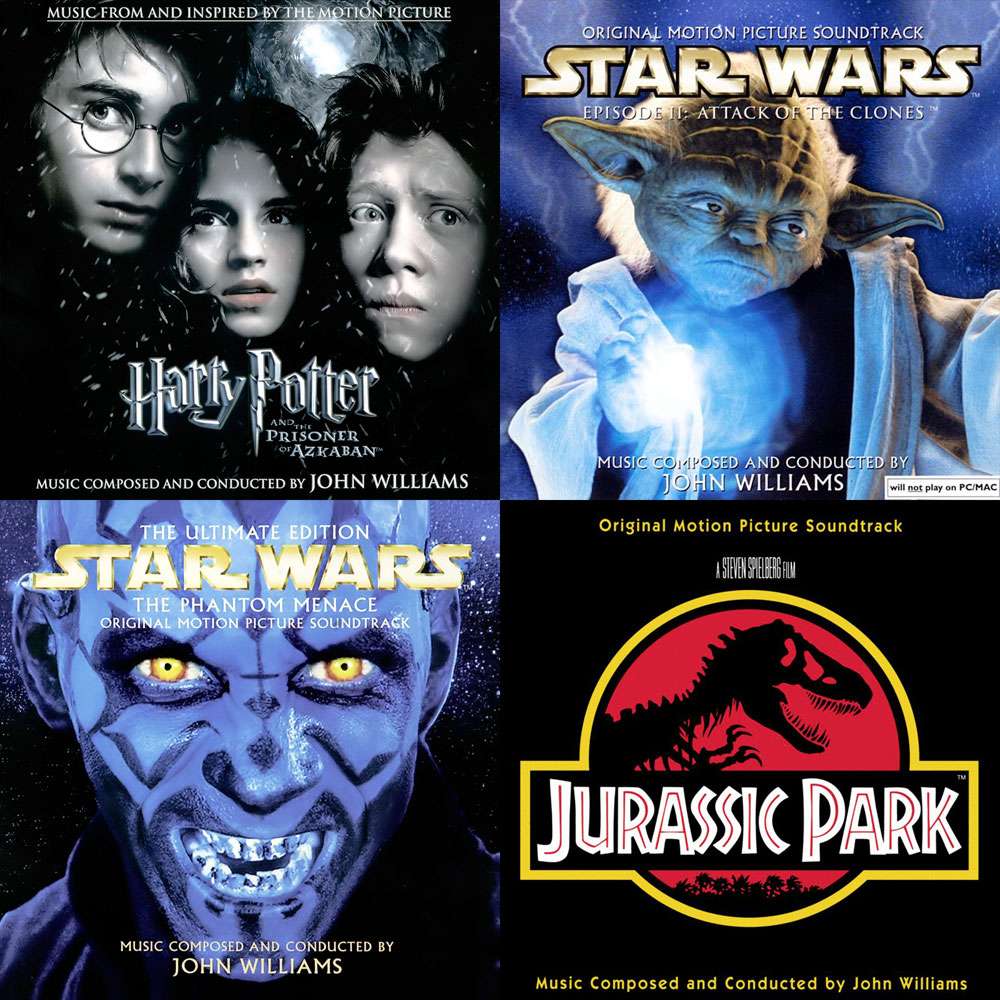
For a long time now I have been assuming that some composers are more interested in a well captured sound than others. One of these composers is John Williams. While his earlier work from the '70s and '80s does not always sound well his more recently released compositions range among the best sounding orchestra recordings available. It´s impossible to pick just one work and declare it to be the best, they all are almost perfect. To name but a few: "Hook", "Jurassic Park" (even with its exaggerated treble), "Schindler's List", "Minority Report", "Harry Potter & The Prisoner of Azkaban" or his more recent "Tintin" score all have a lush, defined, dynamic, spacious and colourful sound. They simply are pure joy which might have to do with the circumstance that Mr. Williams takes his time to compose and to record. Unlike other composers he usually requires six months time for one score and while greatness can be achieved in just three to four weeks by others ("King Kong", James Newton Howard or "Air Force One", Jerry Goldsmith) he always seems to be just slightly more careful, adding layer after layer of variations, harmony and complex rhythms. The engineers he uses seem to know what he requires - and most of the time they deliver.
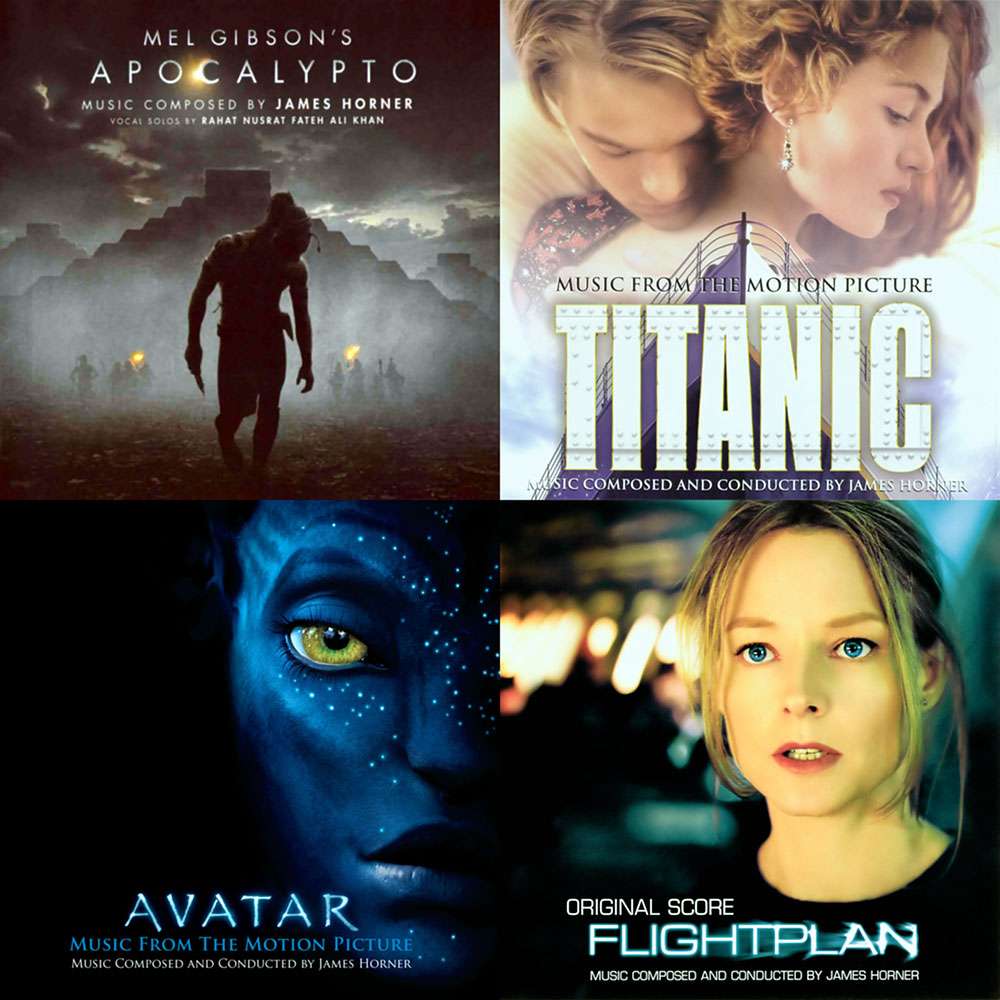
You probably own a wonderful sounding score yourself already: "Titanic". If I remember correctly over 30 million CDs have been sold over the years, it´s an impressive and rare number for a score. It was composed by James Horner and it earned him a well deserved Academy Award but probably very few people know that it also sounds close to perfection. Bob Katz, himself a highly respected engineer, knows about it, some years ago he stated that it´s one of the best mastered CDs out there. But one shouldn´t stop with this example of Horner's composing style even though it serves as some kind of "Best-of" for Horner's music itself. There are just so many other scores by him that sound very well: "Apocalypto", "Flightplan", "A Beautiful Mind" (even though it has been mixed odd) or "Avatar". Hm, if I think about it you might want to forget the last one. Sure, it was written to accompany the most successful movie of all times but it really is a boring, cheap and uninspired score. You see, over the last 20 years or so James Horner has been accused of being too ecclectic, he literally "steals" (which goes way beyond of being "inspired" or "paying hommage to") music by others (not so often) and himself (everytime). The main theme for "Aliens" for example turns up again in "Clear & Present Danger". You can bet your life on it that a theme for one movie might turn up in another completely unrelated one resulting in the public accusation of laziness which has been surrounding James Horner lately. If you´re still willing to accept this you are in for sonic ride for most of his later scores (since the mid 90s) come close of being the epitome of sonic perfection. Compared to John Williams above they do not sound as well but the differences are so tiny that these scores still sound better than 95% of everything else.

If you´re into electronic music this release from Trent Reznor & Atticus Ross is for you. Trent Reznor initially started out as an industrial rock singer/songwriter, his band Nine Inch Nails is quite famous. That background might be one of the reasons that there are many people out there who are deriding this work as being uninspired and boring, "The Girl with the Dragon Tattoo" has been attacked for bordering on being a collection of noises and soundscapes only. Well, there actually doesn´t exist a reason for denouncing it other then not being able to fit everyones' taste. It even has a strong connection to "Star Trek" (for a yet unknown reason), one piece is called "Bird of Prey" while another piece quotes the Borg-Theme Jerry Goldsmith composed for "Star Trek: First Contact" (one possible reason could be the quote from the movie that "Borg" sounds swedish; Stieg Larsson, the author for TGWTDT came from Sweden too which would render the theme-quote an in-joke). The sound is a beast of its own because it will prey on your ears, it´s just pristine. This score doesn´t use a classical orchestra - but that doesn´t mean that it cannot sound well. Samples of real recordings are mixed with synthesizers, sequencers and signal processors are manipulated with extreme attention to detail and a fine ear for subleties while the overarching sonic concept never strays out of sight, creating a balanced soundscape with many highlights. I don´t know how Reznor/Ross achieved this but it´s evident that you sometimes won´t need a classically trained composer to support a movie, create an artistic work and to produce sublime musical soundscapes. If I have one criticism it´s that this score is an example of the Loudness War, it has distorted 0 dBFS peaks responsible for a slightly smeared image. Otherwise it´s perfect so get out and buy the 3-CD edition, it´s quite cheap.
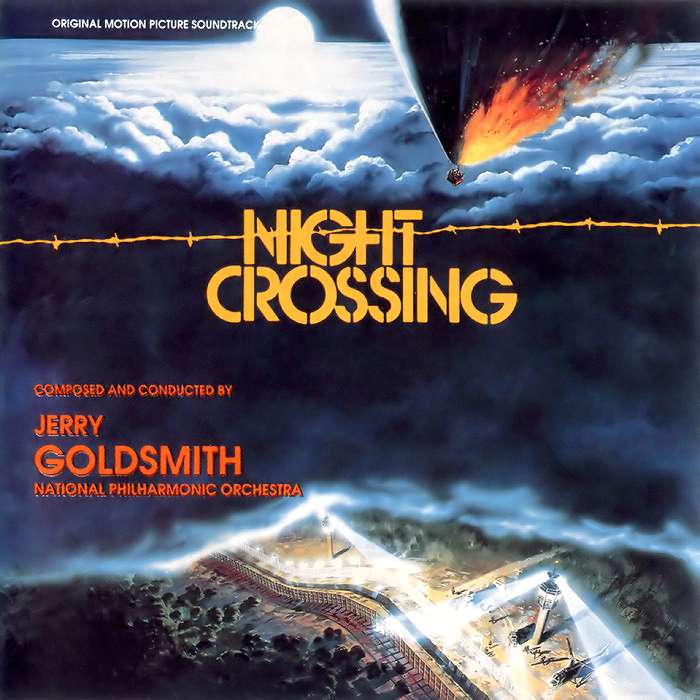
In 1981 Jerry Goldsmith composed the score to a now obscure movie called "Night Crossing" which described the flight of two families from East Germany to West Germany with a huge balloon. It seems that Mr. Goldsmith has been inspired by this movie to compose one of his most passionate works because the music is complex, dynamic, emotional, intelligent and quite breathtaking (even though used a tacky accordeon for describing German rural life). The sound quality of this release is equally perfect because it´s noisefree, not distorted, extremely dynamic, crisp with lovely sonic colour and perfect staging (it could use a bit more energy at the lower mids though which somehow results in a slightly flat imaging). Surprising really because it´s 31 years old, yet it still holds up extremely well. Engineering was done by Eric Tomlinson and it´s one of those cases where he succeeded in getting a perfect sound. Sadly, this score isn´t available anymore, the last time it has seen a (limited) release was in 1994 by Intrada. I only have a copy a friend made for me but - as is often the case with me on rare OOP releases - I very much would like to have an original CD since I love to read a booklet in combination with a pressed medium instead of a CD-R. So I really hope that the recent Disney/Intrada pairing will pay off and that it´ll be released again, they won´t need to remaster it because it´s already almost pristine.
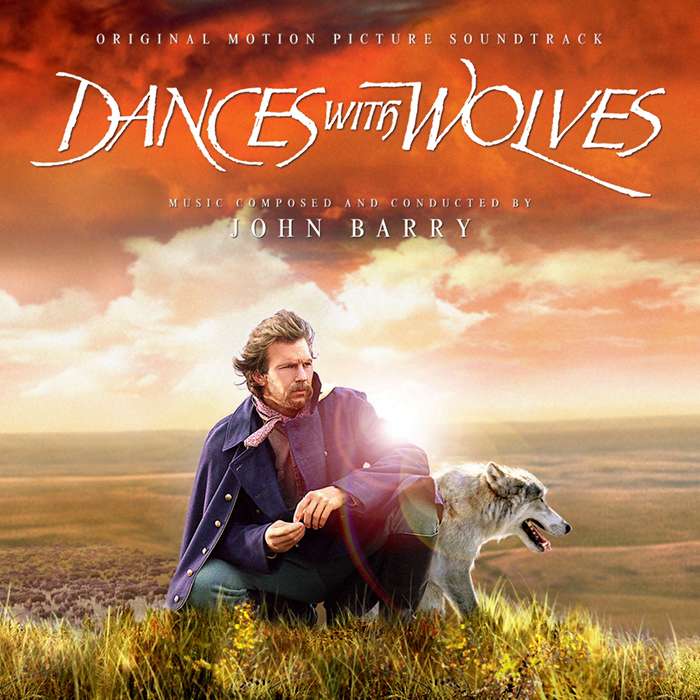
With his epos Kevin Costner singlehandedly resurrected a genre that was believed to be a rotting corpse. Courtesy of the marvellous photography the movie presented vast vistas and dramatic pictures, marrying these with an enganging love story and a well done description of how the native American people once suffered. Not one composer would have been better suited to score this picture than John Barry. Mr. Barry can of course be described as "Bond, James Bond" for he is the one composer responsible for shaping an entire genre. While the Bond style wouldn´t have been well suited for this movie he already had developed a secondary style throughout the '70s that used an extremely slow and elegant pace with big brass and cinemascope sized emotions, all glued together by jazz harmonics & rhythms and loaded with his trademark simple composition style. If one work by a composer could be described as being the crowning achievement of a long career it would be this. Another wondrous achievement always was and is the sound of the CD: it perfectly fits the music and the movie. The scores' sonics are extremely articulate, airy and dynamic combined with fullness and details that must be witnessed to be believed. This score is over 20 years old and still sounds like it has been recorded tomorrow. Of course you can criticise it for being too wide and too reverb laden - but if it would be any other way it wouldn´t fit the music. The sound is so well captured that it has been re-released many times, always on the newest audiophile medium: in 1995 on a Gold-CD with additional music, in 2001 as an SACD and finally in 2004 in remastered and expanded form. If possible however you should try to seek out the original version or the Gold-CD because the 2004 version has been remastered with too much emphasis on bass and treble. Don´t get me wrong, it still sounds good but the newest release has lost one of the most appealing aspects of the score: the balanced frequency response. This one is highly recommended even if the music sometimes will prompt you to fall asleep over it. Before I forget: the cover you can see above isn´t the original cover. That one looked boring so I took an alternate that has been created by the wonderful Luis Roja.
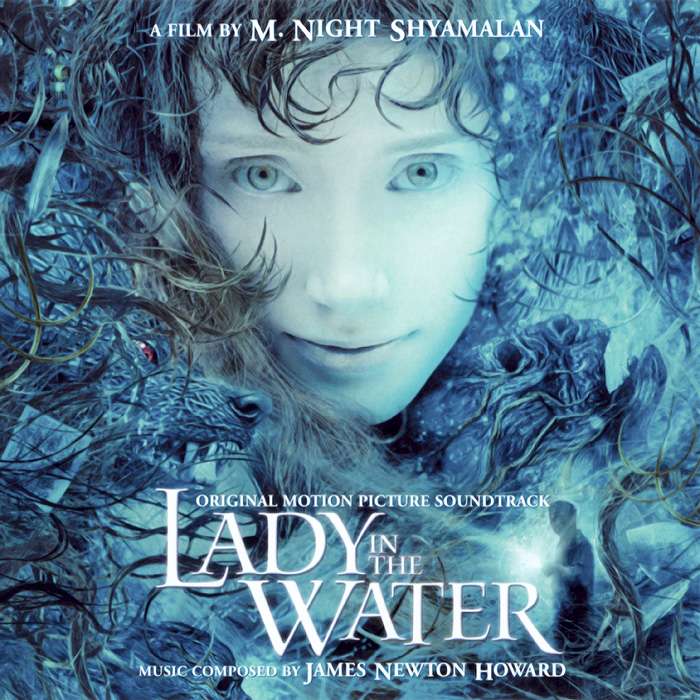
Ah yes, this movie... I won´t talk about it. I like it but it has many flaws and describing them would go beyond the scope of this article. The music however is perfect - as is the sound. There might be some energy missing at the mids but other than that it´s well captured. Treble is extremely gentle, yet extremely detailed and airy. Bass is full and deep but never bloated and the slightly recessed mids are largely responsible for the laid-back sound. On weak systems it can appear to sound too liquid but that´s only because those systems destroy the very delicate textures. The staging is lovely too, it´s wide, deep and perfectly balanced. I cannot listen to this recording on my old Technics SL-XP 300, with that CD player it sounds like shit. So this is not only a marvellous score by James Newton Howard, it´s also able to serve as a Test-CD.

Sadly not many scores by Christopher Young sound as well as this one. If they would however they´d be even more engaging. Mr. Young is primarily known for composing music for horror movies, he composed the music for "Hellraiser", "Species", "Copycat" and "The Grudge". But scoring for horror movies isn´t the only reference, he also composed music for big budget movies like "Spiderman 3" and "The Core". At one thing he excels though: writing for strictly dramatic movies, as a prominent example I´d like to mention "The Shipping News". The knack for emotions might be one of the reasons enabling him to compose horror scores that are perfumed with an underlying melancholia that´s hard to grasp. This melancholic horror is perfectly captured here with the "Excorcism of Emily Rose" which also showcases his talent to use the styles of Penderecki, Kilar, Lutoslawski and Górecki. The latter fact renders him one of the most modern and advanced composers in Hollywood. Of course he doesn´t simply copy them, the wonderful artist that he is incorporates them into his own style. Result: one moment you´re in sheer terror, goosebumps are chasing goosebumps while the next moment you are immensely depressed, melancholic and feel the weight of the world on your shoulders. Mr. Young always is an emotional rollercoaster ride on his better scores - thankfully the sound of this one isn´t for it will make you truly happy. It does have some high frequency sinuses which can be quite distracting but otherwise staging is lovely, the size and placement of instruments stays consistent throughout, the occasional synthesizers are sounding organic and perfectly blended into the orchestra. Sometimes it´s a soundscape not unlike the one described above with "The Girl with the Dragon Tattoo", this time created with an orchestra though. You really should seek out "Emily Rose" before it´s too late, the CD has already started to disappear from stores. It´s really a shame because it´s such a wonderful little gem from an underrated composer.
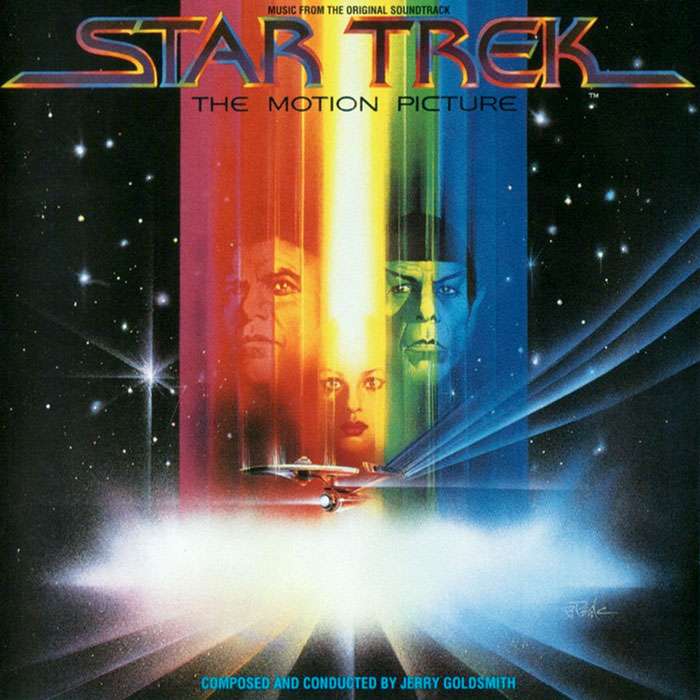
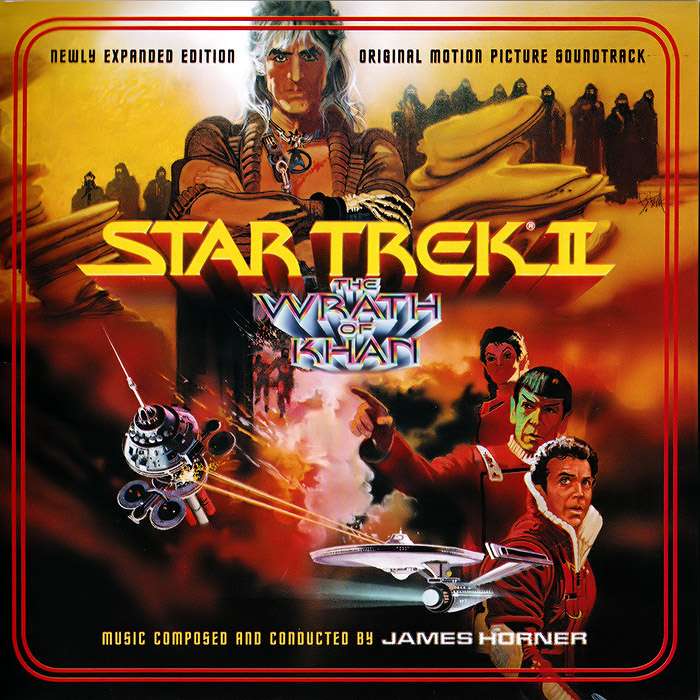
The score to the first Star Trek movie by Jerry Goldsmith is a legend. It´s commonly mentioned alongside scores like "Lawrence of Arabia", "Star Wars", "Titanic", "E.T." and it´s a shame that it wasn´t awarded an Academy Award. It by far surpasses the quality of the movie and its brassy title march was made famous by its use in the TV series "The Next Generation". The post production of the movie (and subsequently the music) was hurried and stressfull. The first theme Goldsmith composed was rejected by director Robert Wise to be too grand and operatic, sounding like "sailing ships". So J.G. came up with the theme we all know and love, a theme that has been performed by many orchestras in the world ever since. And even though the composing was done with little available time the final work is one fine piece of music. It marries a huge orchestra with synthesized elements, an organ and some unusual other instruments (the "Blaster Beam") and it was responsible for shaping the musical world of the entire Star Trek genre. It´s a wonder that the sound holds up very well when keeping the ennerving production circumstances in mind: engineering was done by Bruce Botnick and the resulting sound is wonderful. Dynamics are explosive, there´s an abundance of crispness that rarely gets harsh and a sometimes thundering base combined with an extremely precise and sharp image of the instruments while the ambience that surrounds them is lush. Yes, there is some noise and sometimes it can become a tad harsh but these are only occasional problems that shouldn´t hinder you to seek this score out for it should be on every cupboard.

Another score by Jerry Goldsmith composed for an obscure film that was directed by a director who later singlehandedly wrecked the Star Trek genre with the movie "Star Trek: Nemesis". A flop too, "U.S. Marshals" served as the sequel to the wonderful "The Fugitive" and while the second movie basically was a carbon copy of the first one it still failed to engage audiences and critics alike. The music has its fair share of detractors too, many Goldsmith fans hate it because it´s generally considerd to be too rhythmically complex and devoid of any good theme. I for one always loved it, this score proves that it won´t need a good theme and grand harmony to produce a good piece of music. The sound is lovely too, it was engineered by Bruce Botnick again (19 years after the score directly above) and while it has a very audible sine at higher frequencies it´s nevertheless detailed, crisp, lush and incredibly dynamic. Ambience tends to be too dry at times but that produces the positive side effect that you can pinpoint the instruments embedded in the virtual stage. Very recommended!