Showing posts with label Audioquest Forest. Show all posts

Wednesday, January 09, 2013

Vodoo continued: my final Statement on USB cables


This article here is the final sequel to "Hot Vodoo: Audio differences between USB cables - yes, they do exist" and "More USB cables - more differences". So before you read this one go ahead and scroll through the other two.

Almost one year has passed since my last article concerning USB cables and their sonic signatures was published here. Truth is that I ran out of steam: I didn´t want to do it since I was afraid that I had been measuring the effects of ground loops only. But before I start with the embarassing truth I´ll tell you about the stir those two USB articles created. The articles I refer to (linked above) were written almost a year ago and since then they have been popping up constantly in several online forums. I´ve received visits from Russians, Germans, Americans, Norwegians, Japanese or Chinese citizens to name but a few. Sometimes the participants of these forums made fun of me, sometimes they tried to find out how I was doing things, sometimes I was accused of lying or imagining things and on some occasions people actually tried to help me. It fascinates me to this day that 99 % of all those people didn´t comment here on my blog but only in their respective habitat, forums I´ve never heard of before. Since I´m the most gleefully cunning person I occasionally registered there just to take part in their discussions... and boy, it was delightful to witness how fast participants there transformed from being bullies into polite, elaborate people upon myself unexpectedly taking part in those discussions. Without me it was 'chic' to mock me - so why did people stop when I suddenly entered? I love mockery, especially when it´s about me (I tend to be too self-centered sometimes). This wasn´t restricted to one country, no, it was a trait exhibited by people coming from all around the world. For all those who were doubting me throughout the last year I assume this article will be a field day which is perfectly alright - yet it saddens me that people generally seem to ignore transparency and truthfulness. But let´s start, eh?

USB cables revisited: only the Belkin and the Audioquest were used
In the last article I compared five different USB cables, for the article you are now reading I used only two of them: the Belkin which performed the best & the Audioquest which performed the worst. Since the measurment differences between those two were the strongest I assumed that they´d be the most likely candidates for also showing differences today. Likewise, I used my Creative Labs Soundblaster X-Fi HD USB again... BTW, that was the most peculiar thing... because in those forums I mentionend above I was attacked for measuring cheap hardware 'on my kitchen table'. Well, of course I did, that was the whole point. What good would my test have been if I would measure with expensive boutique hardware (which I don´t own, thank you very much)? I wanted to show results with everyday hardware, something people would actually buy. That way my results would (hopefully) be more comprehensible. Furthermore, assuming that something more expensive is behaving in a superior way is audiophile bullshit. One word about the 'kitchen table' comment... I will ignore it since it reveals opinions much too conservative for my taste. Just something to think about. Back to topic: I had to use the X-Fi HD USB and my ASUS Xonar Essence ST again since I wanted to compare possible differences between one year ago and today. My testing methodology may have changed / improved during the last year, yet I still have to make sure to repeat testing circumstances exactly as before to obtain reliable results.

Creative Labs Soundblaster X-Fi HD USB was used again
For that reason my testing chain then and now consists of the X-Fi HD USB connected via the Audioquest King Cobra RCA cable to the Xonar Essence ST. The last time both soundcards were powered by my desktop PC and since that obviously created the problematic grounding loop I now took a slightly different approach. This time I used my nine year old laptop, an FSC Amilo 1425 which was used to power my X-Fi HD. Naturally this laptop is able to run on batteries, it completely avoids grounding loops that way. Everything else was the same though: the Creative still was connected to the ASUS with exactly the same RCA cable. The laptop uses Windows XP as its OS so I had to utilize the Kernel Streaming plugin for foobar2000 to avoid potentially harmful resampling (one year ago: WASAPI direct connection on Windows 7). Another difference to the older test is that I decided to show you the results of ten test runs (five for every USB cable). I also did five test runs for the last test but I sadly failed to disclose their results. So, let´s have a look at the facts, shall we?

For comparison: Old results, one year ago, both interfaces run from the same PC

Belkin USB cable, two different PCs, one running on batteries,
five different test runs which have been averaged for this table

Audioquest Forest USB cable, two different PCs, one running on batteries,
five different test runs which have been averaged for this table
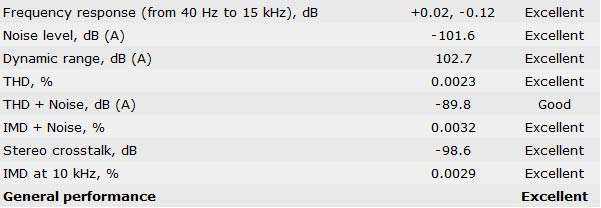
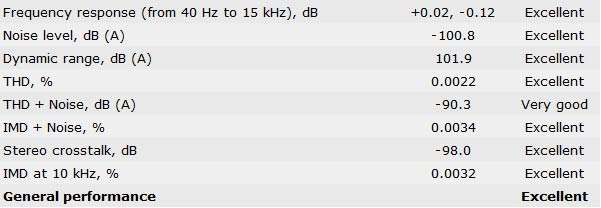
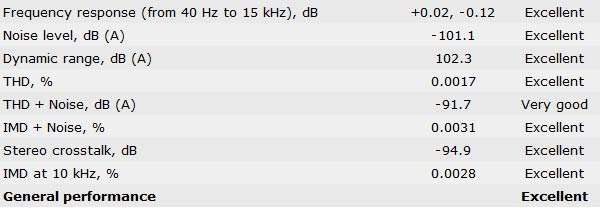
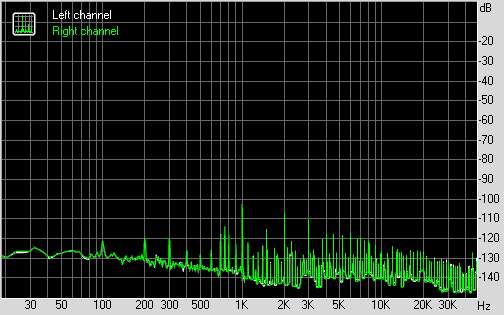
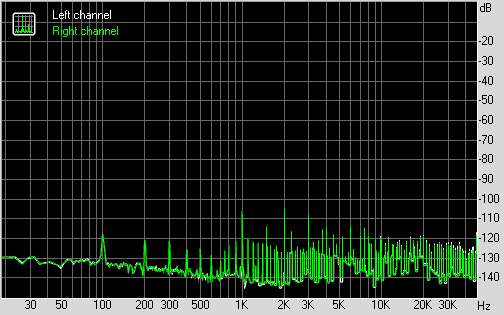
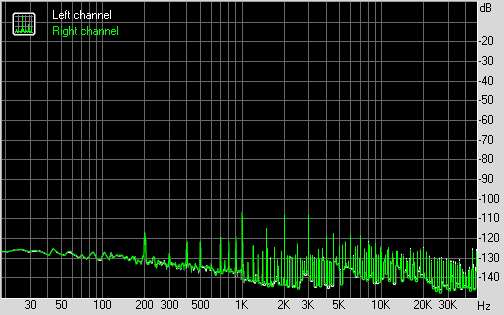
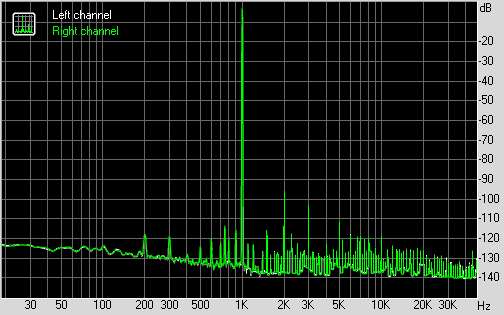
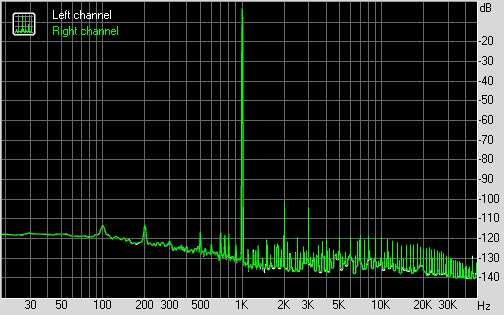
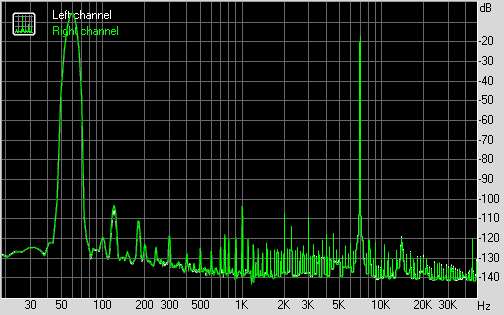
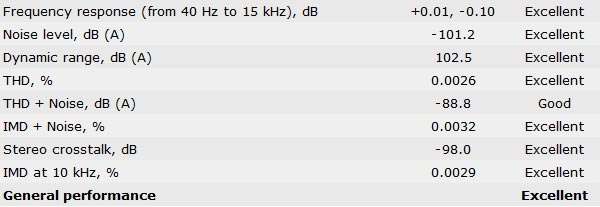
Shit! You now can see that one year ago I indeed measured the effects of a ground loop caused by using the same PC for both interfaces. With one interface running on batteries and by that removing the ground loop I also removed the measurment differences between the two USB cables, the lower resistance of the Audioquest is not important anymore. Yes, the X-Fi HD USB now measures EXACTLY the same with two different USB cables. Which probably means that 1. differences between USB cables don´t exist or 2. that I indeed can´t measure them with my limited hardware or 3. that I need more and different measurments. In any way, two things are now crystal clear: the X-Fi HD USB is a gorgeous performer on its line-out while the Xonar Essence ST boasts an equally impressive line-in. With measurment results as fantastic as these it´s hard to imagine that more expensive soundcards can do much better; you also have to keep in mind that both cards are relatively cheap and are far away from being hardware for demanding professionals. Just take the noise levels: they have improved by roughly 12 dB - Creative was indeed telling the truth by claiming a noisefloor as low as -114 dB for the X-Fi HD. Back to the USB cables: the only differences I was able to find were so small that they are truly insiginificant:

X-Fi HD USB, Belkin USB cable
X-Fi HD USB, Audioquest Forest USB cable
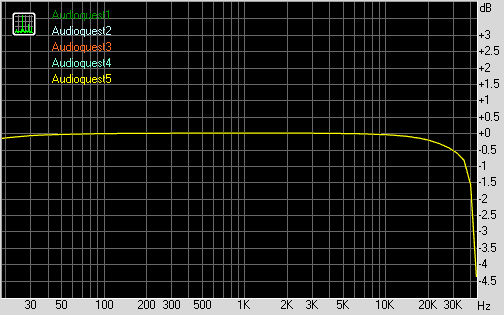
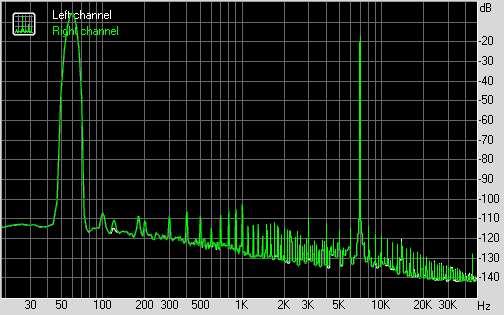
Click on the upper of those two pictures, that way you can scroll between them using your mouse wheel - only then you´ll see that the X-Fi HD USB has a very, very slightly improved high frequency performance with the Audioquest. That´s it. You could now say "Hey, there is a difference!" Erm... no, there isn´t. It is way too tiny to be of significance. Maybe distortions are able to reveal something else?

X-Fi HD USB, THD & Noise, Belkin USB cable
X-Fi HD USB, THD & Noise, Audioquest USB cable
Again, click on one of those two pictures and scroll between them with your mouse wheel and you´ll see that nothing changes - again. If at all, only the noisefloor seems to reveal a slight tendency in favor of the Belkin so I won´t bore you with additional non-existing differences between two pictures. Today I´ve learned two things: ground loops are evil & USB cable differences cannot be measured when using my approach. Phew, now I´m embarrased: I wrote two articles that were basically describing the effects of a ground loop! Stupid, stupid, stupid. But wait, has the sound changed? That´s where it gets interesting because it hasn´t. The X-Fi HD USB still sounds its best with the Audioquest Forest USB and the worst with the Belkin. Let me point out that the sonic differences are indeed small, I assume that they won´t be audible to 90 % of all people. But I started this article with an emphasis on being honest and truthful (which I always am - and which is painful here) and therefore I´ll tell you that I had doubts about my ability to hear things; I was afraid I might have encountered a prime example of a placebo. So I did what I usually detest, namely a Double Blind Testthe results of which you can see below:

foo_abx 1.3.4 report
foobar2000 v1.2
2013/01/09 02:54:00
File A: RAM-Disk:Audioquest.wav
File B: RAM-Disk:Belkin.wav
02:54:00 : Test started.
02:55:31 : 01/01  50.0%
02:56:05 : 02/02  25.0%
02:56:27 : 03/03  12.5%
02:57:05 : 04/04  6.3%
02:57:18 : 05/05  3.1%
02:57:28 : 05/06  10.9%
02:57:45 : 06/07  6.3%
02:58:01 : 06/08  14.5%
02:58:19 : 07/09  9.0%
02:58:33 : 08/10  5.5%
02:58:48 : 08/11  11.3%
02:58:59 : 09/12  7.3%
02:59:17 : 10/13  4.6%
03:00:01 : 11/14  2.9%
03:00:17 : 12/15  1.8%
03:00:35 : 13/16  1.1%
03:00:51 : 14/17  0.6%
03:00:54 : Test finished.
 ----------
Total: 14/17 (0.6%)
I had occasional problems making out differences. It took me 17 trials during roughly seven minutes to find out if I was imagining things - but now I´m at least confident that my ears (and brain) are still fully functional. I´m no so-called 'Golden Ear', those are a myth. Audiophiles often claim that they are able to hear more than, say, skeptical people relying purely on measurments - which isn´t true. The only thing that´s valid to state is that there are people out there who have trained themselves to hear differently compared to others. I only hear this because I know what to listen for, nothing more. I´m also proud of my (perhaps imaginary) ability of not falling for typical placebo effects. "How can Marlene be so arrogant and full of herself?" you ask... maybe you´re right, look what being conceited brought me: grounding loops! All kidding aside, the situation of most of the time knowing what to listen for really isn´t the easiest thing to live with. I sometimes wish to have the gift of blissful ignorance because everytime I hear an album I immediately spot errors or defects & I cannot enjoy the music until they are gone. This might sound contrived to you but it prompts me to ignore bad sounding albums, even if the music is engaging. Imagine the time I could save by not being obsessed with these things. Enough with the cocky self pitying and back to topic!

Measures extremely well on its line-out: Creative Labs Soundblaster X-Fi HD USB

I´m afraid there isn´t that much to conclude. I still hear the effects of different USB cables, yet I´m unable to measure them; the centuries old dilemma of audiophiles. It all leads to you and the decisions you make, dear reader. Are you a believer or a skeptic? I hate to exploit this common prejudice but I started measuring USB cables through external soundcards as a means of diminishing troubles between those two groups - I thoroughly failed. The only thing I did was creating a lot of hot air. Shame on me. I did however learn a few things: more expensive cables have less resistance causing ground loops to leak through more easily, that I cannot measure everything, that ground loops hamper effective resolution and that the X-Fi HD USB is a great performer on its line-out. But where is the benefit for you?


Thursday, January 26, 2012

More USB cables - more differences


Please go ahead and read the first and the third and last article about USB cables - especially the last one is important.

Just like I´m looking above with a lot hairy sausages on my head from the lovely movie "Kismet" I also feel like that inside my head: twisted and taut. The sausages I refer to are obviously more USB cables. My last test revealed measurable differences between two USB cables with similary striking audible results - at least in my opinion. Furthermore I wondered how other USB cables would measure but I couldn´t do test with my other cables because the SoundBlaster X-Fi USB HD required a cable with a Micro USB plug. And yesterday another thing happened: the wonderful Vincent Kars from thewelltemperedcomputer referred to my tests not only on his website (thanks again, Vincent) but also on the Whatsbestforum. One member there made me think about effects related to the power supply and that different cables perhaps would supply power better then others so I was curious since 1. I changed my USB connections since the last test and 2. today I bought an adapter so that every cable can be used now with the SoundBlaster.

I said that I changed the configuration of my USB connections. What I meant by that is that I bought a USB bracket - I wanted to use an additional internal USB hub that has been laying dormant since I got my PC in 2010. Why? Because on my first test the SoundBlaster was connected to one particular internal hub that shared its port with several other devices: a USB flash drive for ReadyBoost, my printer, my external USB DVD drive and my keyboard. Thanks to the new USB bracket there is just one other device beside the SoundBlaster connected to this internal hub now: my DVD drive (which is self-powered). All other devices now either use the new bracket (and by that the previously dormant internal hub) or the third internal hub that has been present before but wasn´t used (stupid me). Oh, before I forget: when I´m talking about internal USB Hubs I´m referring to the ones already built onto the mainboard - not to some external hub that can be bought everywhere. Every PC has a built-in USB controller, to that several internal hubs are connected and these hubs extend to the USB-ports you can see at the back or at the front. In my case I now use four seperate internal hubs. But on to the cables, shall we?

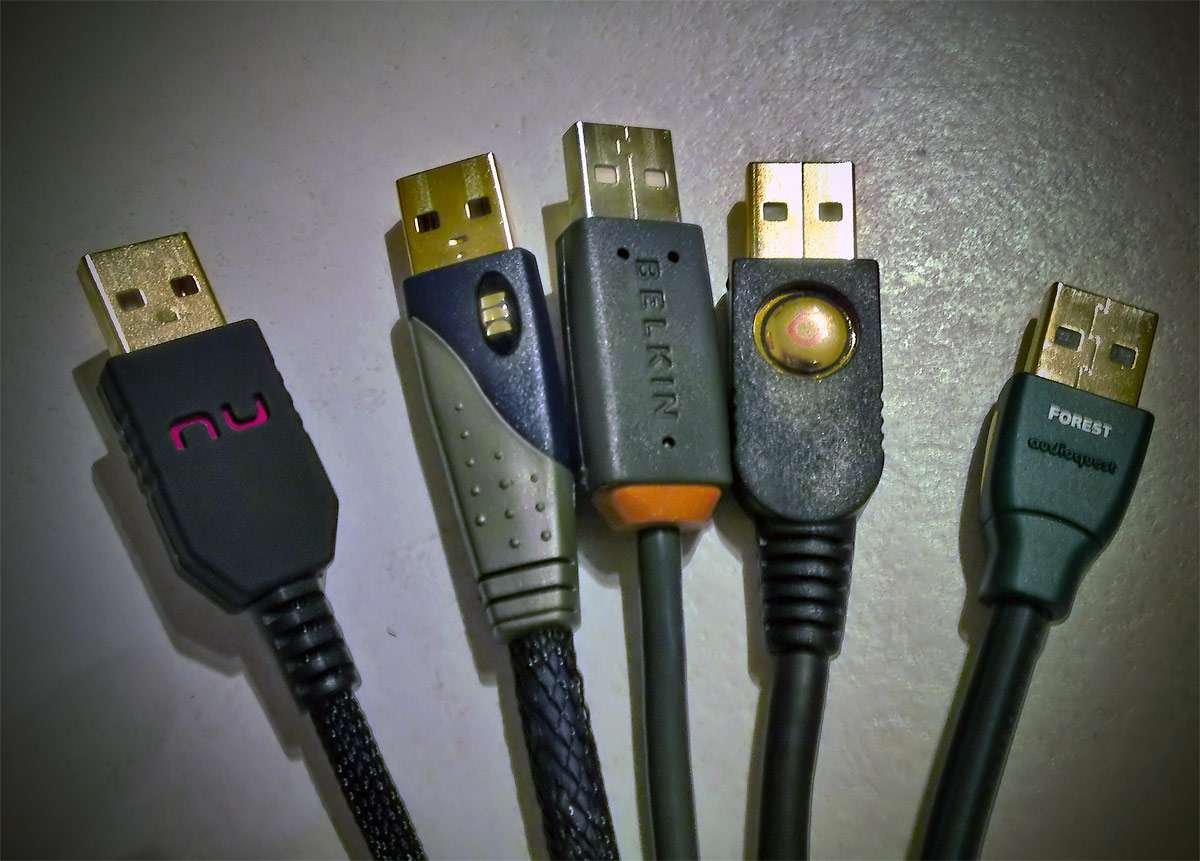
From left to right: NuForce Impulse, Monster USB, a cheap Belkin,
Oehlbach USB and the Audioquest

All cables are relatively inexpensive and all cables - the Belkin being the exception - have the audiophile crowd in mind. The NuForce Impulse was reviewed in the german audio magazine "Audio" some months ago and subsequently was awared their BestBuy. The Monster Cable has been in my possession since 2005 and is the most expensive cable (I paid roughly 60,- Euros but it has dropped in price considerably since then) and it is not even USB 2.0 certified. The Belkin is a cable I bought for the cheapest money possible and it has been used with my scanner only after testing it. The Oehlbach was bought in 2010 for connecting my E-MU but for quite some time now it has been used with my external DVD drive, the E-MU now is connected to the NuForce. The Oehlbach, the Audioquest and the NuForce each cost around 30,- Euros. Despite its price the Monster started to disintegrate a few years ago (the mesh that covers the cable has become very brittle) but it still functions well. For this test I also ignored the cable that came with my SoundBlaster since I was more interested in how these other cables would compare to the Audioquest. Secondly I have not been doing any listening tests with these cables. But I can tell you that I´ve thouroughly reviewed them for myself over the years with my E-MU: the NuForce "sounds" the best, very far away is the Oehlbach that "sounds" relatively similar to the standard cable (only slightly more precision), then comes the Monster that adds too much bass and shows wrong timing while the Belkin sits firmly on the last place by being the worst cable of them all (worse then the standard cable).

NuForce Impulse

Monster USB

Belkin USB

Oehlbach USB

Audioquest Forest USB

An alert reader will by now have discovered that the measurments for the Audioquest have changed since my last test: the noise levels have been improved considerably. This is very interesting since the SoundBlaster is still connected to the same USB port - but I also disconnected three other devices from the same internal hub. Since the other devices are now missing the Audioquest fares visibly better which could mean that USB interfaces in general are susceptible to other devices connected to the same internal hub, an effect possibly amplified by more expensive boutique cables. BTW, the test conditions have not been changed (apart from the disconnected USB devices) since the last test. The recording device still is the ASUS Xonar Essence ST, the levels are the same as are the used driver interfaces and the Windows configuration. So, by looking at those charts you´d think that nothing interesting has happened, right? Because with the exception of the Belkin all cables appear to measure more or less the same, the small differences can be ignored because of a possible error margin coming from the used soundcards (although I again repeated these tests five times each and the results were always consistent (differences were +/- 0.2 dB at max)) - or can they not?  
And because it´s so important for you to understand what I´m really doing here I´ll repeat these sentences again: when I talk about "measurments" you cannot take that literally! From a scientific standpoint my results are nothing more then nice looking pictures. I don´t know how RMAA "measures" but the pictures you can see most likely are several separate results taken over an unspecified period of time that have been middled or averaged for the picture (in essence, the pictures are all graphs). For showing a real difference I would have to take my five "measurments" of one cable, average them, then take the other cable to do the same. Finally I would have to do a statistically valid comparison or calculation between those two averages to express the differences in percentages. But since I´m not a scientist and since I´m a jerk with statistics I won´t be (cannot) doing this, I´m just Marlene D. and I like to play around a lot.

Noisefloor NuForce Impulse

Noisefloor Monster USB

Noisefloor Belkin USB

Noisefloor Oehlbach USB
Noisefloor Audioquest Forest

As you can see the RMAA charts above don´t show everything. RMAA also misinterprets noise as distortions, I´ll show that during the next pictures. The plots however reveal that the Audioquest still shows roughly the same noisefloor response just like last time: deep frequency noise is visibly higher when compared to the other cables even though the overall noisefloor has been decreased. The NuForce and the Monster show the same noisefloor while the Oehlbach is a mixture of those two and the Audioquest. The Belkin however is another case: high frequency noise has been increased roughly 10 dB. Now to the THD (Total Harmonic Distortions) measurments:

THD NuForce Impulse

THD Monster USB

THD Belkin USB

THD Oehlbach USB

THD Audioquest Forest

There we have it again: the Belkin cable shows the highest high frequency noise whereas all other cables behave quite normal - the Belkin also shows the highest distortions. The Audioquest again shows more low frequency noise but distortions of the Audioquest/Soundblaster combination are slightly lower (especially the peak at 2.000 Hz). I´m at a loss here, dear reader, because I don´t know what that means. Perhaps the more expensive cables deliver power from the USB port a bit "better" in a way that shows faults of the PC power supply. Or they submit errors produced by other connected devices better or worse (maybe the standard cable has something built-in that rejects those errors). Anyhow, one thing is for sure: when you connect a USB sound interface to your computer you should make sure that - if possible - no other device is connected to the same internal hub (you can have a look at the usage of the internal hubs with the Device Manager in Windows) because it appears that the more expensive boutique cables reveal USB errors or shortcomings of currently unknown kind different then standard cables. Phew, now I´m going to have a smoke, a coffee and a piece of sweet cake... ;)


Last update: 09.01.2013

Tuesday, January 24, 2012

Hot Voodoo: Audio differences between USB cables - yes, they do exist!


Before you even start I also recommend reading the continuation of this article and also the final conclusion about my USB tests, they are quite interesting and shed an embarrasing light onto the first two.

You might find it ridiculous that I´m talking about sonic differences between USB cables but let me assure that they exist. In theory though - and the audiophile objectivists will tell you that I´m obviously insane, mad or the devil - there shouldn´t be differences at all. I mean, a USB cable is just a digital cable that works inside a computer environment and - unlike an analogue cable affected by magnetism, distortions, noise, etc. - follows a certain set of rules and is unaffected by usual cable defects just like any digital cable. But countless people have claimed that if they connect their USB soundcard to a (usually much) more expensive high-end cable from a boutique manufacturer the sound of this soundcard will be improved considerably. Yes, some of these people are really mad: would you, dear reader, connect a USB soundcard for $ 500 to a USB cable for another $ 500? Yeah, me neither... oh wait, I´m gonna do the same - albeit on a much smaller scale. Gosh, I´m turning into one of those nincompoops full of bigotry ;). And I never was a bigot, I am Marlene Dietrich, an angel, a saint... oh, shut up.

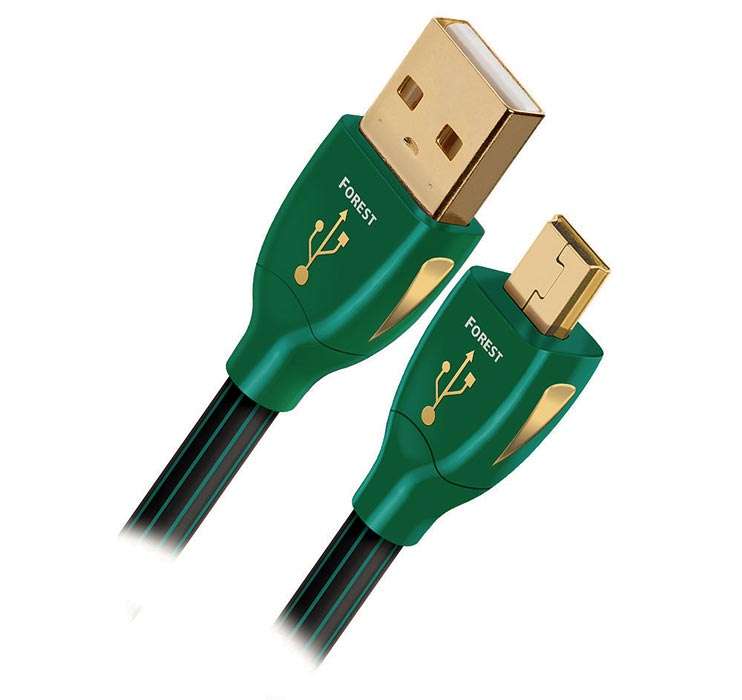
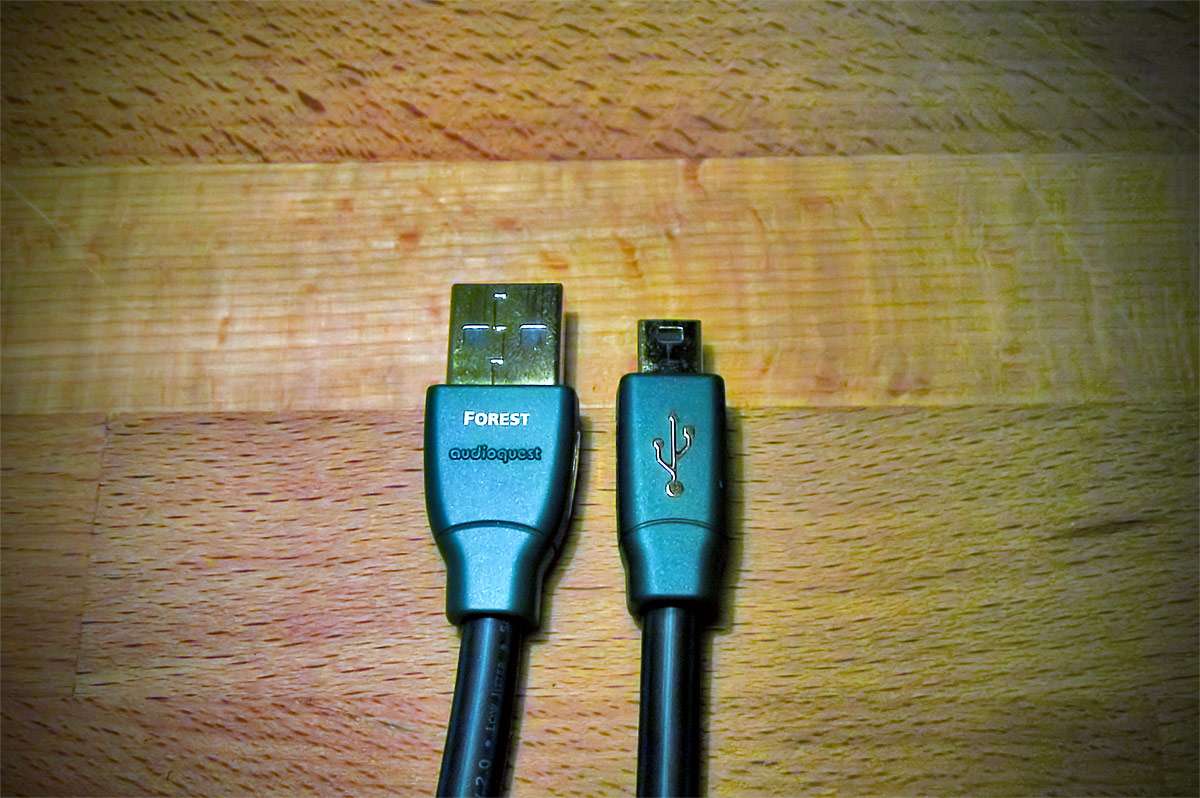
Beautiful, isn´t it? (Copyright by Audioquest)

Anyway, today I´m gonna review or look at an inexpensive USB cable, the Audioquest Forest USB (you can see it above) cable which I bought especially for my SoundBlaster X-Fi USB HD. I´ve owned a special USB cable before which I also bought for my first soundcard, the SoundBlaster Live! 24 Bit external. It was from Monster Cable, looked and felt cheap and was bought in 2004 for little money. The quality of this cable doesn´t seem to be good: after almost eight years in constant use it now starts to disintigrate, the plastic of the plugs looks coloured, the always blinking LED at one end has stopped blinking (which actually is a relief since the blinking was ennerving). That´s when I bought a USB cable from german manufacturer Oehlbach, much better build quality but almost no sonic difference to a standard cable. Then just a few months ago I bought the Impulse USB cable from NuForce and that one finally delivered the audio quality I expected from my external E-MU 0202. Finally a few weeks ago I bought the new Audioquest Forest because I couldnt´find an adapter in order to connect the NuForce Impulse to the Soundblaster (I needed a Micro plug). You can see by that little backstory that I quite believe in different sounding USB cables. Rather unusual as I pride myself in not being prone to audiophile bullshit. Even worse: all those years I have been trusting my ears only - but now with my new and wonderful SoundBlaster and the new cable from Audioquest I finally decided to do some measurments. And here is an important information that I´d like you to read very carefully: when I talk about "measurements" you cannot take that literally! From a scientific standpoint my results are nothing more then nice looking pictures. I don´t know how RMAA "measures" but the pictures you can see most likely are several separate results taken over an unspecified period of time that have been middled or averaged for the picture (in essence, the pictures are all graphs). For showing a real difference I would have to take my five "measurments" of one cable, average them, then take the other cable to do the same. Finally I would have to do a statistically valid comparison or calculation between those two averages to express the differences in percentages. But since I´m not a scientist and since I´m a jerk with statistics I won´t be (cannot) doing this, I´m just Marlene D. and I like to play around a lot.

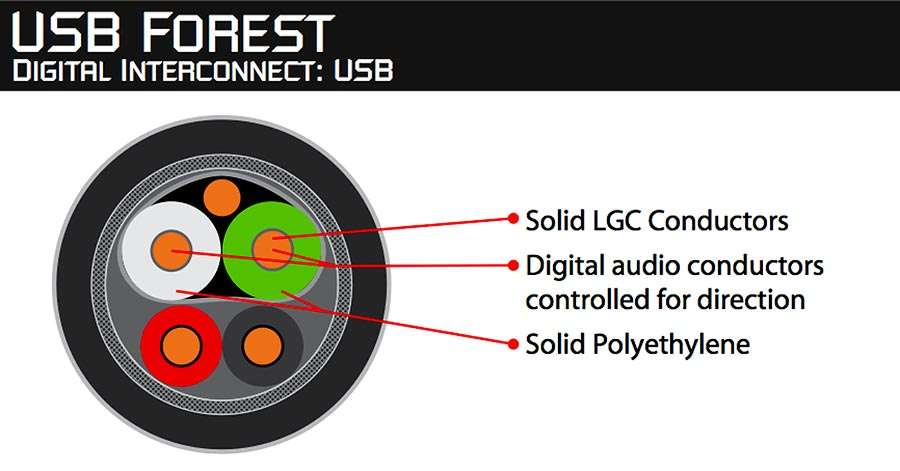
This is how the cable looks from the inside
according to Audioquest (copyright by Audioquest)

As you can see above the cable uses solid copper conductors, just like every Audioquest cable. I also made very good experiences with my Audioquest Topaz (bought in the '90s) and my King Cobra (the silver connectors are awful though - because silver corrodes) so the decision for a cheap Audioquest cable was easy, it cost 29,- Euros (incl. shipping), half of what my SoundBlaster did cost. Yeah, paying half the money necessary for a brand new SoundBlaster - but for a cable instead.

For this cable to be exact
Overkill, you say? Stupid? Maybe... but I´m gonna show you that my SoundBlaster measures different with this cable and I´m also gonna show you that it sounds different - much different in fact. And just like in my last review I will present to you some excerpts from some tracks I recorded from the SoundBlaster, the first time connected to the standard USB cable, the second time to the Audioquest cable. In case of the SoundBlaster playing back the music I recorded its output with my ASUS Xonar Essence ST (via ASIO with WaveLab), connected with the King Cobra RCA cable of course. On every recording the configuration and the playback / recording levels were exactly the same (on both cards: 0 dBfs) - only the USB cable was different. Samplerates were the same every time, playback was done with WASAPI Event Style on JRiver Media Center when the SoundBlaster was used and with ASIO when the ASUS was used for playback. And just in case: Windows was configured to use the samplerate of 96 kHz only in both cases (as was the ASUS). I even repeated the measurments five times with each cable because I couldn´t believe my eyes: I never expected the SoundBlaster to measure any different when used with different USB cables. But on to the measurments:

IMD, standard cable,
from SoundBlaster to ASUS

IMD, Audioquest cable, from SoundBlaster to ASUS:
the noise floor is much higher and more consistent

Result general performance, standard cable, SoundBlaster to ASUS:
pretty much like my first tests

Result general performance, Audioquest cable, SoundBlaster to ASUS:
much worse. Noisefloor increased for +6 dB, more distortions, more crosstalk.

Surprised? Yeah, me too. I don´t know if the cables is broken. I only know that after seeing those results I tested it with my Sansa Clip+ and an external HDD - no errors or slower speed (because of re-reading faulty data) during data transmission. I assume it has something to do with the power supply unit in my PC, which would explain why these results only show when the SoundBlaster is connected to the ASUS. It´s curious because my power supply is a rather good one from Enermax, a well regarded manufacturer of power supplies. Or it´s my mainboard that is doing something wrong. Or something inside the cable isn´t connected and it´s on the brink of not functioning. I don´t really know, I can only guess. In any case, the SoundBlaster measures worse when connected to the Audioquest cable. Here are now my two ratings for the X-Fi HD USB with the standard cable and the Audioquest:

Standard cable:

Sonic Balance:
Dynamics:
Resolution:
Stage / Ambiance:
Character:


Audioquest Forest USB

Sonic Balance:
Dynamics:
Resolution:
Stage / Ambiance:
Character:

For testing I used two scores by Jerry Goldsmith: "Looney Tunes: Back in Action" from 2003 and "Dennis" from 1993. Since you will be able to download those two 30-seconds excerpts from these scores I´m going to explain to what things you have to pay attention to: on the Looney-tunes track there is a percussion group mixed to the front. Behind it you can hear the full orchestra performing. With the Audioquest cable the attacking sforzandos of the orchestra are more noticeable, especially their reverb tails. After one third into the excerpt a plucky synthesizer will join the two groups, mixed to the center area: it can be perceived better with the Audioquest cable. Overall, the sound with the Audioquest has more warmth and more punch - although some people might prefer the more slimmer, seemingly crisper sound when the SoundBlaster is used with its standard cable.
On the Dennis-tracks the virtual stage is not so flat with the Audioquest. Again you can observe a more punchier, warmer sound with an improved perceived dynamic: the deep bass hits of the orchestra are more impressive. With the standard cable the strings sound more like metal, almost gritty. With the Audioquest they have more gloss (which was preferred by J. Goldsmith in the '90s). You should do - as I did - an additional DBT, it too will reveal differences because they simply are big enough to be perceived everytime.


Oh come on, it´s beautiful - for a cable
Which cable do I prefer? I really don´t know. Does the Audioquest fake something? Does the standard cable lie? I´m at a loss here, I cannot answer that question. It appears that I have to continue my testing - I have to get an adapter so that I can use my other USB cables with the SoundBlaster in order to find out if it´s just the Audioquest creating errors/improvements and if the other cables are doing the same - or not. Until then I´m going to enjoy a sound with my SoundBlaster that defies its price of roughly 100,- Euros (incl. the cable) - even if it is not the truth or a somehow faked sound signature.


Latest update: 09.01.2013
Related Posts Plugin for WordPress, Blogger...

The Socials