Showing posts with label portable cd players. Show all posts

Monday, April 07, 2014

Conclusion for eight reviews of vintage portable CD players


Introduction

Eight months for eight vintage portable CD players. That´s the time it took me to write the final article of my biiiiiiiiiig comparison. I hated that one and the article you´re reading even before I wrote them. I´ve felt them to be a huge mountain I had to climb before I´d be able to write anything else. For quite some time I´ve been planning several articles I want to write... about the FiiO X3 which I bought in October 2013, the FiiO X5 which was loaned to me by FiiO, about audiophiles / objectiphiles, MD recorders / players, etc. But the mountain kept getting bigger and bigger, all because these fuckin' things have been blocking me all the time! Not anymore.
You know... when I think about it, this comparison might be the last. I´m not interested in reviewing CD players anymore, they´re too bulky, most of them have bad headphone outputs, and so on. There are only two players I still want to have: the Technics SL-XP 700 and one of the more recent Sony portables with ATRAC3Plus decoding. That´s it. But before I talk too much, let´s get on with this conclusion.


The candidates

A bunch of vintage portable CD players


Sony D-202
Shall I recommend it? I don´t know. The line out sounds well enough for its age, the headphone output on my unit is broken. But it´s safe to say that the headphone output isn´t very well engineered anyway. The D-202 is one of those players often recommended by collectors, many times for the wrong reasons. Collectors pride themselves of knowing exactly which one of the vintage portables sounds best when in reality they´re listening to a bunch of errors produced by the headphone out. They then talk about 'warmth' and 'character'... nope, I´m sorry but those are all caused by cheap engineering. The D-202 is no exception as it´ll sound well over the line-out only. The rest? Built quality is mediocre, reliability might be an issue (for Christ´s sake: it´s 23 years old).


Technics SL-XP 505
Well, I could repeat the text from above written for the Sony D-202 as the SL-XP 505 has the same basic problems (age-related reliability problems, built quality, headphone output sound issues) so I concentrate on the one redeeming feature: sound quality. Remarkably characteristic over the line out (see? Told you that collectors like me recommend for the wrong reasons), it might offer a tasteful alternative for people seeking something that sounds well with pop, rock and jazz. All others: stay away from it.


Sony D-111
No. Just no. Don´t ever consider it, it feels like crap, sounds like crap, it is crap.


Grundig CDP-70
Performs well over the line-out. Might even be able to replace an older, stationary CD player. On the other hand it has one of the worst headphone outputs I´ve ever heard and measured. Built quality is awful too... well, it matches the ugly design so if I´d want to be positive I´d call it coherent (yes, I´m a cynic). Decide yourself. You might actually decide against it; it´s 21 years old, spare parts will be a problem, especially since the company that built it doesn´t really exist anymore.


Sony D-E705
Well designed and built, feature heavy (including a digital output), what more is there to desire? Ah, yes... the sound. The D-E705 sounds overly warm, like a warm cushion really. Only for people who want a warm and slow, not too aggressive sound. All others take the digital output (mediocre quality). If you want superior built quality, have a look at the D-E805 - it´s the same unit with a metal lid instead.


Sony D-E555
In essence the same player as above. No sonic differences, same features, different design (not for the better).


Sony D-E441
Almost boring sounding player. Otherwise a characteristic sound signature (doing it again), one I don´t like very much. But each to his/her own. I don´t know why, but people seem to like this player. On eBay it tends to fetch comparably high prices, if it´s the design or something else, I do not know. I certainly wouldn´t buy it again yet I´ll keep it only because it contains a spare drive for my Sony D-465.


Ciron QXX-28
At heart a very good stationary player. Ridiculously cheap no-name model. If it breaks down, it won´t hurt too much. Repairing it with spare parts? Not possible because no one knows who built it. Headphone output is usable with demanding high impedance headphones only because of very high noise floor. Sounds very well over the line out (with ESP off). Will also play MP3 with very high quality (but not gapless). Of the eight reviewed players, the QXX-28 is the only one I can partially recommend. But only if you use it at home and if you´re still able to get it.

Conclusion

You know, I have enough of portable CD players. I prefer MD technology when it comes to ancient media formats. Or modern DAPs like my FiiO X3 (yet to be reviewed). Or, I don´t know, something else (but not vinyl). Portable CD players however are only one thing: a reminder of ancient technology, nice to look at... some feel even good at the touch. But not these eight players, they´re all made out of plastic and their built quality isn´t on par with the more expensive models like the Sony D-335 or D-465. In terms of sound some fare well, most do not. I´m sure of one thing however: I cannot recommend any of them fully. All of them have more or less crappy headphone outputs, necessitating the use of an external headphone amplifier like the FiiO E06 or the E07K. Ironic as they are built for portable use, yet most of them are at their best when NOT used outside but at home. In hindsight I´m glad their time has passed. Before you panic: I might return at some point to vintage PCDP... it happened to me before on MD technology. Right now however I´ve enough of them.


Last update: 07.04.2014

Review: Ciron QXX-28 (2006)


Fig. I: Ciron QXX-28
This review is part of a larger comparison containing seven eight vintage portable CD players and the penultimate of these reviews. You can find the final conclusion here.

Overview

The Ciron QXX-28 was bought in September 2013 especially for the purpose of comparing to the other 7 vintage portable CD players; over the last years I´ve often seen it popping up on eBay, offered by various sellers in Germany. Since it has a long and interesting feature list I was curious if a gadget that´s as cheap as the QXX-28 (I paid 25,- Euros) would still sound well enough. After all, the price, the design and the feature list cater to a specific crowd (people not interested in sound, but in features and 'good' looks for almost no money). Well, what IS it able to do? I´ll give you a list:

- can play MP3, WMA, Audio CD
- built-in USB 1.1 port
- built-in SD/MMC cardreader port
- plays MP3, WMA and WAV from USB drives and SD/MMC cards
- extracts and converts Audio CDs to MP3 or WMA on USB/SD/MMC
- 160 seconds ESP for Audio CDs, 450 seconds for MP3

- CD Text capable
- ID3 capable
- charges 2 batteries
- EQ with 7 settings

These are the basics. Apart from that it can do what other portable CD players can do: skip tracks, searching within them (works with MP3 too), you can program a tracklist, random, repeat, etc. Apart from the headphone output it also offers a line-out (probably fed by the same amp driving headphones). Ah, while I´m at it: I´d love to tell you something about the ICs it uses... but sadly, I cannot find many of the ICs anymore. I only know that the D/A converter is a 1-bit DAC with 24 bit resolution, manufactured by Panasonic. Decoding of MP3, WMA and other DSP-related stuff is achieved by a SoC (ARM design) from MCS Logic.

Fig. II: drive of the QXX-28
But who is Ciron? I only know that the company doesn´t exist anymore. It was a reseller from Germany, founded in 1999. They sold electronic items like this one for cheap money and, apparently, they didn´t do this too well since they went broke sometime around 2009. In any case, they were only reselling the QXX-28. It was built by someone else and it has been impossible to find out who exactly built it. The only thing I found is a link to an even more feature-heavy version of the QXX-28, able to play DVDs (click here).

Fig. III: center button and display of the QXX-28
But how is the built quality? Like you would expect it to be for a gadged this cheap. It´s white of course, 'cause white has been all the rage thanks to Apple. The plastic housing feels thin and cheap, buttons are wobbly (especially the center button on the lid) with an awful tactile response. The firmware too has some problems: MP3 and WMA playback isn´t gapless (there´s a pause of roughly 2 seconds between each track), it sometimes crashes, even when it does something easy like playing back CDs. The grabbing-to-USB/SD/MMC is useless; it does this with 1x speed and the quality of the encoding is generally awful. Otherwise, playback of lossy codecs works well (including sound quality). The ESP is of the ADPCM compressing kind with all its advantages and disadvantages. It´s always active unless you switch it off using the center button (it´ll stay off as long as the QXX-28 has power). And the sound?

Listening test

Headphone out

Ergh... the headphone output might actually be usable if there wouldn´t be the high noisefloor. Noise is almost always audible and the amount is independent from the setting of the Volume wheel. For low-impedance headphones (you know, the ones most certainly used with portable devices) it´s completely useless because of a relatively high output impedance causing bass drop-off and frequency errors. But it works like a charm with the Sennheiser HD-600: noise is absent (because of the HD-600s insensitivity), impedance errors are too and - lo and behold - it even gets loud enough! But for portable use? Forget it.

Line out

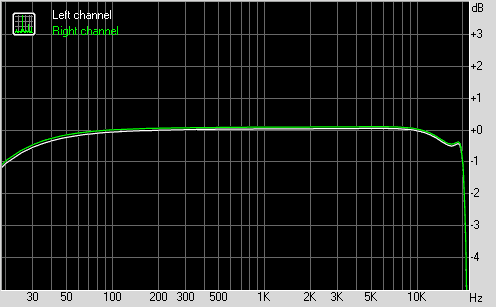
I´ve said it often enough: the price of an audio device rarely relates to its sound quality. The QXX-28 sounds surprisingly good. Really. Provided you switch off the ESP. If you do so, you´ll be rewarded with a stage that´s exactly as wide as on my reference files. There´s only some very slight impairment of image stability, soloists in the center of the stage feel a tiny bit more distant with impaired articulation. Bass is good, apart from a sometimes audible drop off of lowest frequencies (below 80 Hz I´d say). When it comes to precision and definition, the QXX-28 smoothes the impact of high frequencies. Details however are on par with the reference. Smoothing treble usually affects dynamics; this is apparent on the QXX-28. It´s slightly less snappy than the references but otherwise fairly close. All in all, this is the best of all the 8 players I´ve reviewed for this comparison, in part because it doesn´t exchange the character of the music it plays with its own, it completely retains it.

Sonic Balance:
Dynamics:
Resolution:
Stage / Ambiance:
Character:

Fig. IV: QXX-28 outputs, source selector and volume wheel

Fancy graphs (measurements)

Line-out

Fig. V: QXX-28, line out, CD
Fig. VI: QXX-28, line out, MP3
I´ll make short work of this section... people don´t seem to be interested in measurements. It´s stupid to ignore them (electronic devices are pure science, therefore they adhere to scientific principles like... measurements) but that´s the way it is and so I have to deal with it. For that reason, I´ve skipped the graphs and my explanations. Take the remaining pictures as you like. Anyway, for a portable CD player that´s as cheap as the QXX-28 the measurements are more than ok. Fig. V was done with my usual test CD, Fig. VI was done with MP3 files (320 kBit/s) and the results show that this player decodes MP3 with full floating point. Wow! I´ve never expected this. This old, cheap player adheres to the recommendations I made in November 2013. Stunning.

Fig. VII: CCIF intermodulation distortions
Fig. VIII: QXX-28, jitter
Fig. IX: QXX-28, impulse response
Headphone out

Fig. X: QXX-28, frequency response with headphones, several impedances
Fig. XI: QXX-28, total harmonic distortions
Fig. XII: QXX-28, intermodulation distortions
Last update: 03.04.2014

Thursday, October 03, 2013

Review: Sony D-E441 (1999)

Sony D-E441, view from above
This review is part of a larger comparison containing seven eight vintage portable CD players and the penultimate of these reviews. You can find the final conclusion here.

Overview

I bought the Sony D-E441 one and a half year ago and initially I never intended it to be reviewed here. I purchased it only to have a spare drive for my Sony D-465. They both share a similar drive mechanism (including the DAX-11 laser) and since the D-465 is fairly unreliable I thought it to be wise to have a back-up of sorts. But surprise: the D-465 still runs decently (with few exceptions) so I´ve started to use the D-E441 for listening. It sounds quite pleasant so it might be a nice thing for some people.

Sony D-E441: side view
On the photograph above you can see that it´s quite clunky, it doesn´t feature the compact elegance of the D-E705 and the D-E555. Manufacturing quality isn´t on par either. Take the lid: it is thin, flabby and seems quite fragile. The volume button is unmarked, numbers indicating how one adjusted the gain, are missing. Not convenient. An optical output is missing as well, a line-out is present though. Inside it still shares many parts of the aforementionend models. The D/A-converter is still the Toshiba TC9438FNL, the headphone amp the TA2120FN (used in the D-E555). The ESP2 feature is again controlled by the NPC SM5902, it also employs ADPCM compression. But one thing about the ESP feature is very different: the D-E441 always stores roughly two seconds of uncompressed audio in its RAM. If you start playback, the disc winds up to double-speed and pre-reads audio material into the RAM-buffer. After this buffer is filled, it winds down to normal speed. So even when the ESP isn´t activated you always have a working, non-compressing buffer at hand - and that IS convenient. There is a disadvantage to this method: depending on the drive speed it creates some small sines which are wandering erratically through the frequency band (see the measurements below).

Sony D-E441: detail
Listening test

Headphone out

I feel like a broken record... but don´t use the headphone output, please don´t. You won´t have the bass drop-off so prevalent on the D-E705/D-E555 - it seems to have a low output impedance. Yet it distorts so much that I at first though I had done something wrong during measurement. But no, the headphone-out-produced distortions are clearly audible... and naturally, I repeated the measurements to confirm my findings.

Line out

The line out sounds calm. Very calm. On the brink of being boring. The D-E441 is a warm sounding player, reducing highest treble and deepest bass. Timing and snap however are very, very good, it is neither too fast nor too slow. The perceived diminishment of the extreme frequency response ends however reduces punch considerably. When it comes to imaging, articulation is very good and superior to the reference. On the other hand, instruments that are supposed to be placed beside the artist who´s singing/playing in the center, move quite a bit behind her/him, hiding there. A stage as compact as this one usually helps depth and holographic impression. But not here, it´s not only compact, it´s also flat. BUT: it has immaculate stability, instruments never change their size or place, they are riveted to their spot. Reverb feels like an integral part of the virtual stage (unlike the D-E705/D-E555). The 'warm' impression the D-E441 makes, is augmented by dropping musical details audible on the reference files. Differentiation suffers as well, it isn´t able to resolve parts of the music that need to be resolved. All of this creates a warm, friendly, tasteful character with immaculate imaging stability. Critics could now argue that it doesn´t sound warm but boring; they´d be right too. With some material this warmth and friendliness is indeed unbearable and sleep inducing. So if you want to own it, please consider carefully what you´re in for, if you like its characteristic sound signature.

Sonic Balance:
Dynamics:
Resolution:
Stage / Ambiance:
Character:


Listen for yourself!

In this section you can compare my reference files to the recorded output of the Sony D-E441. I´ve uploaded several 30-seconds excerpts (fully legal) to Soundcloud for you to compare. This an example of transparency you won´t find anywhere else; what magazine offers audio examples of the device it reviews? These examples also serve to show how close to the source itself any device sounds when level differences are eliminated. I fully expect that some of my assessments might sound arbitrary to you, that is because differences with sources are tiny in reality. But please remember that EVERY other reviewer in the world faces the same problem. When you hit 'play' the files will be streamed to you in 128 kBit/s mp3, badly encoded. Therefore, I strongly advise you to download the files, they´re in 24/96 FLAC. With these files you not only have the highest quality possible, you´re also able to have a look at the aliasing performance of the Sony D-E441 if you want.
I wanted to upload two files to Soundcloud so that you, dear reader, would be able to compare them to their respective reference files. But as it appeared I wasn´t allowed to. Soundcloud accused me of breaking the copyright of the respective owners of the material I have been using so far. It´s funny, I didn´t even receive any warning beforehand... something like "Excuse me, Lable XYZ has alerted us that you use our platform to illegally distribute material... blablabla." I don´t distribute illegal material of course, but for labels/streaming providers, just about anyone is obviously a potential thief, redirecting the precious loot that in their mind is allotted to them by divine right. I´ve written Soundcloud an email, asking for more information. Let´s see how they answer. Depending on their answer I will decide if I´m keeping my 'Listen for yourself'-feature or not. I´m under the impression that I´ve done nothing wrong. I followed the 30-seconds-rule (it isn´t a rule really) and my blog is clearly NOT commercial (and won´t ever be) so I don´t know what their problem is.

Sony D-E441
Fancy graphs (measurements)

Line-out

Sony D-E441, RMAA's own quality assessments
Sony D-E441, frequency response
Sony D-E441, noise floor
Sony D-E441, total harmonic distortions + noise
Sony D-E441, intermodulation distortions
The line out of the D-E441 distorts less than the line outs of the D-E705/D-E555. But there are some odd peaks visible just above the noisefloor, these are caused by the CD drive winding up and down. I don´t exactly know how the workings of the drive mechanism are able to sneak into the audio signal, I also don´t know if they have an effect on the sound. They shouldn´t since they are so small... but I can´t be sure. On the whole, measurements are not bad yet they aren´t stellar either.

Sony D-E441, CCIF intermodulation distortions
Sony D-E441, jitter
Sony D-E441, impulse response
Ultrasonic aliasing (imaging) distortions are strong, the two models I´ve reviewed before utilize the same D/A-converter, so it isn´t surprising that the D-E441 behaves similarly. The jitter measurement is a bit misleading: the sines right to the 11.025 Hz sine were moving over the duration of the jitter testfile; in the beginning of the 60-second file they started below the 11.025 Hz sine at roughly 8.000 Hz (CD drive winds up), at the end of the test file they were just above it, stabilizing there (CD drive now is at normal speed). An example of the CD drive leaking into the audio signal. At last, the impulse response of the D-E441 gives the impression that Sony indeed was experimenting with non-standard aliasing filtering around that time, the D-E705/D-E555 exhibit the same response. Perhaps a reason for the slightly warm signature all three players are sharing.

Headphone out

Sony D-E441, frequency response with headphones, several impedances
Sony D-E441, total harmonic distortions + noise with headphones, several impedances
Sony D-E441, intermodulation distortions with headphones, several impedances
I don´t know how often I´ve repeated these measurements... but I always came up with the same result. In short: the headphone output of the D-E441 sucks big time. While frequency response indicates a low enough output impedance, distortions are so severe that a balanced sound cannot ever be approached with this model when the headphone output is employed. I have to tell you though that distortions can be lowered considerably when the volume is lowered to half of what´s possible (which isn´t easy with the missing indication numbers). Only then you´ll lose lots of gain which defeats the purpose of using the Sony in loud environment. Just use a portable headphone amplifier and connect it to the much better line out.

Last update: 03.10.2013

Sunday, September 29, 2013

Review: Sony D-E555 (1999)

Sony D-E555
This review is part of a larger comparison containing seven eight vintage portable CD players and the penultimate of these reviews. You can find the final conclusion here.

Overview

The Sony D-E555 was released one year (or a few months; were not able to find out the correct date) after the D-E705 and it happens to be very similar in every way. The only major, immediately visible difference is the design. IMO the design of the follow-up model isn´t exactly an improvement... though I like the blue colour (it also came in silver). Since it´s so similar to the D-E705 I won´t need to write too much about it. On the other hand, that circumstance leaves enough space that is going to be used for photographs instead. Yay!

Sony D-E555: rear view
You can see on the picture above that manufacturing quality isn´t the best. It´s OK though and - I´ve mentioned it - does not differ from the D-E705. It even came with the same accessories (cabled remote control with included display, battery pack, headphone)... blegh, it´s no use, this Discman is so similar to the D-E705 that I´ll concentrate on the (botched) design with the help of the aforementionend photos.

Sony D-E555: side view
Regarding the innards of the D-E555, please have a look at the D-E705, they are the same... well, almost. Instead of the ROHM BA3574BFS that serves as the headphone amp on the older model, the D-E555 uses the TA2120FN from Toshiba. So all important parts are now Toshiba. Funny for a Sony, isn´t it? Another thing that differs is the placement of the ICs responsible for the ESP. On the D-E705 they are soldered onto a seperate mini-PCB, hovering above the main-PCB. On the D-E555 these ICs have been incorporated on the main-PCB instead. But that´s all, at least to my layman eyes. So... time for a photograph again!

Sony D-E555: detail
Listening test

Headphone out

I hate to repeat myself... but don´t use the headphone output. Look further below at the measurements: the new headphone amp isn´t able to save the day. It´s still missing bass, this player will sound as thin as its predecessor. But we still have the...

Line out

... which won´t sound any different to the D-E705. Believe me, I´ve tried. I compared the sound produced by the D-E555 to my references, and, because I was so desperate for wanting to hear differences, to the files including the sound signature of the D-E705. But to no avail; the D-E705 and the D-E555 sound alike. Sometimes I was under the impression that the D-E555 sounds even warmer than the former model but that impression vanished the next second with different material. Just like the D-E705, the D-E555 sounds slightly muffled, yet it keeps differentiation. Holographic impression of the stage is still impaired by reverb that seems to be de-attached from the rest, singers still appear to sing closer to you. Shall I go on? Wait, I suggest something revolutionary new: why don´t you read the review of the D-E705 again? Oh, you did? Crap, I´m starting to repeat myself... not surprising when reviewing this Discman here.

Sonic Balance:
Dynamics:
Resolution:
Stage / Ambiance:
Character:

Sony D-E555: from above
Fancy graphs (measurements)

Line-out

Sony D-E555, RMAAs own quality assessments
Shall I go on and bore you with the same measurement graphs you´ve already seen on the Sony D-E705? I think not. Ah, wait... maybe jitter, impulse responses?

Sony D-E555, jitter
Sony D-E555, impulse response
Hm, fascinating: jitter is indeed different, just a bit. The thin spread I talked about in the review of the D-E705 has disappeared, instead the spread at the base of the sine got louder. Is this audible? I have no idea... but I don´t think so. The impulse response is the same and still atypical for Sony devices.

Headphone out

Sony D-E555, frequency response with headphones, several impedances
Sony D-E555, total harmonic distortions + noise with headphones, several impedances
Sony D-E555, intermodulation distortions with headphones, several impedances
As you can see, compared to the former model, distortions have been reduced. On this model, it´s also valid to say that headphones with higher impedances will perform better. Deep bass is still missing however, so prepare yourself for a tinny sound signature through the headphone output. Not as bad as the D-E705, but still miles away from useable. Since there´s nothing else to report... you know what this means, yes? Correct, another photo!!

Sony D-E555: detail
Last update: 29.09.2013
Related Posts Plugin for WordPress, Blogger...

The Socials